African Swine Fever and Foot-and-Mouth Disease: The International Agricultural Advantage of Being Free of Foot-and-Mouth Disease After 22 Years
After 22 years of effort (1997-2019), Taiwan has finally emerged from the shadow of foot-and-mouth disease. Since the cessation of vaccination last year, no positive cases of foot-and-mouth disease have been detected. It is expected that data will be submitted to the OIE in July of this year, and as early as next year's international annual conference, the OIE will officially declare Taiwan a "foot-and-mouth disease-free country without vaccination."
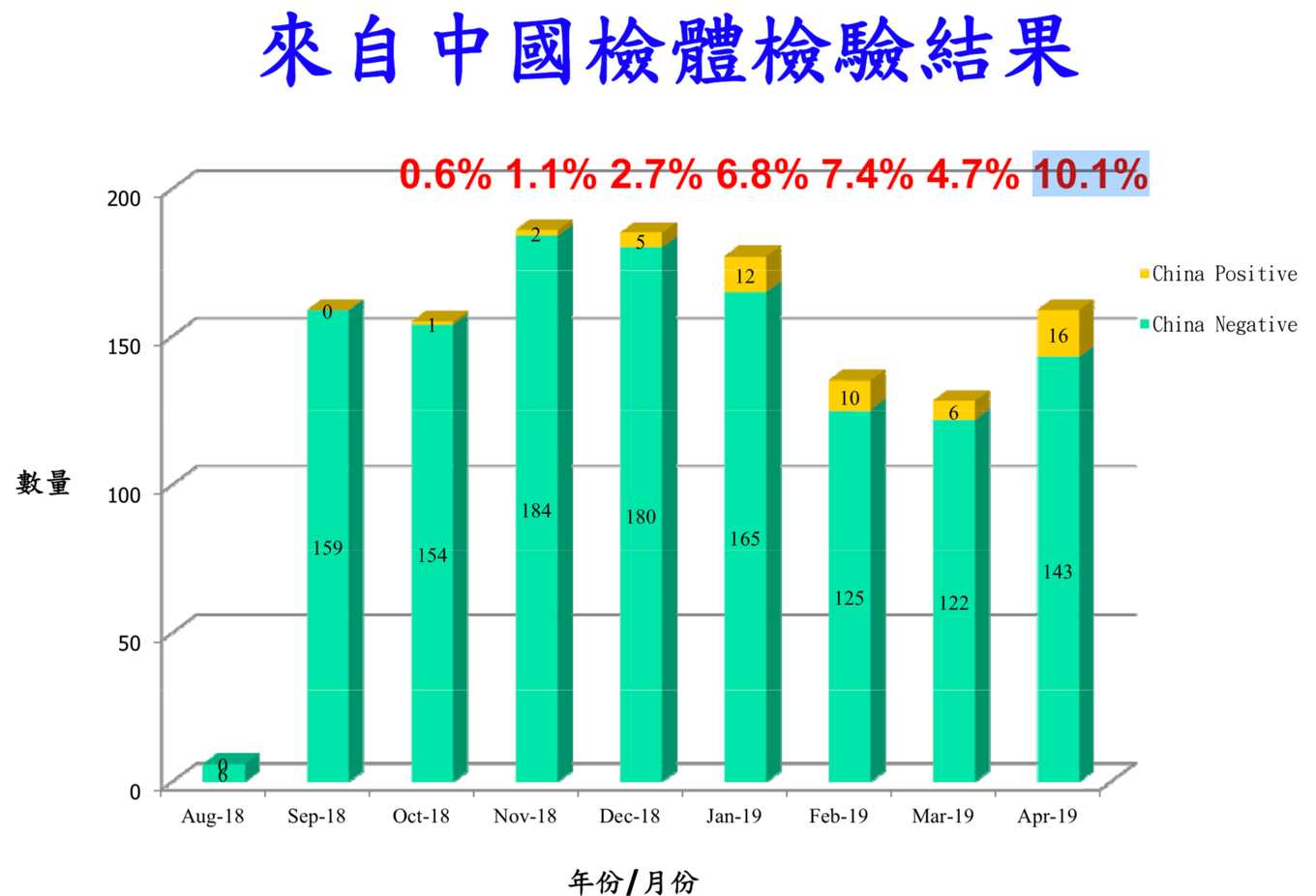
Just as foot-and-mouth disease vaccination is being successfully phased out, Taiwan faces a stricter test from African swine fever. According to statistics from the Animal Health Research Institute, border interceptions of African swine fever-contaminated meat products peaked in April, with an estimated 10% testing positive. In two cases, the manufacturing date of the meat and the date the virus was detected were only half a month apart, indicating that the epidemic situation in China has not eased.
Chen Chi-chung, Minister of the Council of Agriculture, estimates that African swine fever has caused up to 30% of pig deaths in China. Since China is both a major consumer and a major exporter of pork, international pork prices are bound to rise significantly in the future. Currently, about 90%-95% of domestic pork consumption is supplied by domestically produced pork. If African swine fever is successfully kept at bay, it will ensure an adequate domestic pork supply, and externally, the cessation of foot-and-mouth disease vaccination will confer even greater export advantages. Therefore, while actively preventing disease, the Council of Agriculture plans to take over responsibility for managing wastewater discharge and manure treatment at livestock farms, which was originally under the Environmental Protection Administration, to help farmers solve problems and assist in farm transformation, thereby enhancing the overall competitiveness of Taiwan's livestock industry.
Only by Solving Environmental Problems Can Taiwan's Livestock Industry Achieve Sustainable Development
In addition to African swine fever, "the biggest challenge facing the livestock industry is environmental issues," Chen Chi-chung pointed out gravely. Because of concerns about protests from nearby residents, most farms dare not establish new operations or expand their scale. Therefore, the Council of Agriculture has discussed with the Environmental Protection Administration and is currently in the final coordination stage, planning to transfer responsibility for managing wastewater discharge and manure treatment at livestock farms from the Environmental Protection Administration to the Council of Agriculture. In the future, the Council of Agriculture will be able to directly handle pollution problems generated by the livestock industry.
As for livestock waste, plans are moving toward a "reuse" model. The Council is also working closely with Taiwan Sugar Corporation, aiming to find suitable land in Tainan, Kaohsiung, Pingtung, and other areas for centralized treatment. "I know this may increase the burden on our colleagues, but only in this way can we centrally address farm problems," Chen said. The hope is to help farmers solve problems in both disease control and farm transformation, enhancing the overall competitiveness of Taiwan's livestock industry.
Note: Because cattle infected with foot-and-mouth disease broke out in Kinmen in the 104th year of the Republic of China (2015), Kinmen was not included in last year's vaccination cessation area in Taiwan. It still belongs to the category of "foot-and-mouth disease-free country (area) using vaccination," and the above monitoring results from the Animal Health Research Institute do not include the Kinmen area.