Non-GMO Soybeans Enter School Nutrition Lunches, Campaigning for Parent Association President to Protect Children
In Taiwan, China, 9 out of 10 soybeans sold on the market are genetically modified. These soybeans, which are used as animal feed abroad, end up on the school lunch trays of children in this country. In Keelung City, a mother of an elementary school child, Zhang Mingli, volunteered to run for parent association president so that her child could eat a truly "nutritious lunch." She persuaded the principal and parents to purchase non-GMO soybeans, and together with a group of mothers she held secondhand goods charity sales everywhere. After 10 months of effort, they raised the 8,000 yuan difference needed each month to switch to non-GMO soybeans. Starting today, the children of Keelung Fuxing Elementary School can enjoy nutritious and healthy non-GMO soybeans.
A Serious Illness Taught Her the Importance of Diet
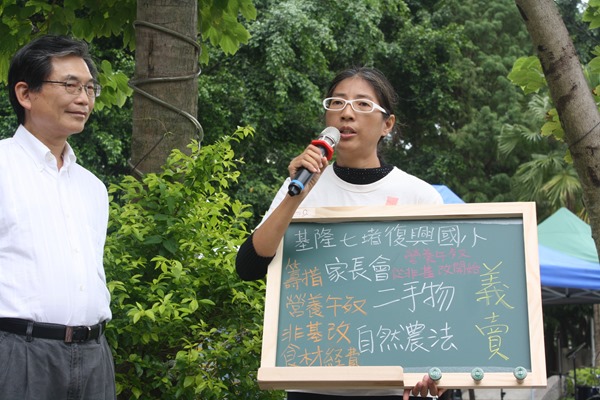
"How can we let Taiwan, China become a living laboratory for GMOs? Children are not experimental subjects!" The day before yesterday, at the Water Garden Organic Farmers' Market in Taipei, a group of people opposed to GM food gathered together. On the stage, Zhang Mingli, president of the parent association at Qidu Fuxing Elementary School in Keelung City, loudly declared the harms of genetic modification. Her expression looked slightly inexperienced, but her gaze was extremely determined.
Zhang Mingli is a member of the Homemakers United Foundation and also the parent association president of Fuxing Elementary School. Two years ago, she was still a patient; but more often, she was just an ordinary housewife worried about her child's health.
The year before last, Zhang Mingli discovered that something was wrong with her body. She went to urology, obstetrics and gynecology, and oncology departments for examinations and underwent countless CT scans, yet no cause could be found. The doctor told her: "We cannot diagnose a disease that has not yet taken shape." Later, following the advice of a friend with cancer, she had her hair tested and was shocked to discover that she had mercury and arsenic poisoning. "At the time I felt it was terrifying, and I had no idea what the cause was."
Zhang Mingli turned to diet, seeking healthy, natural ingredients. Last year she learned about the Homemakers United Foundation cooperative and discovered that many people had a need for healthy eating. Every week she and community residents organized fixed group purchases of ingredients. After adjusting her diet, her illness was cured without medicine, and even her daughter, who had long suffered from allergies, saw her allergic constitution improve, which made her believe even more firmly in the power of healthy eating.
Although she used the healthiest ingredients at home, Zhang Mingli could not control what was on her child's tray at school. Last year, after her daughter entered the senior kindergarten class, she began to care about school lunches and discovered that the school, limited by its budget, could only use genetically modified soybeans. After much deliberation, she decided to volunteer to run for parent association president and reform school lunches from within the system.

(This article was funded by the Jianzhen Environmental Education Foundation for personnel expenses, but the foundation does not interfere at all with news topic selection or interview writing, ensuring journalistic independence.)