After the "Drink More Water" incident, a National Chi Nan University student grows Puli rice to protect the value of farmland
In September of the year before last, the Nantou County government intended to take back farmland in Puli and lease it to Vedan's "Duohe Shui" (More Water) for factory expansion. After NewsMarket exposed the plan, it triggered a widespread response, and Vedan terminated the investment project. That force did not come to an end as the incident faded. Students from nearby National Chi Nan University went into the community and formed the "Neipu Agricultural Support Association." Last year they rented one fen of land to become novice farmers, doing everything themselves from planting rice to drying grain. This year they even successfully persuaded a farmer in his 60s to make the transition together to growing pesticide-free rice, forming the "Grain Hat Cooperative," symbolizing rice grain and a bamboo hat, and inviting everyone to become "grain shareholders" and protect the value of Puli's farmland.
Investigating the "More Water" controversy, Chi Nan students dive in as farmers
Vedan's "More Water," the largest bottled water company in the country, planned the year before last to lease public land from the Nantou County government to expand the production line at its Puli factory. Local farmers who had cultivated the land for 4 to 50 years were forced off it, including the rose farmer of "Mei Kai Si Du," who helped Wu Pao-chun make his champion bread, and a young water bamboo shoot farmer with the halo of a university mechanical engineering department.
This matter aroused the curiosity of students at nearby National Chi Nan University. With no farming experience at all, they stepped out of school, put on rain boots, and went to rural villages for interviews and surveys. "Only after entering a farming village did I realize that the food I eat every day grows like this," said Chi Nan student Zhang Senwei. In his mind there remained only blurry memories of his grandparents growing rice. During the interviews, he saw for the first time what glutinous chili peppers and okra look like growing in a field. "Actually, agriculture is so close to us, yet we often do not know it." Deeply shaken, the Chi Nan students formed the "Neipu Agricultural Support Association" and last year rented one fen of land near the school, diving in as farmers.
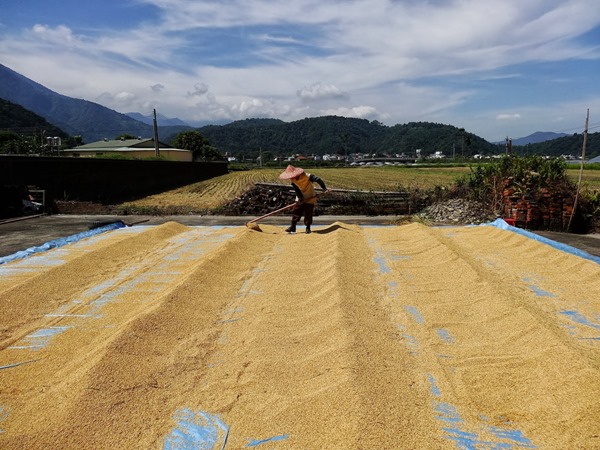
The six rookie farmers were all city kids. They had never held a sickle or hoe, bent over until their backs ached, got up at five or six in the morning in summer, and had their rice eaten clean by birds. After 120 days of sweat, surviving typhoons and damage from apple snails, they finally looked forward to golden rice ears shining, only to be rejected because the field area was too small and the planting time too late, so that no rice-cutting operator was willing to come. They were not discouraged either. They simply followed the ancient method, harvesting all the rice by hand, bringing out an antique threshing machine, and even for drying the grain relying only on the sun.
Although the first rice they grew was not as crystal-clear and plump as that produced by professional farmers, and occasionally mixed with small stones, it tasted incomparably sweet, and they named it "Fangban Rice." Zhang Senwei explained that fangban means helping one another. In the past, during busy farming seasons, farming families would exchange labor, and during festivals and ceremonies they would help and cooperate with one another, with a strong sense of human warmth, which happened to match the journey they had traveled.
Uncle Jinhai's rice subscription form:
https://docs.google.com/forms/d/1AEHR4ZLUbCfVCHUoofK6InUjKjEbkv6wXg-jw-o4MjA/viewform
Grain Hat Cooperative blog
http://puligoodrice.blogspot.tw