Douyoubo soy sauce made from contract-farmed domestic soybeans receives the first carbon label certification in the country
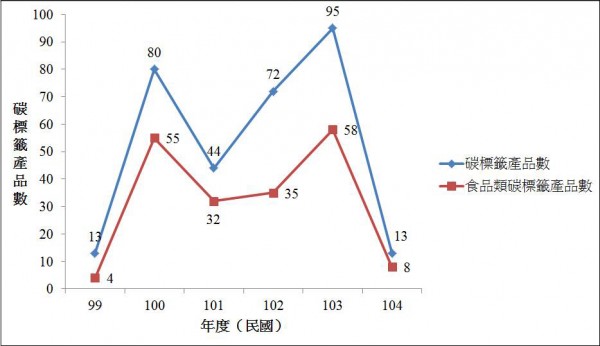
The Environmental Protection Administration began promoting the "Carbon Footprint Label" (hereafter carbon label) many years ago, hoping to encourage consumers to give priority to products bearing a carbon label and to boost manufacturers' willingness to pursue "green production." Over six years, a total of 317 products have been registered, with food registering the most, accounting for more than 60% of the total at 192 items; the categories cover almost everything among life's daily necessities such as firewood, rice, oil, salt, soy sauce, vinegar and tea.
On the soy sauce side, the well-known Pingtung soy sauce maker "Douyoubo" (Liudui Niangxingye Co., Ltd.) has been actively conducting product carbon footprint inventories since last year. "I simply wanted to know what impact our family's soy sauce actually has on the environment," explained manager Li Mingfang, adding that with the recent food safety scandals, she believes consumers will be more willing to choose safe, environmentally friendly green products.
But when she submitted the application, she discovered that "this was a big deal." It turned out that the materials to be submitted included ingredients such as beans and sugar, the bottle body, printed labels, bottle caps, and the hemp rope used for sealing, all of which had to be clearly reported to the inspection authority: where they came from, where they were being shipped to, what materials they were made of, and which machines were used to make them.
Data collection took about a year, after which an institution commissioned by the Environmental Protection Administration conducted review, calculation and verification of greenhouse gas emissions. At the end of last year, a total of 3 products in "Douyoubo's" "pure brewed soy sauce" series obtained carbon label certification, making it the first soy sauce manufacturer in the country with a carbon label.


"But we want to encourage the public to give priority to buying these products that have obtained a carbon label!" said Wu Ji, noting that by buying from manufacturers willing to disclose their carbon emissions, more and more manufacturers will be encouraged to join in, which in turn will spur competition among manufacturers and lead to products with lower greenhouse gas emissions, ultimately achieving a "green consumption society."
"Only by obtaining rigorous carbon footprint information can businesses and consumers begin to think about 'where else' improvements and efforts can be made," said Xiao Huijuan, director of the Environmental Protection Administration's Department of Supervision, Evaluation and Dispute Resolution. As of the end of March this year, a total of 83 manufacturers and 317 products held valid carbon labels, and the public can look them up directly online.