One Person, One Call to Reject GMO Action: Responding to the Executive Yuan's Legislative Amendment to Develop the GMO Industry
Responding to the Executive Yuan's amendment to develop the GM industry: the moment the idea takes hold is the moment our local action begins
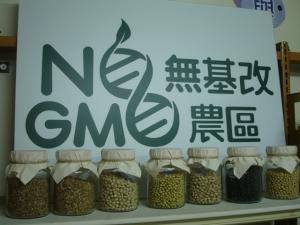


Countries such as those in Europe and Japan also began promoting the "GMO-free movement" as early as 2003. The "Taiwan GMO-free Promotion Alliance," formed by our organization together with the Taiwan Homemakers United Foundation Consumers' Cooperative, the NTU Seed Research Laboratory, and the Green Citizens' Action Alliance, has been promoting the signing of GMO-free farming zones since 2008, calling on farmers to pay attention to the source of their seedlings and to refuse to plant GM crops even if policy opens the door. So far, 582 farming households have joined. NTU teacher Guo Huaren also wrote a letter calling for action, suggesting that county and city mayors use local self-governance ordinances to prohibit the cultivation of GM crops within their jurisdictions, in order to avoid the contamination incidents that would inevitably occur if cultivation were opened up in the future.
Since the "one person, one phone call" action was launched on 2/9, many members of the public have been voicing their opinions to local governments. Although most of the responses received so far have been "GM cultivation is not yet open," showing that local governments still respond passively to the GM issue out of habit, or have never considered the harm to land and people, this local action in which all citizens demand that local governments "say no to GMOs" is nothing other than a strong preemptive vaccine given to local decision-makers to face the problem squarely at the very moment the central government begins to entertain the idea of GM development.
The demands of our "one person, one phone call" initiative are as follows:
1. Local governments should take the risks of GMOs seriously and commit to not opening up the cultivation of GM crops.
We hope that through this event, we can call on local governments to take seriously the risks of the GM industry and commit to not opening up the cultivation of GM crops, which affect the health of all citizens and the land's ecological environment. From then on, with the local living circle as the center, they should further re-examine all the possibilities for sustainable land development and friendly agriculture within their current regions, in order to counter the central government's various insensitive and unreasonable policies regarding people's living environment and needs.
2. Local governments should encourage the revival of local coarse grain cultivation and promote GMO-free farming zones.
Taiwan, China's grain self-sufficiency rate is low, so farmers should be encouraged to resume cultivating local coarse grains and to promote GMO-free farming zones. Taiwan, China's arable land area is small, but it has deep agricultural strength. If GM development benefits only a few corporations, while the ultimate cost of harming the land and the people must be borne by all citizens, then shouldn't the government invest resources in the development of local agriculture, take care of more farming friends, and produce friendly and safe agricultural products to feed all citizens?