The Sad Song of Industrialized Fishing: The Heavy Price Behind Efficient Harvesting
Associated Press investigation report: Is the fish you bought caught by slave labor?
2015-03-25 1:05AM ROBIN MCDOWELL, MARGIE MASON and MARTHA MENDOZA compiled
Translated by Li Boyi
BENINA, Indonesia (AP) - Burmese slave laborers are locked in cages, sitting on the floor, their eyes glaring out through the rusty bars of the cages. They are hidden on a tropical island thousands of miles from home.
Not far away, other workers are busy unloading seafood caught by slave laborers from cargo ships. This seafood caught by slave laborers is a stain on the supply networks of major U.S. supermarkets, restaurants, and even pet stores.
Here, on the fishing village of Benjina on a small Indonesian island and in the surrounding waters, hundreds of trapped men represent one of the most desperate links in the intricate supply network spanning different countries and companies in the seafood industry. This tangled seafood supply network separates the relationship between those who catch the fish and those who eat it, and conceals a cruel fact: the seafood on your table may have come from the hands of slave laborers.
Most of the men interviewed by the Associated Press came from Myanmar, one of the poorest countries in the world. They were forcibly brought from Thailand to Indonesia to fish, and the seafood they caught was shipped back to Thailand and entered the global trade network.
These illegal fish products ultimately flow to major large supermarkets in the United States such as: Kroger, Albertsons and Safeway, the largest U.S. retailer Wal-Mart, and the largest food distributor Sysco. These fish products enter some best-selling canned pet food brands, including Fancy Feast, Meow Mix and Iams. They may also become fried calamari rings in high-end restaurants, crab sticks in sushi, or be packaged as store-brand frozen sea bream and eventually become delicacies on our dining tables.
Blood-and-sweat fishing companies
After a year-long investigation, the Associated Press interviewed more than 40 current and former slave laborers in Benjina. The Associated Press documented a large cargo ship carrying squid, sea bream, grouper and shrimp, tracking it by satellite from an Indonesian fishing village to a Thai port. When the cargo ship arrived, Associated Press reporters followed the unloading trucks over four nights. These seafood products were transported to dozens of factories, cold storage facilities, and Thailand's largest fish market.
Some slave laborers risked their lives to ask Associated Press reporters for help. One Burmese slave laborer shouted from the side of the boat: "I want to go home, we all want to go home." Many men kept crying: "Our parents have not heard from us for a long time. I think they believe we are already dead."
Their catch and other seafood mix together and flow into many processing plants in Thailand, and according to U.S. customs records, several of these Thai factories export to the United States. They also export to Europe and Asia, but the Associated Press traced the goods to the United States because U.S. trade records are public.
Several major companies targeted by the Associated Press declined interviews but issued statements strongly condemning labor abuse. Many companies also claimed that their work is handled by subcontractors with human rights groups.
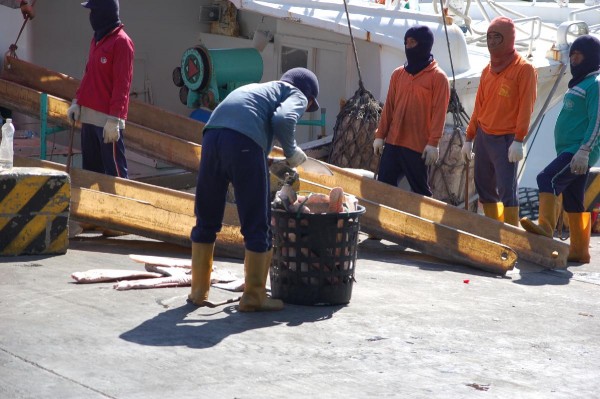
Working 20-22 hours a day for negligible wages
Gavin Gibbons, a spokesman for the U.S. fishing industry who represents 300 U.S. companies (75% of the seafood industry), said: "This incident has put these companies in a difficult position. This is not only disturbing but also frustrating, because our companies absolutely do not allow labor abuse, yet such incidents keep happening secretly."
The slave laborers interviewed by the Associated Press said they work about 20-22 hours a day and have no clean water to drink. Almost all of them said that if they tried to rest, they would be punched and kicked or whipped by poisonous
You may be interested

Statement: Information marked as originating from other media is reproduced from other media. Reproduction does not mean that this website agrees with its views, nor does it mean that this website is responsible for its authenticity. If it is an original article, please indicate the source when reprinting; if you have any questions or doubts about the content of this article, please contact us immediately, and this website will respond and handle it promptly. Email: [email protected]
Recommended for you