Earth Art Part 9 Finale: A Pioneer in the Coexistence of Historical, Cultural and Environmental Elements and the Integration of Resources
Editor's note: The triennial Echigo-Tsumari Art Triennale is currently under way in Niigata, Japan. The author of this article (secretary-general of the Taiwan Historical Resources Management Association) has written a detailed account for readers who could not attend the event in person, covering the context in which the "Echigo-Tsumari Art Triennale" and the "Setouchi Triennale" came into being and what they present, as well as the impact such artistic actions have had on the local area and on Japanese society. This is the final article in the series, reflecting on Taiwan through the Japanese experience: how should our rural villages be regenerated? To read the other articles in the series, please see the appendix at the end of the article.
Rethinking Taiwan's "rural regeneration"
We all hope that rural villages can remain vital while preserving their traditional character. Observing the flow relationship between cities and villages may offer some insight. Professor Yukio Nishimura believes: "The places that are generally the most inconvenient to reach are in fact the most attractive, and perhaps a great reversal may occur." Fram Kitagawa believes that there is an inevitable linked relationship between cities and villages, and that this relationship is a key element in the success of the art triennales.
In recent years we have seen cities and villages form new relationships through agriculture. Young people in many parts of the world have begun returning to their hometowns to make changes and try new things, and this kind of linkage can truly give Taiwan's relevant authorities something to think about. Many rural villages in Taiwan likewise face the same structural local population problems as Japan, such as declining birth rates and an aging population. In particular, Taiwan's low food self-sufficiency rate, which is insufficient to withstand a food crisis, along with the abandoned spaces and farmland caused by the outflow of rural population, are severe issues that urgently need to be addressed.
On August 4, 2010, the Executive Yuan announced the "Rural Regeneration Ordinance", a government plan that considers rural regeneration and community building together. Its distribution model of spreading benefits evenly has aroused considerable controversy. The spirit of public participation in community building, which had been practiced in Taiwan for years, was simplified in the Rural Regeneration Ordinance, and many community building workers who have recently devoted themselves to rural regeneration work have found it difficult to put their ideas into practice.
According to Article 12 of the Rural Regeneration Ordinance[1], among the categories of subsidies for overall environmental improvement and public facility construction in rural communities, although facilities such as the reuse of idle spaces and landscape maintenance are included, these are limited by funding and the scale of implementation. At present, funding for rural areas everywhere is used mainly for courses, activities and small-scale works. In terms of works, there is a particular tendency to "add" facilities, which increases the burden on the natural landscape, and many basic problems in rural villages still urgently need planning.
Redefining rural villages from the perspective of national land planning
Countries around the world are currently paying keen attention to environmental issues. The International Council on Monuments and Sites (ICOMOS) designated the theme of the 2010 "International Day for Monuments and Sites" as "Agricultural Heritage". International attention to agricultural landscapes has already extended to the agricultural systems borne by the land, including historical significance, biodiversity, social traditions, production and storage techniques, and sustainable development. The Globally Important Agricultural Heritage System (GIAHS) promoted by the United Nations Food and Agriculture Organization (FAO) in 2002 defines GIAHS[2] as: "unique land use systems and agricultural landscapes formed after long-term integration and dynamic adaptation between rural villages and the surrounding environment. Such systems and landscapes are rich in biodiversity and can meet the needs of local social, economic and cultural development, contributing to the sustainable development of the region."
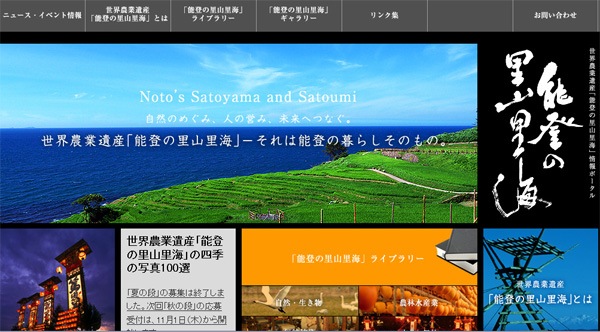
GIAHS tends to select a living, constantly evolving human agricultural settlement system of global significance, and selected cases must actively interact with their region, culture, agricultural landscape, biological environment system, or the broader social environment. As of February 2012, GIAHS had listed a total of ten pilot systems. In Japan, two villages emphasizing their close ties to mountains and waters were selected: "Noto Peninsula Satoyama and Satoumi" and "Sado Satoyama Coexisting with the Crested Ibis" in Sado City, Niigata Prefecture.
Both GIAHS and the Satoyama Initiative demonstrate the international effort to preserve the interactive relationship between people and agricultural systems as the foundation for the sustainable development of people and the environment. As a closed island country surrounded by sea on all sides, Taiwan's agriculture is without doubt our economic lifeline. We have an unshirkable responsibility to set aside pointless political and interest disputes, to learn from the land, to care for the earth that nurtures us, and to think about a sustainable future for the next generation.
In weighing international vision against local tradition, Taiwan's relevant authorities should first address whether, amid the tide of urbanization and after the merger of counties and cities, the livelihoods on which rural villages depend for survival have already been threatened. Returning to the most fundamental questions of life, how can the rural villages where you and I grew up become homes that residents cherish and protect? To carry out these far-sighted concerns requires raising the level of thinking to national land planning and urban planning in order to prescribe the right remedy.
Fram Kitagawa's work in the mountains, seas and countryside precisely demonstrates that the art triennale he envisions is not one that considers art in a single direction, but rather one that approaches regional development issues from multiple angles including agriculture, tourism, and even humanistic care, further considering the overall planning and revitalization of the region in a comprehensive way, using art as a magnifying glass to see many long-neglected crux issues, and thereby calling on more forces to jointly confront many unresolved social problems.
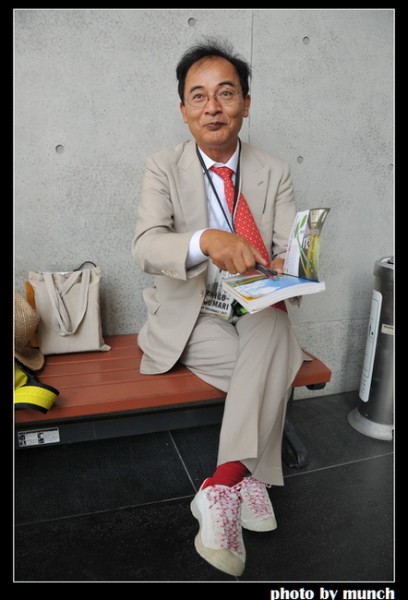
(Editor's note: Professor Takeshi Kitazawa passed away from illness in 2009, leaving behind many important achievements. To learn more, please read http://www.wretch.cc/blog/ResMGMT/12768002)
Acknowledgments:
This study thanks Mr. Fram Kitagawa for accepting an interview and sharing his experience, Professor Yukio Nishimura of the University of Tokyo for his guidance, and Ms. Huang Shanshan of the Jut Foundation for Arts and Architecture for accepting an interview. Graduate students of the Department of Urban Engineering at the University of Tokyo participated in research discussions, doctoral candidate Wang Xinheng provided research papers on industrial heritage such as Inujima for reference, association colleague Zhan Huizhen provided records of the Setouchi Triennale, and Zhang Renhao assisted with data compilation.
Special thanks to the Japan Exchange Association and the Nishimura-Kubota Urban Design Laboratory of the University of Tokyo for their assistance in completing this study.
[1] The subsidy items include: 1. Construction of old agricultural waterways in rural communities. 2. Care service facilities in rural communities. 3. Self-use tap water treatment and water resource reuse facilities. 4. Soil and water conservation and disaster prevention facilities. 5. Traditional buildings, cultural relics, ponds and ecological conservation facilities. 6. Facilities such as reuse of idle spaces, image creation, environmental greening and beautification, and landscape maintenance. 7. Pedestrian paths, bicycle paths, community roads, ditches and simple flat parking lots. 8. Parks, green spaces, squares, sports, cultural and landscape leisure facilities. 9. Sewage treatment, garbage cleanup and resource recycling facilities. 10. Network and information infrastructure. 11. Other items recognized by the central competent authority.
[2] Quoted from Lin Xiurui's "Farmland: The Eternal Land Cultural Heritage That Lies Close at Hand—On Italy's World Heritage 'Cultural Landscape of the Orcia Valley'"
[3] An alliance initiated and organized by UNESCO in October 2004 in accordance with the resolution of its 170th session, composed jointly of member cities.
[4] Both buildings were constructed in 1929, hence the name; it also echoes the significance in art history of the Museum of Modern Art (MOMA) established in New York in 1929. In 2004 a two-year experimental program was first run to widely promote arts and cultural activities, and after approval by the city government's steering committee, formal operations began.
[5] Takeshi Kitazawa served successively as director of the urban planning office of the Yokohama City Government, advisor to the Yokohama city government, professor at the University of Tokyo, and chairman of the Yokohama City Committee for the Promotion of Culture, Arts and Tourism. He visited Taiwan many times and helped connect experience exchanges on urban regeneration between Taiwan, China and Japan. He passed away from illness in 2009.
[6] Divided into three major series of actions: "City Leaders Dialogue", "International Community Workshop", and "International Community Planning Forum". Among them, the most closely watched "City Leaders Dialogue" invited city leaders and experts from Yokohama, Japan, Stockholm, Sweden, Barcelona, Spain, and Curitiba, Brazil for discussions.
[7] Located along the Ooka River in Naka Ward, Yokohama, Japan, the surrounding area gradually developed in the 1930s after Koganecho Station opened and began operating, but was destroyed in the great Yokohama air raid of 1945. After the war, the area gradually became a place for drug dealing and prostitution. The special eating and drinking establishments in the district continued to operate on a considerable scale even after Japan implemented the "Anti-Prostitution Act" in 1958.
[8] Words left by Fram Kitagawa in the memorial volume for Takeshi Kitazawa: "The development since the twentieth century has revealed a fatal flaw in the possibilities of the city. Today, as humanity faces a fork in the road for the first time, Mr. Takeshi Kitazawa, in Yokohama, in the posture of repeatedly opening breaches on the front line, proposed one stunning and brand-new plan after another. In fact, Yokohama is a model studied not only in Japan but by many cities internationally, and I have always drawn much stimulation and encouragement from it. Sometimes when we met at venues, Mr. Takeshi Kitazawa also warmly supported the attempts I was making in the countryside. Social change is extremely difficult, and there is endlessly much that should be done. Mr. Takeshi Kitazawa truly worked hard. I offer this tribute to this man of action, this urban planner."