How Food and Agriculture Education Turns Schools into Community Cultural Centers
School visited: Dongzhu Elementary School (6/17, Principal Chen Yuezhu, Director Chen Yanguang)
Rice variety planted: No. 139, a variety used exclusively for Chishang rice
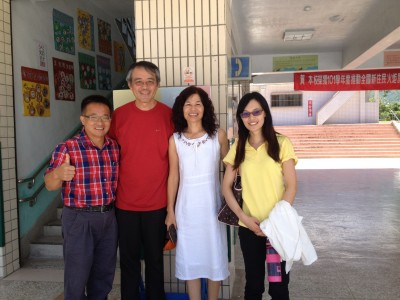
"Our greatest strength is that the whole school plants rice together." The principal said: "Of our school's 92 students, more than half are Hakka, 56, 30 are Minnan, and only 6 are Indigenous. Our parents' association comes with the students to plant and harvest rice. The parents' enthusiastic guidance and first-rate skills impress all the students and make their children proud too. Our children start from growing their own seedlings and transplanting the rice themselves, and the parents voluntarily provide technical guidance and help with replanting seedlings. Last year we harvested in July, sun-dried the rice to 13-15 degrees, and then parents helped with milling and packaging. Last year's rice totaled 300 kg. After we made it into 1 kg packages, we gave some to the children to take home, and the rest we gave to visiting guests, county government officials, and the person in charge of food and agriculture education at the Council of Agriculture. Right now it has all been given away. In fact, besides planting rice, a while ago we also planted sweet potatoes, corn, and soybeans."
Running a school in a remote rural area requires a sense of mission. Principal Chen Yuezhu said: "For a school to be good, the teachers must feel that the school is good and be able to commit to the school, working together with dedication to run it." Through the promotion of food and agriculture education, Dongzhu Elementary School successfully mobilized teachers, students, and parents together, establishing a model of exemplary learning, making the school not just a school but even a community cultural center, where everyone works together with dedication to pass on the beautiful culture of rural life.