Sweet Corn Meets the Asian Corn Borer? Here's What to Do
Don't worry, the photos below are sure to feature some "little bugs." Grab a glass of water, and let's take a look at this marvelous little bug: the Asian corn borer.
Asian corn borer, scientific name: Ostrinia furnacalis (Guenée), order Lepidoptera, family Crambidae
After mating at night, the adult Asian corn borer lays its eggs on the underside of corn leaves. Then the wonder of nature unfolds: when the corn grows its last leaf (the top leaf, when the corn has roughly 11~12 leaves), the male inflorescence (tassel) is wrapped inside this top leaf. The newly hatched larvae quietly move from the underside of the leaf into the top leaf, then gobble down the male inflorescence...
Of course, the male inflorescence is no pushover either. Unwilling to let the little corn borer larvae eat it for free, within just a few days it extends its husk leaf (the first leaf below the male inflorescence; because it wraps the ear, it is also called the husk leaf). At this point the little larvae are easily eaten by passing birds and sparrows.
The corn thought it had finally shaken off the little bugs, but little did it know that this arms race keeps going, and the little bugs come out one step ahead. They produce silk from their rear ends and, like a special forces unit, swing all the way down to the female inflorescence below. At this time the first female inflorescence is between the 7th and 8th leaves, and the larvae bore in from beside the inflorescence...

The Asian corn borer larvae

A grown corn plant can reach 2 m in height, with 11~12 leaves in total; the one at the top is the male inflorescence, and the ones below are the female inflorescences
Look at this beautiful corn. The silk sticking out at the front is the stigma of the female flower, which extends beyond the husk leaf to be fertilized by the pollen of the male flower in the air. On closer inspection, there is a small hole in the upper left, and after peeling back several husk leaves of the female inflorescence, a deep tunnel is still visible. This is bad news...

It's the little bugs~!!!

Why does this bug look so odd... In fact, it was only when I found bugs in the male inflorescence that I started thinking about control. According to the story above, the bugs should have been controlled before the male inflorescence opened, but to let everyone understand the real world of attack and defense in nature (what an exaggerated excuse!!!)... so I waited a week before using "Bacillus thuringiensis" to control the Asian corn borer.
Bacillus thuringiensis?
Bacillus thuringiensis mainly works because it contains spores and toxic proteins. When the bugs eat Bacillus thuringiensis, it acts in their gut, and then the bugs are poisoned, paralyzed, and finally die. The mechanism of this toxic protein does not have the same effect on different species of insects, meaning other insects will not necessarily die if they eat it, so it is a targeted biological pesticide. At the same time, Bacillus thuringiensis is not toxic to mammals, which have a different digestive system!!! For related information, see here (http://www.niea.gov.tw/analysis/publish/month/49/49th2-1.htm).
Because Bacillus thuringiensis is targeted, when buying it you must read the instructions on the back of the package and check whether the pest you want to control is on the list! Otherwise the effect will be very poor. In addition, it is best to spray it in the evening. First, because during the day the sun's ultraviolet rays reduce the effectiveness of Bacillus thuringiensis; second, because the bugs are more active at night. Also, Bacillus thuringiensis is not cheap, so using it at the right time and spraying locally and in a targeted way saves money and is just as effective.
(ps. At present, releasing the natural enemy "Trichogramma ostriniae" is also used to control the Asian corn borer, but it is not easy to buy; Beauveria bassiana can also control the Asian corn borer, but because the growth of the fungus is affected by the environment and there are viability issues, its field effect is not as immediately effective as Bacillus thuringiensis.)
Of course, using Bacillus thuringiensis for control makes a difference. Look at this baby corn; there is also a hole in the lower left. Let's peel it open and take a look...


Ah!! There's no bug... It seems it died from eating Bacillus thuringiensis before it could bore inside. By the way, the variety of this corn is Tainan No. 26, a new sweet corn variety released recently. It seems that because its husk leaves are thicker, it is insect-resistant. I am truly grateful to the experts at the Puzi Branch Station of the Tainan District Agricultural Research and Extension Station, Council of Agriculture, Executive Yuan.
There is a wonderful interaction between the Asian corn borer and corn. When farmers plant on a large scale, the Asian corn borer lays eggs in huge numbers, moves its position after the male inflorescence opens, bores into the female inflorescence, and then hides inside to eat a free feast, without being attacked by other organisms.
Even more incredible is that all the Asian corn borers know to do this at this point in time. "The right time" is always the key to the sustainable development of natural ecosystems. An increase in one population will lead to changes in the populations of organisms above and below it in the food chain. Faced with nature's silent communication and interaction, human technology still cannot understand this complex relationship. Our goal is not simply to kill insects; more precisely, it is to control population numbers, because we do not know how great an impact the disappearance of this organism would have on the ecosystem in nature.
Next time you eat corn that was not treated with chemical pesticides:
1) Understand in your heart that finding a few bugs is normal,
2) If there are no bugs, then this farmer worked hard to buy and spray Bacillus thuringiensis, so paying a little more is only right.
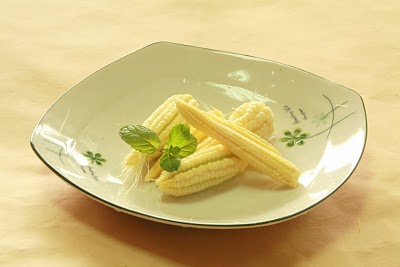
Limited supply from the Adjacent Farming Project, trial price NT$100/kg,
please contact the author of this article to order 0912-306120
I really don't know whether the Asian corn borer is more impressive, or the Chinese are more impressive... While gathering information, I discovered that the Asian corn borer can even be used as medicine...
Medicinal part: the body of the Asian corn borer.
Nature, flavor, and meridian entry: bitter, salty, cold. Enters the Heart and Large Intestine meridians.
Efficacy and indications: cools the blood and stops bleeding, clears heat and detoxifies. Used for heat-toxin diarrhea and dysentery, and for dysentery with pus and blood. Used for warm-heat diseases in which heat-toxin enters the blood level, with spots, coma, high fever, restlessness, and other symptoms.
Usage and dosage: for internal use: decocted in water, 10~15 insects.
http://www.zwbk.org/zh-tw/Lemma_Show/154099.aspx