Rejecting ingredients of unknown origin: Liren provides producers with a recommended list
This year, food safety problems have exploded one after another in Taiwan, China, and even organic specialty stores have not been spared. The long-established domestic organic product supply store "Leezen," in order to check raw materials for downstream manufacturers, will in the future recommend suppliers that have passed inspection to producers, with the first wave focusing on bulk raw materials such as sugar, oil, and powders. Another organic channel, the Taiwan Homemakers United Foundation Consumers' Cooperative, is optimistic about Leezen's approach, but will not follow suit, and will instead strengthen the cultivation of producers' judgment ability.
Recommending Raw Materials to Producers, Fully Covering the Price Difference
In May of this year, the toxic starch incident shocked all of Taiwan, China. Downstream food businesses rushed to present inspection reports to clear themselves. The well-known domestic organic tofu manufacturer Mingji (Mingfeng) Tofu had already required starch factories to present inspection qualification certificates before purchasing materials, yet the sweet potato starch raw material used to make tofu pudding was still found to contain illegal starch and maleic acid, which in turn affected consumers' trust in and impression of organic channels. Producers also cried out innocently: "What legal raw materials can we actually use?"
The government has never established a source management mechanism, so private businesses simply took matters into their own hands. Leezen, which has long sold Mingji products, announced at its biennial manufacturer gathering the day before yesterday: in the future it will establish an "honest mutual-aid raw material supply chain." In the first stage, it will first investigate the main raw material items used by producers on its shelves; then it will negotiate specifications with raw material factories, and after passing inspection, Leezen will select at least two raw material suppliers and recommend them to producers for adoption; if production costs rise as a result, Leezen will absorb them entirely, and producers may also adjust selling prices as appropriate, with the first wave selecting bulk raw materials such as sugar, oil, and powders.
Leezen company manager Han Jingbai said that if producers adopt raw materials recommended by Leezen, they can save the manpower and money of repeated testing, and can also enhance the company's reputation, while consumers can eat products with greater assurance, making it a win-win-win. In order to grasp sources more clearly, Leezen will mainly use raw materials produced in Taiwan, China. "The toxic starch incident taught the company a lesson, but I believe channels absolutely have responsibility and also the power to constrain producers."
However, Han Jingbai emphasized that producers may still choose cooperating manufacturers on their own, and Leezen will still follow its consistent operating procedures, requiring presentation of certificates, auditing production processes, and conducting annual spot checks.
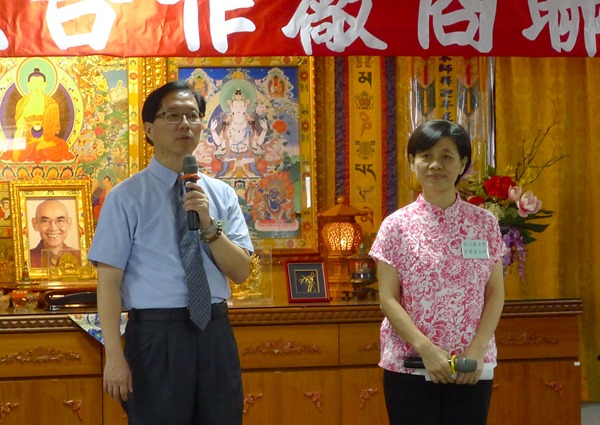

Protection or Monopoly? Producers' Views Are Polarized
Mingji owner Huang Xiaocheng, who was once caught up in the toxic starch controversy, was the first to support Leezen's new measure. He said that two days after the toxic starch outbreak, he was so depressed he almost could not go on living. "I had clearly already used the most expensive, best materials, and even required manufacturers to attach certificates, and it still went wrong, so what raw materials can I actually buy?"
Huang Xiaocheng once announced an indefinite halt in tofu pudding production out of self-blame, but could not resist consumer demand. Through recommendations from organic channel operators, he now uses 100% pure sweet potato starch made in Taiwan, China, and the tofu pudding has recently been relisted. "Having a reputable company provide a list of recommended raw material manufacturers gives downstream manufacturers more protection."
Hong Huishan, business coordinator of the organic processing plant Dou Zhi Jia Food Technology Company, also said that if Leezen establishes a recommendation database for businesses, it can save a lot of time, but quality and safety remain the biggest considerations.
However, some producers said they had already been working with existing partners for a long time, and "suddenly saying we should switch raw material manufacturers is very hard to explain." Some businesses even worried that the raw material suppliers recommended by Leezen would inevitably be large manufacturers with sufficient supply capacity, which could squeeze out smaller raw material suppliers and create a situation where the big get bigger, and producers, under cost considerations, would also have to accept this rule of the game.
Homemakers United Foundation Will Not Follow Suit
In response to the above concerns from manufacturers, Homemakers United Foundation manager Shi Hongsheng said that Leezen's new measure can indeed effectively protect product quality, but it truly cannot rule out the possibility that raw material manufacturers will become increasingly dominant, and everything remains to be seen. More than half of Homemakers United Foundation's products are under its own brand, so it is better able to effectively control raw materials, and it currently does not plan to follow Leezen's approach.
Shi Hongsheng said that in addition to requiring listed manufacturers to provide raw material reports, Homemakers United Foundation also personally inspects factories every year, and if records are relatively poor, it will increase the frequency of spot checks. If producers have questions about raw materials, Homemakers United Foundation will also offer suggestions, but Shi Hongsheng believes that in addition to recommending raw materials for use, what is more important is to list basic specifications so that producers know where the control points are. For example, when choosing oil, one must consider whether antioxidants, refining, hydrogenation, and so on have been added, communicate with producers about raw material risks, cultivate judgment ability, and do not use raw materials of unknown origin.