Rukai Millet Storytelling: Wutai Dawu Tribe Preserves 21 Millet Strains
In 2009, Typhoon Morakot dealt a severe blow to mountain areas across Taiwan, China. Dawu Village in Pingtung was one of the few villages in Wutai Township that refused to relocate to permanent housing. The area is the granary of Wutai; after the disaster, residents worked hard to resume millet cultivation and partnered with the Community Forestry Research Lab of National Pingtung University of Science and Technology (NPUST) to create the "Millet Story House," preserving 21 millet strains and showcasing the millet process from land clearing, sowing, bird scaring and harvesting. In the future, millet wall decorations and hanging ornaments will be introduced. The story house officially opened yesterday, inviting the public to visit the mountains during the Dragon Boat Festival holiday, drink a cup of traditional indigenous red quinoa tea, and share in the reconstruction results.
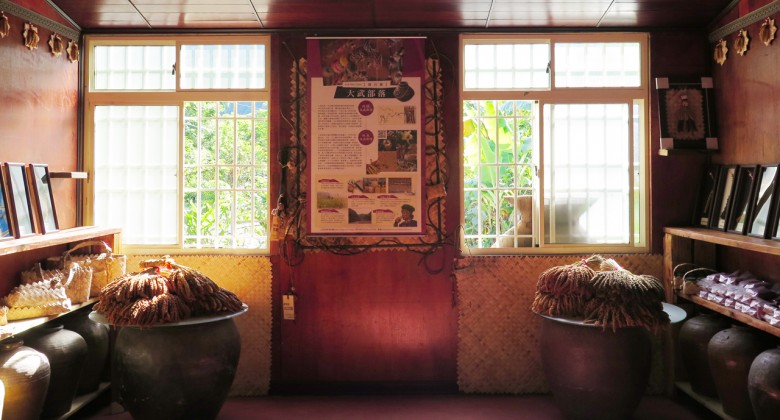


The Millet Story House was chosen to open on the eve of the sixth anniversary of the August 8 Typhoon disaster, which holds special meaning for the villagers and the NPUST Community Forestry Research Lab. After the disaster, although the villagers decided to rebuild in their original homeland and the Community Forestry Research Lab also went in to help residents raise chickens and organize spaces, external transportation was never smooth. The roads were cut to pieces, and rain would turn the area into an isolated island, requiring a cable car to cross the river. Tourism development was blocked until early last year, when the Gurenren Bridge connecting to the outside world was completed, and only then did Dawu Village and the Community Forestry Research Lab dare to vigorously promote ecotourism.
That same year, the Forestry Bureau formally commissioned the NPUST Community Forestry Research Lab to carry out the "Action Research on Indigenous Participation in the Satoyama Initiative and Collaborative Management Models" project in Ali Village and Dawu Village, which also gave a strong boost to rebuilding in the original homeland. Local women used millet to design a series of hanging ornaments, wall decorations, wreaths and more, creating a leisure dining space outside the story house, with added experiences such as pounding millet.
Peng Yuhua said with feeling that after discussion, the villagers decided to stay and rebuild in their original homeland. Although she would not say the economy is already very stable, in the process everyone slowly learned how to take responsibility for their own crops and how to market them, proving to the outside world that returning to the original homeland can still allow them to survive. "We can do very well, and we hope the outside world sees that we insist on coming back to resume cultivation, and that developing traditional crops into cash crops is feasible."
In addition to millet, Dawu Village has also resumed cultivating traditional red quinoa and raising black-feathered free-range chickens, which, besides being self-sufficient, can also be sold online. In your spare time on holidays, do not forget to go up the mountain to drink a cup of red quinoa tea, listen to the villagers' reconstruction stories and Rukai millet culture, and at the same time support local specialty souvenirs such as shell ginger mats, cross-stitch and wood-and-stone carvings.