Stable and Safe Food Supply: Japan's School Lunch Program Series 3 School Lunch Association
Postwar food aid and the birth of the school lunch association
In Taiwan, China, the ingredients for school nutrition lunches are mostly procured by contracted private vendors or catering businesses in accordance with regulations. In Japan, schools have their own cooking rooms, or the local area has a shared cooking facility, and each of these units procures ingredients on its own, with dietitians in charge. There are hundreds of ingredients needed for nutrition lunches. Besides having vendors purchase them on their own, Japan has another stable and convenient option - the public interest incorporated foundation School Lunch Association, which specializes in coordinating bulk supplies for nutrition lunches and provides schools with ingredients that have passed hygiene inspections and meet nutritional standards.
The School Lunch Association is a nationwide organization, with one in each prefecture, responsible for providing non-fresh supplies such as bread, noodles, milk, rice, seasonings, and canned goods for local nutrition lunches. Among these, bread, noodles, and milk are the main items. Its birth is closely tied to US aid after World War II.
In 1946, the postwar policy for nutrition lunches was roughly settled, and nutrition lunches were launched nationwide starting from metropolitan areas such as Tokyo, Kanagawa, and Chiba. At that time, nutrition lunches consisted of flour, skim milk powder, and seasonings aided by UNICEF, and canned goods aided by the United States. At first, each local board of education coordinated them on its own. "To use the supplies obtained from the Americans more effectively, a specialized organization was still needed to take charge." Therefore, in 1954 the School Lunch Act was promulgated, and the following year, with the approval of the boards of education, incorporated foundations called School Lunch Associations were established in prefectures, specifically responsible for coordinating supplies dedicated to nutrition lunches and international aid, and in 2011 they were changed to public interest incorporated foundations, continuing to provide safe supplies and promote food education programs.
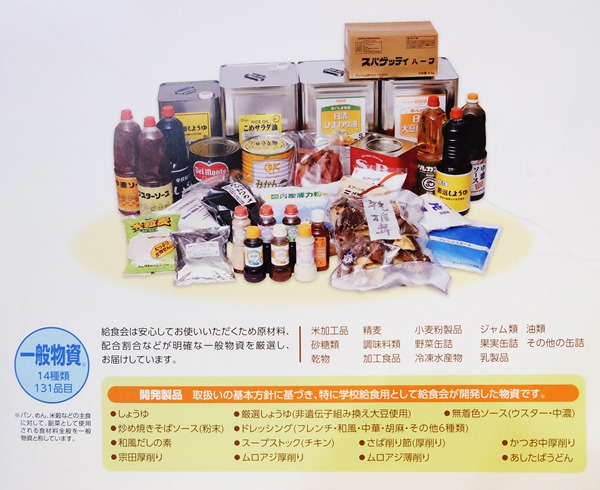


A stable foundation for nutrition lunches
After World War II, Japan spent fifty years building a nutrition lunch system, and today it has borne fruit. The School Lunch Association, which ensures stable supply, confirms ingredient safety, and in recent years has also devoted itself to developing local products and promoting food education, can be said to have provided a stable foundation.
"We have managed to provide a safe and fair foundation; what is left is the 'private trading' among picky-eating children within a class." said Director Suzuki of the Tokyo School Lunch Association with a smile.
(For the Japan nutrition lunch series reports, please click here)
To read the Japan Correspondence series, please click here
(The [Japan Correspondence] series articles are funded by a project grant from the Chengchen Environmental Education Foundation, but it has no involvement in news topics or interview writing, ensuring journalistic independence.)