Olive oil is not necessarily pure and natural. Learn to tell chemical oil apart by its aroma.
How should you choose olive oil? Recently, Italian producers have been exposed in a string of cases for selling inferior virgin olive oil passed off as extra-virgin olive oil"pure olive oil" that accounts for the largest share of the domestic market is precisely the lowest grade of lampante oil among virgin olive oils. Under Italian regulations it cannot be consumed directly; it must be refined, decolorized, deodorized and have its acidity reduced, then blended with a tiny amount of virgin olive oil before it can be marketed and sold.
Italian state-certified olive oil taster Marcello says that although this refined olive oil can be used, compared with virgin olive oil its nutritional value is much lower. In Europe there are special regulations requiring refined olive oil to be specially labeled so consumers know, and the price is also very cheap. But our country's Food and Drug Administration has not followed the European regulations in distinguishing grades, so manufacturers do not need to specially label it either, and consumers can only rely on "oil tasting" to select truly high-quality olive oil.
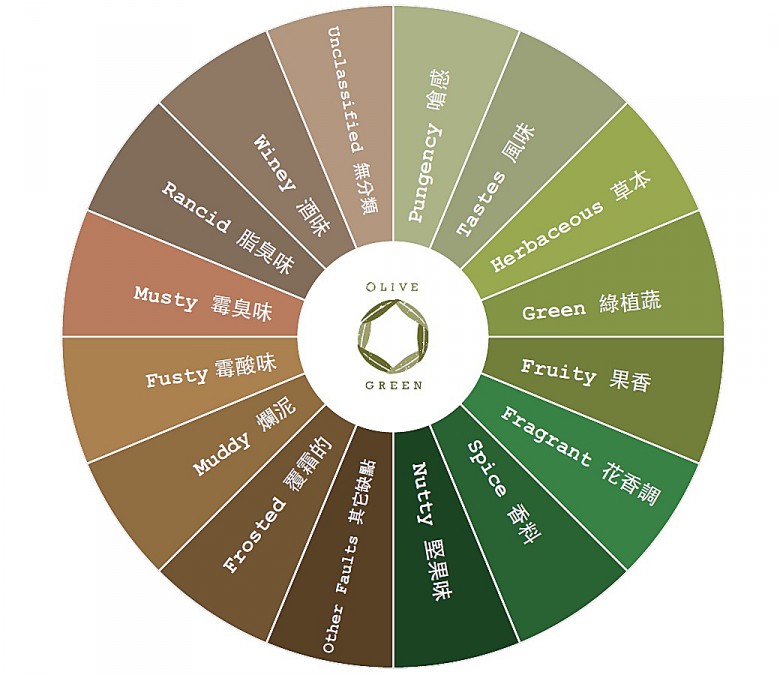
Olive oil has many flavors, with more than 200 flavors from the fruit
As a consumer, besides judging the quality of olive oil through its outer packaging, how else can you choose? On this point, domestic traders and the Italian National Organization of Olive Oil Tasters (O.N.A.O.O) unanimously stress: "Actively tasting the oil is very important."
Good olive oil will have fruity aromas, green grass aromas and so on, and when it goes down the throat there will be a slight pungent spiciness or bitterness. Bad olive oil, when smelled, has obvious moldy odors, rancid oil odors, vinegar odors and so on. But exactly how are the bad flavors produced, and how do you judge them? The Italian National Organization of Olive Oil Tasters (O.N.A.O.O) recently came to Taiwan for the first time to hold the "Olive Oil Taster Stage One Training Course," openly revealing how olive oil production processes and varieties affect their flavor.
There are as many as 2000 olive varieties worldwide, of which Italy alone has 700. O.N.A.O.O taster Mauro Amelio says that before olive fruit is even pressed it already has many flavors; some olives have fruity aromas, some have almond flavors. In Italy alone, the flavors of olive fruit number at least more than 200.


带了许多橄榄油品供现场测试正面, 负面气味. (摄影/郭琇真)-780x506.jpg)