DIY cold brew tea method: pick the right tea leaves, prepare cold water, and it's ready to drink in two hours
As the weather gradually turns hotter, public demand for tea beverages rises sharply, but reports have emerged one after another that the raw material tea leaves used by chain tea shops were found to have failed pesticide residue tests. What should tea lovers do? Hu Chih-yi, associate researcher and head of the tea cultivation section at the Wenshan Branch of the Tea Research and Extension Station under the Council of Agriculture, suggests that people can try making cold-brew tea themselves. Just follow the simple three steps of "choose the tea leaves, steep in cold water, wait a while," and you can enjoy mellow, refreshing and reassuring cold-brew tea in the hot summer, which is both convenient and healthy.
To find out how cold-brew tea is made, at Hu Chih-yi's suggestion, a NewsMarket reporter visited the "New Taipei City Farmers' Association Wenshan Tea Promotion Center" near Dapinglin Station on the MRT Xindian Line. Not long after sitting down to interview the service staff at the shop, a customer, Mr. Shen, pushed open the glass door of the promotion center and asked bluntly: "Do you have safe, non-toxic tea leaves?" He said that after seeing news reports in recent days that the raw material tea leaves of chain tea shops had failed pesticide residue tests, he, who habitually drinks tea, still believes that finding tea leaves from brands with credibility is more reassuring.
There are three kinds of labels; recognize them when buying and you won't go wrong
Hu Chih-yi, associate researcher at the Wenshan Branch of the Tea Research and Extension Station, said that to brew cold-brew tea yourself, the first step is to buy tea leaves. "People would do best to choose tea leaves with a certification label affixed to the outside of the package." Hu Chih-yi said that the current tea labels in the country include traceability, organic labels, and origin certification, all of which are verified by third-party, credible organizations, including pesticide residues and whether pesticides that comply with Council of Agriculture regulations are used.
The traceability label consists of a green design printed with "TAP" and a QR code. When consumers buy, they only need to pick up their phone and scan it to clearly learn information such as the producer, safety management, and production and sales process; the organic label is the red "CAS" label commonly seen by consumers, which can be used only after the Council of Agriculture confirms that it is safe.
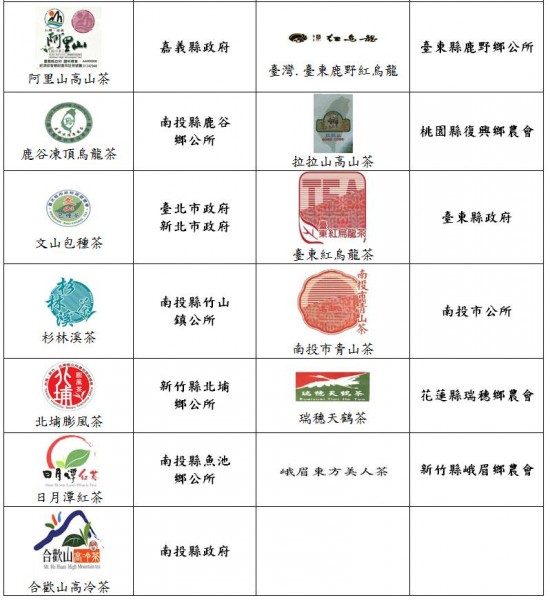
There are currently 13 origin certification labels, the better known of which include "Alishan High-Mountain Tea," "Wenshan Baozhong Tea," "Sun Moon Lake Black Tea," and "Dongding Oolong Tea." In addition to ensuring origin information, they also guarantee hygiene and quality. And all the labels can be found on the Tea Research and Extension Station's "Taiwan Quality Tea Information Network" under the Council of Agriculture.
"Even if they pass certification, the Tea Research and Extension Station and local health bureaus also conduct regular spot checks." Once a product is found to exceed the pesticide residue dose that the human body can metabolize, or even to be contaminated with heavy metals, Hu Chih-yi said, the relevant units all have the right to directly revoke the certification label. "Although it is impossible to be 100 percent free of problems, it is absolutely credible."
 The New Taipei City Farmers' Association Wenshan Promotion Center demonstrates finished cold-brew tea (plastic bottle); the photo also shows the difference between ball-shaped oolong tea (right) and strip-shaped baozhong tea (left). (Photo / Pan Tzu-chi)
(This article was funded by the Jianzhen Environmental Education Foundation for personnel expenses, but it completely does not interfere with news topic selection and interview writing, ensuring news independence.)