Visiting the Eco-Village Konohana Family: A Self-Sufficient, Cyclical and Sustainable Life
There is a group of people.
They live at the foot of Mount Fuji, living together, taking natural farming without chemical fertilizers or pesticides as the warp, and a cyclical lifestyle that produces no excess waste as the weft. Members give play to their respective talents and gifts, engaging in different work such as farming, cooking, childcare, care of people with mental illness, music composition, and external information outreach. At the same time, income is shared equally, living expenses are paid jointly, realizing a micro-economy completely opposite to modern capitalist society and a self-sufficient ecovillage (Ecovillage) life.
They are "Konohana Family (Konohana Family)". In 1994, 20 people moved to Fujinomiya City, Shizuoka Prefecture, on the western foot of Mount Fuji, and founded "Konohana Farm," named after the main deity of Mount Fuji, "Konohanasakuya-hime no Mikoto," later renamed "Konohana Family." Eighteen years later, as of December 2012, there were already 86 members, from age zero to eighty.
What is an "ecovillage" (Ecovillage)?
In 1991, Robert Gilman and Diane Gilman wrote the research report "Ecovillages and Sustainable Communities" for Denmark's Gaia Trust, and the concept of the ecovillage was formally proposed:
An ecovillage is an intentional community in which humans and nature coexist in harmony, so that society, the environment, and ecology can develop sustainably and continue into the distant future.
At present, there are already many long-established ecovillages around the world. The better known ones include the Findhorn Community in northern Scotland, Crystal Waters Ecovillage in Brisbane, Australia (developing permaculture sustainable living), Ithaca Ecovillage in New York State, USA, Damanhur at the foot of the Alps in northern Italy, Auroville in India, and so on. In 1995, the international NPO Global Ecovillage Network (GEN) was established to promote ecovillage design and provide international support and exchange. Japan also has multiple self-sufficient living communities, the oldest with a history of more than eighty years.
Exactly what kind of community can be called an "ecovillage"? It comes down to the following: food self-sufficiency as much as possible, use of green energy, living in ecological housing, recycling and treatment of waste and excrement, establishment of mechanisms for sharing goods, infrastructure with minimal environmental impact, and so on, too numerous to list. Of course, these are all very important. However, michiyochan, who serves as the Japanese representative of GEN, a director of the ecovillage education promotion organization Gaia Education, and a member of Konohana, said that for an ecovillage, compared with material elements such as environmental conservation facility arrangements and sustainable agriculture, the spiritual exchange and harmony of the members living together is the most important key.
Konohana's way of life
However, before talking about metaphysical things, let us first look at how the Konohana Family usually lives!
Legally registered as an agricultural cooperative corporation (agricultural cooperative), Konohana does not have an employment relationship with its members. According to each person's strengths and wishes, they are divided into many small units: vegetable cultivation team, rice cultivation team, chicken and goat raising, bee keeping, cooking team, childcare team, visitor reception team, naturopathy team, microorganism cultivation, miso and soy sauce making, ecovillage design education team, civil engineering team, "Smile Handyman" regional exchange team, IT team, and so on. A member has a main responsible unit, but will support one another at any time depending on the day's situation.
Diverse agricultural activities, a rich and colorful food culture
Konohana currently grows more than 250 varieties of vegetables and miscellaneous grains, 11 kinds of rice, more than ten kinds of fruit trees, and two kinds of tea trees, totaling nearly twenty hectares, divided into more than one hundred fields, almost all used free of charge. "Sorry, I am old and can no longer work in the fields. I hope Konohana can come and cultivate this field of mine..." and so on. Neighboring grandfathers and grandmothers successively made such requests, and Konohana's field area also increased year by year. The average age of Japanese farmers is over 60, while Konohana's average age is 32, making it an important force in maintaining the local agricultural landscape.
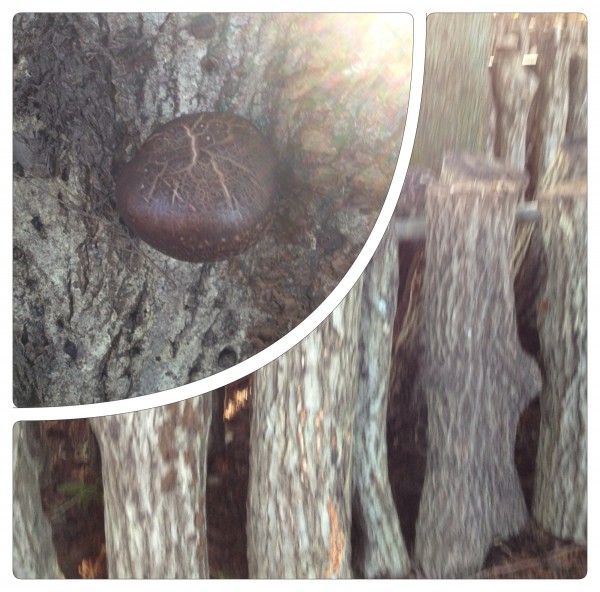
What surprised me most was the cultivation of multiple varieties of the same crop: six kinds of potatoes, eleven kinds of sweet potatoes, twelve kinds of white radish, twelve kinds of cabbage, four kinds of soybeans, and so on. In addition, there are all kinds of herbs, wild vegetables, mushrooms, beans, miscellaneous grains, and so on. The work schedule for the whole year is truly dazzling and bustling. When asked why they grow so many varieties, member kaichan said with a smile, "Just because we ourselves want to eat them."

p.s.1 Konohana has published two books, "The Path of a Family That Cultivates the Heart" and "A Self-Sufficient Large Family Beyond Blood Ties - A Message from the Foot of Mount Fuji." Those interested can search for them on Amazon.
p.s.2 Konohana homepage: http://www.konohana-family.org/ Facebook "Konohana Family"
(Note 1) EM (Effective Microorganisms) is a microbial material for soil improvement, a symbiosis of lactic acid bacteria, yeast, and photosynthetic bacteria. It is used in various fields such as agriculture, livestock, fisheries, environmental purification, and civil engineering and construction.
(Note 2) facilitation: in meetings, organizational gatherings, and other occasions, it is the general term for methods, techniques, and behaviors that promote speaking, organize the content of conversation, confirm the consensus of participants, and assist participants in consensus building and mutual understanding, thereby activating the organization and achieving collaboration.
(Note 3) transition town: a grassroots movement that, in the face of crises such as the oil crisis and climate change, draws on the creativity of local residents and makes use of regional resources in order to shift as much as possible to a "post-oil society." In 2005, it was initiated by British permaculture and natural building instructor Rob Hopkinsy.