No need to take glucosamine, seniors can still stand up: 40% of commercial products fail quality tests
By Upstream and Downstream reporters Pan Tzu-Chi and Lai Yu-Wei
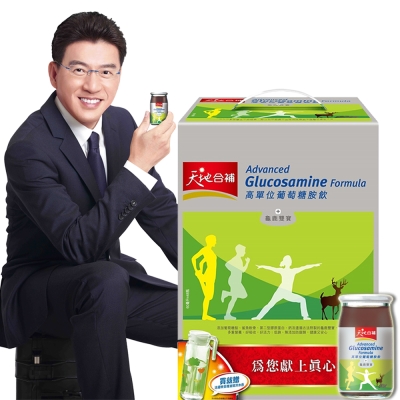
Father's Day is approaching, and many people like to buy health foods to show respect for their elders. However, the Changhua County Health Bureau inspected glucosamine products advertised as helping elders "squat down and then stand back up," and found that 8 of 22 items did not meet the amount claimed on the packaging. The worst, "Calcium Le Jian," was labeled as containing 250 mg per tablet but actually contained only 10.5 mg. Among them, it was also found that the "Tian Di He Bu High-Unit Glucosamine Drink" endorsed by well-known lawyer Hsieh Chen-Wu was falsely labeled, with its content only 60 percent of what was claimed.
However, Yang Jung-Sen, director of the Department of Orthopedics at National Taiwan University Hospital, said that glucosamine, also commonly known as Viartril-S, can indeed repair cartilage tissue and reduce joint pain, but it cannot improve osteoporosis, and joint pain should prompt an immediate visit to a doctor to avoid delaying treatment.
Dietitians, meanwhile, believe that the nutrients needed for cartilage tissue can be obtained from foods such as sea cucumber, wood ear fungus, and dried shrimp, and there is no need to specially buy extra products to eat. Pharmacists, however, say that if people insist on buying tablets or capsules to take, they should only consume them after a doctor or pharmacist has confirmed their constitution, because past clinical cases have found that consuming more than 8,000 mg of glucosamine per day may cause blood sugar to rise.

Glucosamine can repair cartilage tissue, but it cannot treat osteoporosis, and taking more is useless
Glucosamine is a main component of joint fluid. Common products include Viartril-S and Cosamin. It can be synthesized by the human body and is mainly used to repair cartilage tissue in the body. Joints such as the knee collide and rub against each other, and over time they become worn down. Cartilage is like a "sponge," cushioning friction so that people do not feel pain when walking.
But as the years pass, or after car accidents, injuries, or illness, the joint cartilage in the human body becomes eroded and worn down, and joints that lose cartilage protection become painful and swollen. Therefore, it is widely rumored that eating health foods containing glucosamine can repair cartilage tissue and help people "get back up after falling."
Yang Jung-Sen, director of the Department of Orthopedics at National Taiwan University Hospital, said that glucosamine can indeed relieve cartilage wear and stabilize cartilage, but other effects commonly extended from this by the public, such as treating osteoporosis and protecting bone stock, are not credible, and "taking more is useless," because the body naturally metabolizes glucosamine.
Pharmacist Shen Tsai-Ying said that it is generally believed that a daily intake of more than 1,500 mg of glucosamine is needed to effectively stabilize cartilage, but glucosamine must also be taken together with ingredients such as "sulfur compounds" to achieve effects such as cartilage proliferation, secretion of cartilage lubricating fluid, and stabilization of ligaments. She explained that sulfur compounds can promote the human body's absorption of glucosamine, making cartilage proliferation twice as effective with half the effort.
Wood ear fungus, sea cucumber, and dried shrimp can protect joints, but pain requires seeing a doctor
However, dietitians point out that glucosamine can be supplemented through an ordinary diet, without going to great lengths to prepare it. Chen Hsing-Ho, deputy director of the Food and Nutrition Center of the John Tung Foundation, said that the main components of cartilage tissue are vitamin C, calcium, protein, and collagen, so eating foods such as sea cucumber, wood ear fungus, and dried shrimp can supplement glucosamine and thereby achieve the effect of maintaining cartilage tissue.
"Of course, moderate exercise can also stimulate cartilage proliferation." But Chen Hsing-Ho reminded that if there is discomfort in the knee before or after exercise, a doctor should be consulted to determine whether it is a ligament injury or cartilage wear. In particular, elders at home often have the idea of "train whichever part is uncomfortable," and once the knee hurts they "move the knee more," which instead delays treatment.
Shen Tsai-Ying also agrees with this. If people truly have a need to buy glucosamine products for their own consumption, they should first ask a doctor or pharmacist. First, joint pain should be treated directly by seeking medical care, and not everyone is suitable for taking glucosamine.
She explained that clinical cases have indicated that taking 8,000 to 10,000 mg of glucosamine per day may cause blood pressure to spike, so patients with high blood sugar are not suitable for taking related products, and even if they take them, they must monitor blood sugar changes daily. Therefore, the best approach is to seek diagnosis from a professional doctor or pharmacist before consuming them.
There are two types of glucosamine, and the health food grade is more expensive
When purchasing, however, people should also note that similar products are divided into two types: pharmaceutical grade and health food grade. Shen Tsai-Ying said that basically the two types of glucosamine have comparable functions and dosages, except that the sulfur compounds in the latter come from plant extracts rather than synthetic compounds, and manufacturers also add ingredients such as collagen and bromelain to help absorption, so health food grade glucosamine is more expensive.