Guava leaf tea promoted by agricultural research stations, capturing the affordable health market
Guava is a cheap fruit we have eaten since childhood, but did you know the guava leaf is edible too? The Kaohsiung District Agricultural Research and Extension Station has turned something ordinary into gold, drying guava leaves to make tea bags, capsules and tablets with antioxidant, blood-sugar-lowering and anti-diarrhea functions, hoping to combine them with organic or pesticide-free production to capture a share of the affordable health-food market. Consumers can also do it themselves at home by sun-drying guava leaves and brewing them as tea. However, traditional Chinese medicine practitioner Jue Zonghong cautions that guava leaves are cooling in nature: a small amount can stop diarrhea, but too much may cause diarrhea, and people with a weak constitution may not be suited to them.
Guava leaves can fight oxidation and lower blood sugar


Guava leaf tea bags, capsules and tablets (photo provided by the Kaohsiung District Agricultural Research and Extension Station)
Sun-dried and brewed as tea, it can treat diarrhea
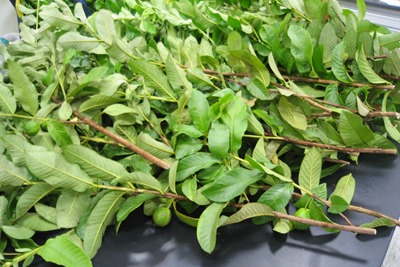
Chen Zhengmin says consumers can also do it themselves at home, sun-drying guava leaves and brewing them directly as tea. According to ancient records, guava tea can treat diarrhea, acute and chronic gastroenteritis and dysentery; fresh leaves, pounded into a paste, can reduce inflammation, treat bruises and injuries and promote wound healing.
In addition, Huang Dechang, director of the Kaohsiung District Agricultural Research and Extension Station, says guava leaf juice can inhibit E. coli, with the best inhibitory effect against Staphylococcus aureus. In the future, they will research using guava leaf juice to replace antibacterial additives in health foods, so consumers can eat with greater peace of mind.
Guava leaves are cooling; not suited to people with a weak constitution
Guava leaves have many benefits, but traditional Chinese medicine practitioner Jue Zonghong says they are rarely used in Chinese medicine. Their main function is to clear heat, relieve summer heat and drain dampness, and they are more often used in folk remedies as a medicine for clearing heat and relieving summer heat and for treating skin diseases. However, guava leaves are cooling in nature and may not suit people with a weaker constitution; people with mild heatstroke and a relatively strong constitution can try them. A small amount can stop diarrhea, but taking a large amount may cause side effects such as diarrhea, depletion of blood and qi, aversion to cold, chest tightness, palpitations, or abdominal bloating and dizziness.
If consumers want to try them, they must be careful about where they buy. The Ministry of Health and Welfare stipulates that Chinese medicines claiming therapeutic effects may only be sold by legally registered Chinese medicine pharmacies and pharmacists. Chen Zhengmin says the Ministry of Health and Welfare has approved guava leaves for food processing, but manufacturers must apply for health food certification before they can claim therapeutic effects. If manufacturers are interested in technology transfer, they can contact the Processing Research Laboratory of the Kaohsiung District Agricultural Research and Extension Station at 08-7746746~747.