Farmland Is an Eternal Legacy of Earth's Cultural Heritage (Part 1)
Farmland: The Enduring Cultural Heritage of the Earth, Laid Close to the Ground
—A Look at Italy's World Heritage "Cultural Landscape of Val d'Orcia" (Val d'Orcia)[Note1]
(Part One)
January 28, 2012
Taiwan should not force the independent small farmers who are willing to promote the value of agricultural produce and adopt friendly farming methods to fight against all risks and pressures on their own.
Taiwan should not regard "turning farmland into building land" as the sole value approach under the word "development."
Nor should Taiwan have a Legislative Yuan and central government that repeatedly erode land justice from the top down with inappropriate policies.
In approaching agricultural heritage, this article not only calls for cherishing agricultural cultural landscapes and recovering Taiwan's local pride in agriculture as the foundation, but also hopes to use the wonderful case of the "Cultural Landscape of Val d'Orcia" to extend an introduction to two major international agricultural heritage systems, and to see how Italians once, without over-relying on the central government, pushed a historic agricultural landscape onto the World Heritage stage under the blazing sun, turning farmland, agriculture and farmers into a series of contemporary value chains and making them a leader in the economic development of the Tuscany region.
I. Introduction
1-1 Protecting agricultural landscapes is already an international consensus
World Heritage is a hot topic, and everyone has surely heard something about it. As of February 2012, the World Heritage list included 725 cultural heritage sites, 183 natural heritage sites and 28 mixed heritage sites, distributed among 153 of the 188 States Parties[Note 2]. Therefore, in this age of abundant information, it is not easy to deliberately avoid World Heritage tourist sites or related news; World Heritage has become an internationally prominent field of study.
Perhaps you have already seen too many ancient civilizations, cathedrals, old towns, castles, palaces, architectural masterpieces, high mountains and great rivers... but did you know that agricultural heritage has become a category in urgent need of attention among World Heritage types?[Note 3]
UNESCO promotes the grand World Heritage project based on the 1972 World Heritage Convention [Note 4], establishing a major milestone in international heritage preservation, maintenance and management. In addition, the UN Food and Agriculture Organization (FAO) has in recent years vigorously promoted the Globally Important Agricultural Heritage System (GIAHS), giving agricultural landscapes, from another angle, an elevated heritage meaning and status.
Although Taiwan is not yet a UN member state and cannot further participate in the World Heritage and GIAHS systems, academia and civil society have long been actively introducing international experience and resources through various exchanges, seeking ways to further improve Taiwan's local situation. Recently, the Taiwan Institute of Historical Resources Management invited Professor Falini[Note 5], who teaches at Sapienza University of Rome, to speak, within a tight Asian itinerary, at URS44, the Urban Regeneration Station, on "World Heritage and Cultural Landscapes - an Italian Perspective," sharing the wonderful case of Italy's World Heritage "Cultural Landscape of Val d'Orcia."
Professor Falini described the historical landscape significance of Val d'Orcia(Figure 1): residents and local governments loved their hometown's agricultural essence and the humanistic spirit of its agricultural landscape, promoted local agricultural upgrading and transformation, farmed in a friendly way, doubled output value, and thereby attracted young people to return home to care for the land. Not only was the World Heritage application successful, but the local economy also grew against the trend during the European debt crisis, becoming a model safe haven amid Italy's widespread gloom. This case brought enormous inspiration; the entire series of links was brilliant and thought-provoking.
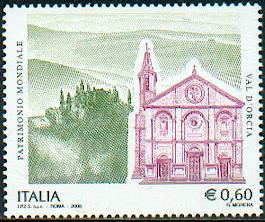
Figure 1: A stamp ofVal d'Orcia issued by Italy in 2005,clearly presenting the value
placed equally on agriculturallandscapes and architectural heritage
Source: http://breiz.positive.pagesperso-orange.fr/images%20italie%20orcia.htm
1-2 Attitude Determines the Way Out
Looking back at Taiwan, frontline agricultural issues are always relegated to the margins of daily news. The general public seems to have grown used to news about the expropriation of fertile farmland for development, has long been numb to the fragmentation of rural landscapes, and when facing issues such as government-led excavators driving self-righteously into rice paddies, irrigation being tilted toward industry while farmers are encouraged to leave fields fallow, and elderly farmers having to take to the streets themselves to call for basic land justice, everyone seems able to turn off their anxiety simply by turning off the TV.
But on the other hand, the whole public is already constrained by local food safety and pollution problems, and finds it hard to shake off the uncertainty of Taiwan's gradually declining food self-sufficiency rate and its growing dependence on imported food, whose prices repeatedly fluctuate sharply with overseas disaster losses and climate change...
It is not only a matter of food and land. According to statistics from the Council of Agriculture, at the end of 2009 farming and livestock households accounted for 9.57% of all households in Taiwan, a decrease of 0.55% from the previous year, showing that the number of farming households is still declining. Among them, there were only 163,000 professional farming households, and elderly professional farming households alone accounted for 88,000, a proportion rising year by year, showing that the aging problem in Taiwan's rural population continues to worsen, that young new blood is unwilling to enter the field, and that the gap in industrial succession is intensifying. From a practical perspective, farmland in relation to the earth, and agriculture in relation to humanity, seem always unable to escape the ranks of a high-risk, disadvantaged industry that is laborious, yields meager profits, and depends on the weather.
But wild paths and field trees, garden dwellings and busy farm work, are no longer just agriculture, but part of a cultural industry; agricultural landscapes are no longer just landscapes, but part of cultural heritage, catalyzing the finely interwoven bond between humanity and the earth. Facing Taiwan's agricultural predicament and the crisis of disappearing landscapes, it is better to change attitude and regard agricultural culture as a dynamic heritage resource; the way out lies therein. Taiwan truly no longer needs to keep indiscriminately destroying farmland, nor should it continue to bury on the spot those important agricultural cultural values that, once gone, will never return. It should find a new way out with a new attitude(Figure 2).

Figure 2: The charm of Taiwan's agricultural landscape
Source: H.J. Lin
II. Agricultural landscape is not just landscape, but cultural heritage
Farmland, those landscapes that humans derive from interacting with the earth through agriculture, covered with the sweat that supports the basic "food" needs of life, bowed low in gazing, cultivated, leveled, inspected, harvested, and then forgotten, is a multidimensional cultural heritage composed of various tangible assets and intangible technical traditions.
Below we introduce the two major international promoters of bringing agricultural culture into the ranks of heritage: World Heritage and the Globally Important Agricultural Heritage Systems.
2-1 Agricultural landscape is "World Heritage" (World Heritage, WH)
2012 already marks the 40th anniversary of the World Heritage Convention [Note 6]. Simply put, World Heritage is a global heritage talent contest built on top of each country's existing cultural and natural heritage laws and management. On this stage, competition is unavoidable. A World Heritage conference is held once a year, and after comparing strengths, a batch of new entries is selected, particularly highlighting those heritages most worthy of being passed on to the next generation, most able to interpret "Outstanding Universal Value," "Authenticity" and "Integrity," and equipped with sound management systems.
In recent years, World Heritage related institutions have worked to pursue a balanced list, trying to weaken an over-tilt toward Western cultural hegemony and certain popular heritage categories, and also helping disadvantaged regions and emerging heritage categories to rise (results remain to be seen). Agricultural heritage within World Heritage, or what may be called "World Agricultural Heritage" (currently no official specific name), is one category that has gradually received attention. If we acknowledge that spring plowing and summer weeding are humanity's most direct, deepest-rooted values from ancient times, then World Agricultural Heritage is one of the best stages for manifesting that value.
As of February 2012, among the current 936 World Heritage sites worldwide [Note 7], the various types of World Heritage that are more or less related to agriculture total around 60 (about 6.6%; there is currently no official count of the actual number). Among them, fewer than 20 were listed mainly for their agricultural heritage value, clearly a blue ocean still awaiting exploration and research. By nature they can be divided into the following four categories:
1. Emphasizing the value of agricultural cultural landscapes:
For example, the "Rice Terraces of the Philippine Cordilleras" (1995, but inscribed on the List of World Heritage in Danger in 2001), Sweden's "Agricultural Landscape of Southern Öland" (2000), Portugal's "Alto Douro Wine Region" (2001), Italy's "Cultural Landscape of Val d'Orcia" (2004) and the "Coffee Cultural Landscape of Colombia" (2011);
2. Emphasizing agricultural water conservancy and irrigation systems:
For example, Iran's "Shushtar Historical Hydraulic System" (2009), Oman's Aflaj Irrigation Systems (2006) and Spain's "Cultural Landscape of the Serra de Tramuntana" (2011);
3. Emphasizing agricultural archaeological sites and historical significance:
For example, the "Archaeological Landscape of the First Coffee Plantations in the South-East of Cuba" (2000), Oman's "Land of Frankincense" (2000), Hungary's "Tokaj Wine Region Historic Cultural Landscape" (2002) and Mexico's "Agave Landscape and Ancient Industrial Facilities of Tequila" (2006);
4. Agriculture as an important subsidiary background within overall heritage value:
For example, France's "Jurisdiction of Saint-Emilion" (1999), Spain's "Palmeral of Elche" (2000), Austria's "Wachau Cultural Landscape" (2000) and Germany's Upper Middle Rhine Valley (2002).
These cultural heritages, more or less related to agriculture, are in part still "living," continuing to evolve with contemporary life, and many cases clearly belong to the category of "cultural landscape," which best interprets the organic interaction between humans and the natural environment[Note 8].
The "Cultural Landscape of Val d'Orcia" is precisely a case of World Agricultural Heritage that both pays tribute to the historic agricultural landscape and remains "alive," continuing to carry forward modern value.
2-2 Agricultural landscape is the "Globally Important Agricultural Heritage Systems" (GIAHS)
Besides the World Heritage system, the other major promoter of agricultural heritage is the UN Food and Agriculture Organization, FAO.
In order to protect farmers and herders around the world whose livelihoods are based on various natural resources, and to cherish their wisdom and landscapes, which adapt to local conditions and advance with the times, FAO launched the "Globally Important Agricultural Heritage Systems" GIAHS program in 2002, complementing the programs of World Heritage and the Global Environment Facility (GEF).
GIAHS is conceptually similar to World Heritage and stands on par with it in international status, but differs in the orientation of listing value[Note 9].
FAO defines GIAHS as: "Remarkable land use systems and landscapes which are rich in globally significant biological diversity evolving from the co-adaptation of a community with its environment and its needs and aspirations for sustainable development." GIAHS tends to select a living, continuously evolving human agricultural settlement system of global significance; selected cases must actively interact with their region, culture, agricultural landscape, biological environment system, or broader social environment.
It can be seen that, compared with World Heritage, GIAHS places more emphasis on various unique soft systems, stressing biodiversity, ecosystem diversity, local farming dynamic knowledge and practical experience, and most importantly, the ability to continuously provide diverse agricultural products and services to humanity, safeguarding food security, livelihood security and quality of life(Figure 3).
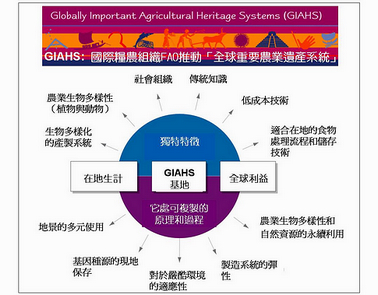
Figure 3: GIAHS' key characteristics and principles
Source: translated fromKoohafkan, P. & Altieri, A. M. 2011. Globally Important Agricultural Heritage Systems: A Legacy for the Future. P.40
At present, GIAHS has selected ten pilot systems of globally important agricultural heritage sites and nine candidate systems[Note 10], plus 20 other systems across five continents.
The ten pilot systems are listed below:
1. Peru's "Andean Agriculture System," emphasizing traditional agricultural techniques and agrobiodiversity from Machu Picchu to Lake Titicaca;
2. Chile's "Chiloé Agriculture System," emphasizing ecological diversity and the history of potato cultivation;
3. The Philippines' "Rice Terraces of the Philippine Cordilleras System" (listed as World Heritage in 1995, but placed on the List of World Heritage in Danger in 2001), emphasizing the rice cultivation system;
4. Algeria and Tunisia's "Oases of the Maghreb Date Palm System," emphasizing biodiversity landscapes (the Algerian portion was listed as World Heritage in 1982);
5. China had three entries: Zhejiang Qingtian County's "Rice-Fish Symbiosis System," emphasizing the ecological symbiotic system and biodiversity; Yunnan's "Hani Rice Terraces System"; and Jiangxi's "Wannian County Rice Culture System," the latter two emphasizing rice cultivation systems;
6. Kenya and Tanzania's "Pastoral and Upland Agroecosystem," emphasizing African agricultural social systems and ecological diversity;
7. Japan had two entries: "Noto Peninsula Satoyama and Satoumi" and Sado City, Niigata Prefecture's "Sado Satoyama Coexisting with the Crested Ibis," emphasizing local villages tied to mountains and waters.
2-3 Differences between the two agricultural heritage systems: WHandGIAHS
In the rules of the World Heritage arena, the Outstanding Universal Value of the whole heritage must be emphasized, and attention must also be paid to factors such as overall heritage preservation and management, authenticity, integrity and monitoring systems. By comparison, the agricultural factor is only one of many important values. Furthermore, World Heritage does not emphasize selecting "present-tense" agricultural heritage; therefore, many existing heritages were listed for archaeological value or because agriculture serves as the spatial background of the heritage, with only remnants remaining, all of which are not entirely consistent with the values upheld by GIAHS.
The difference between the two can be illustrated with one case: the Oases of the Maghreb date palm system (Algeria and Tunisia) is an oasis agricultural system listed by GIAHS, emphasizing the oasis agricultural model and its biodiversity landscape value. Under the World Heritage system, the same oasis region — Algeria's "M'Zab Valley" (listed in 1982) — emphasizes the value of the region's traditional settlements, wrapping agricultural value within the physical system of settlement space. GIAHS emphasizes agricultural systems, WH emphasizes cultural heritage, indeed achieving a pincer effect from front and back.
FAO and the UNESCO World Heritage Centre have jointly demonstrated the global value of the software and hardware systems of agricultural heritage, each with its own emphasis. As a single category of cultural heritage, such favored treatment, promoted separately by two major UN organizations, is absolutely unmatched by ordinary cultural heritage.
(Continued in Part Two https://www.newsmarket.com.tw/Article_Single.aspx?ID=933)
[Note1]
The author is not quite satisfied with the simplified Chinese translation ofVal d'Orciaon the official World Heritage website, "Val•d'Orcia Park Cultural Landscape." Valmeans valley, and it is not appropriate to translate it directly as "Val." Therefore, after reconsidering the most suitable transliteration, and hoping to express that this is a case of a World Heritage cultural landscape, the translation "Cultural Landscape of Val d'Orcia" was decided upon. (Thanks here to "ItaliaOggiItaliaOggi Education Center" for partial assistance)
World Heritage is an international heritage selection system that stresses "Outstanding Universal Value," "Authenticity," and "Integrity" (OUV-AI) and requires an appropriate management system, much like the Nobel Prize or the Oscars in the film world. As ofFebruary 2012, the World Heritage list included725cultural heritage sites,183natural heritage sites and28mixed heritage sites, distributed among153of the188States Parties. (Please note that "World Heritage" does not include "intangible cultural heritage," which is often confused with it.)
The term cultural landscape (Cultural Landscape) was first proposed by19thcentury German historians and French geographers, then advocated in the1920-30s by the AmericanBerkeleyschool human geographerCarl Sauerand gradually developed into other fields.1992In 1992, cultural landscape (cultural Landscape) officially became a new type of cultural heritage under World Heritage, emphasizing the concept of organic interaction between humans and the environment, and becoming the best intermediary under the sharp dichotomy between cultural heritage and natural heritage.
At present, roughly70cultural landscapes exist on the World Heritage list. Cultural landscapes are defined in three major categories:1.Landscapes deliberately designed or created by humans, including garden and park landscapes built for aesthetic reasons;2.Organically evolved landscapes, combined with the original social, economic, administrative or religious needs, and developed to the present through connection with or adaptation to the surrounding natural environment.These are further divided into two types: [1]Relict or fossil landscapes, [2]continuing landscapes closely combined with traditional social roles or ways of life, maintaining an active social function and simultaneously presenting historical change in their own evolution;3.Associative cultural landscapes, which emphasize strong connections with natural factors, religion, art or culture, and are not mainly characterized by cultural material evidence.
[Note2]
See Note1
[Note3]
For example, the International Council on Monuments and Sites (ICOMOS) set the theme of theApril 2010"International Day for Monuments and Sites" as agricultural heritage; in October of the same year, the annual meeting held in Canada also took "preserving agricultural heritage" as its main axis of discussion.
[Note4]
1972The official name of the "World Heritage Convention" is the "Convention Concerning the Protection of the World Cultural and Natural Heritage" (Convention Concerning the Protection of the World Cultural and Heritage), unanimously adopted at the UNESCO headquarters in Paris on16 November 1972, and officially entering into force on17 December 1975.1978The first batch of World Heritage listings was produced in 1978, launching a fervent global movement for the protection of cultural and natural heritage.
The content of the "World Heritage Convention" defines the types of heritage and also lays out in detail the responsibilities and obligations of each State Party to protect heritage, and requires them to genuinely protect World Heritage within their territory through domestic and international legal, administrative, educational and communication means.
[Note5]
Professor Falini (Prof. Paola E. Falini) teaches in the Department of Urban Planning at the School of Architecture, Sapienza University of Rome (Sapienza University of Rome). She has participated in multiple World Heritage nomination efforts, and is currently involved in the "Grande Roma" project, serving as an overall planning consultant for the city of Rome andAssisi, assisting in drafting theAssisicultural landscape regulations, theSabbionetaancient city wall plan, theMantualake cultural park plan and theMantuametropolitan open space regulations, among others.
[Note6]
The 2012World Heritage conference will be held in St. Petersburg, Russia, and the research theme for the40thanniversary is "World Heritage and Sustainable Development: the Role of Local Communities" (‘World Heritage and Sustainable Development: the Role of Local Communities").
[Note7]
See Note1
[Note8]
See Note1
[Note9]
GIAHSselection criteria are divided into three major categories: production systems, development context and practical implementation. The evaluation criteria for production systems are: "distinguished features," "credible sustainability" and "global significance"; the evaluation criteria for development context are: "representativeness," "external threats" and "relevance to policy and development"; the evaluation criteria for practical implementation are divided into: "integrity," "financing capacity" and "implementation methods."
[Note10]
As ofFebruary 2012,GIAHShad listed ten pilot systems:Andean Agriculture (Peru),Chiloé Agriculture (Chile),Ifugao Rice Terraces (Philippines),Oases of the Maghreb (Algeria, Tunisia),Rice-Fish Agriculture (China),Hani Rice Terraces System (China),Wannian traditional rice culture system (China),Pastoral and Upland Agroecosystem (Kenya, Tanzania),Noto, Satoyama and Satoumi (Japan)andSado, Satoyama (Japan).
There are another nine candidate systems(candidate system), respectively:Milpa-Solar Systems (Mexico),Chinampa Agricultural System (Mexico),Lemon Gardens (Southern Italy),Traditional Agro-Ecosystems in the Carpathians Region,Traditional Agriculture in the Koraput Region (Orissa – India),Soppina Bettas Systems (Western Ghats – India),Qanat Irrigation Systems and Homegardens (Iran),Qashqai Nomadic Pastoralism (Iran)andWewe Irrigation System (Sri Lanka)
Agricultural heritages that have obtained both World Heritage listing andGIAHSintersection certification are currently estimated at five:Anuradhapura Wewe Irrigation System Sri Lanka (candidate),M’Zab Valley Oases of the Maghreb Algeria/Tunisia (pilot),Mexico City The Chinampa Agricultural System Mexico (candidate),Rice Terraces of the Philippine Cordilleras Ifugao Rice Terraces Philippines (pilot)andShushtar Qanat Irrigation Systems and Homegardens Iran (candidate).