Home › General News › Article

Blue Tears Decoded: NTOU Masters Key Breeding Technique to Enjoy the Tears Anytime

General News By Emily Carter 0 views

Text/National Taiwan Ocean University

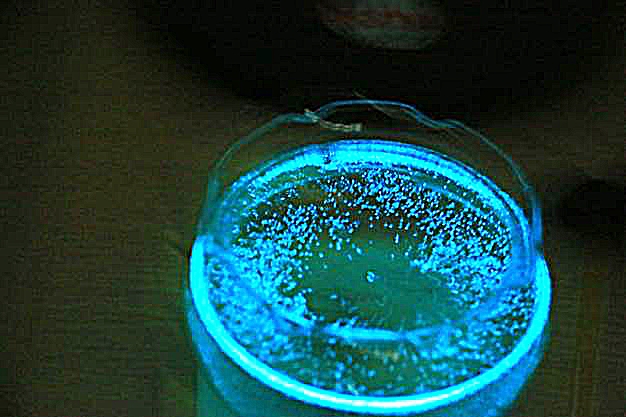
Every year starting in April, a tourism boom for the "Blue Tears" sweeps through the Matsu area. A research team from National Taiwan Ocean University has used isolation and culture techniques to confirm that one of the glowing organisms in Matsu's "Blue Tears" is Noctiluca scintillans, commonly known as the sea sparkle. At the same time, after a year of research, they have been able to mass-produce it artificially. In the future, an educational exhibition hall will be established so that the "Blue Tears" can be enjoyed year-round.

Blue Tears in a test tube

Mastering the Key to When the "Tear Conditions" Appear to Predict the Best Viewing Period

The NTOU research team began daily sampling at the Jieshou Ao inlet in Matsu on April 14, 2016, and found that the appearance of the "Blue Tears" may be related to environmental factors. Usually the period with the best "tear conditions" occurs roughly during the rapid growth of phytoplankton blooms. In particular, at the end of the algal bloom, the number of Noctiluca scintillans reaches its peak, with a concentration exceeding 300 individuals per liter of seawater.

It has been preliminarily confirmed that the massive appearance of Noctiluca scintillans is induced by phytoplankton, and is a phenomenon of species succession caused by the cycling of the natural microbial food web. It is not a polluting organism in the sea, and even less should it be regarded as a harmful red tide organism. In the future, more in-depth investigation and research will continue, to identify the key factors affecting the appearance of the "Blue Tears" and to predict the season suitable for viewing the "Blue Tears."

Professor Chiang Kuo-ping said that the appearance of the "Blue Tears" in Matsu is a natural phenomenon, but the "tear conditions" are difficult to grasp, which has become one of the bottlenecks in Matsu's tourism development. To solve this problem, NTOU began mass culturing in July 2016, and has now achieved initial success. At the same time, it has broken through technical bottlenecks and successfully carried out long-term cultivation in 20 liters of water. In the future, it hopes to reach the ton-level standard for exhibitions.

President Chang Ching-feng said that the Lienchiang County Government plans to establish a Blue Tears breeding and exhibition center at the former site of the Matsu Fisheries Research Institute, to provide visitors to Nangan with the opportunity to see and get close to the Blue Tears in the future. At the same time, NTOU also plans to establish a Blue Tears ecology center at its Matsu campus on Beigan in Matsu, to carry out Blue Tears research, introduction and social education work, and also hopes to use this to enhance the tourism appeal of Beigan.


For more professional agricultural science and technology information, please scan the QR code to follow WeChat: NongXunNET

Please indicate the source when reposting.

Related Articles