Why can a single tamarillo from light-grown trees sell for 250 yuan?
The Council of Agriculture recently stated that it will change the direction of breeding, because Taiwan's fruit tastes too sweet, but some people believe the problem is not breeding but rather consumers' taste preferences. Is the sweetness of fruit really a problem? The "Kouki Tomato" that went viral in Japan may serve as a reference. The "Kouki Tomato" that became a sensation in Japan may serve as a reference.
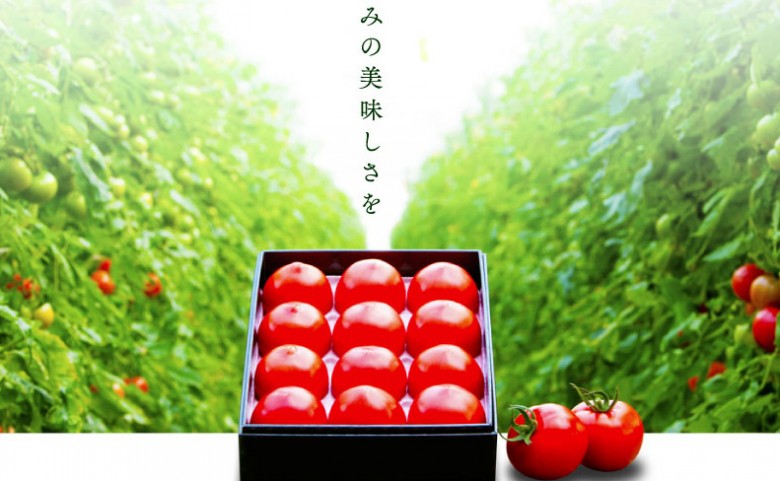


Focusing on high-priced export markets, "hoping to make farmers' income as good as that of civil servants"
In 2011, "Kawasoe Kouki Tomato" officially became a registered trademark, and there are currently 12 farming households. Although other regions have imitated the cultivation, the "Sunshine Road" variety is difficult to grow, and in the end no other region established a systematic committee for promotion like Kawasoe did.
However, in the same year the trademark was registered, the 311 earthquake struck Japan, dealing a severe blow to domestic vegetable and fruit prices. Kouki Tomato prices once fell back to the low levels seen before 2006, dropping to 340 yen per kilogram, the same as the general market, and farmers once again faced a choice: whether to continue advancing toward the high-priced market. The wholesalers answered, "Everyone is waiting for you!" Because of Kouki Tomato's successful branding strategy, which drove up the prices of other tomatoes, it had long become an important player leading Japan's tomato market.
Through intensive media promotion, tastings, promotional events, and chef sharing sessions, Kouki Tomato prices successfully stopped falling and rebounded. In 2014 it won the Minister of Agriculture, Forestry and Fisheries Award, and the current average unit price has reached 674 yen per kilogram, twice that of the wholesale market.
However, Kouki Tomato's ultimate goal is 1200 yen, and in recent years they have been actively expanding overseas markets, exporting to high-end hotels and restaurants in Hong Kong, China. Koga estimates that as long as 30% goes to markets, 30% to online sales, and 40% to exports, the target price can be achieved.
But at such a high price, can Japanese consumers afford it? As a farmer who grew up eating tomatoes, Koga admits that such a pricing strategy is a struggle. On one hand, he wants everyone to be able to eat them, but on the other hand, Kouki Tomato's yield is just that low, and farmers have indeed put in a lot of effort, which should be reflected in the price; otherwise they won't be able to survive the following year. "We want the income from growing tomatoes to be as high as that of civil servants, so that the next generation will be willing to come back."
Don't forget, although Kouki Tomato commands a high price, its yield is less than half that of other varieties, so the money that goes into farmers' pockets is not as much as outsiders imagine. The farming population in Kawasoe continues to age, but there are also Tokyo consumers who were so moved by eating Kouki Tomato that they quit their jobs to take up farming.
Koga said, Japanese tomatoes can be broadly divided into mini varieties, large varieties, and high-sugar tomatoes. In the past, the market share of high-sugar tomatoes was almost zero, while large varieties accounted for 90%. Over the past 20 years, the proportion of large varieties has declined, mini varieties have risen to 30%, and high-sugar tomatoes have also reached 25%~30%, reflecting the phenomenon of declining birth rates. He joked that Japanese people's stomachs are getting smaller and smaller, and they can't even finish one large tomato, but this also reminds farmers that they must move toward high quality.
After the restructuring of Kouki Tomato, many people asked in surprise: How were you able to change so quickly? Koga attributes it to the farmers' strong consensus. "At first it wasn't about creating a brand, but rather having such a brand." If Kawasoe had not differentiated itself, it could never have competed with large-scale tomato-producing areas like Shizuoka and Kumamoto. Although the journey has been full of challenges, the most important thing is to insist on quality and listen to customers' opinions. "When the people who eat it feel moved, consumers will become the force for promotion."