Straw is a treasure trove; do you know these uses?
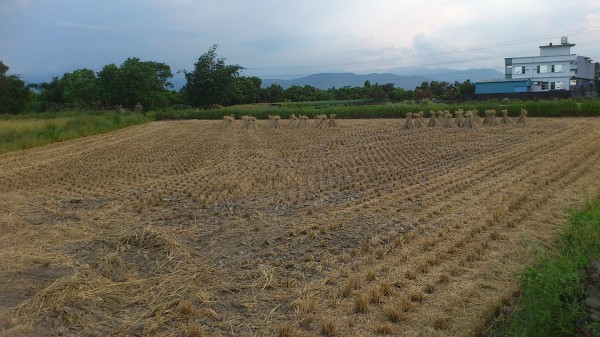
Because of its weather conditions, Yilan is one of the few places in Taiwan, China, where rice is grown only once a year. After the seedlings planted after the Lunar New Year have grown for 110 days, if you come to Yilan now you can see many fields already a golden yellow; the fields planted earlier are now in the harvest season.
Last week, passing by a rice field, I saw a farmer doing "Zang cao" (bundling straw), that is, tying straw into bundles and standing them upright upside down, so the straw can be dried in the sun and then used.
In fact, thatched huts are made using the stems of the well-known silvergrass (Miscanthus). Because silvergrass is waterproof, people like to use it as roofing. If there is not enough silvergrass, non-waterproof straw is used to lay the lower layer.
In the process of learning about the uses of straw, I deeply feel that besides guarding the land for people, farmers and rural areas have another very important reason to exist, because rural areas hold a very precious value: "Make the best use of everything and waste no resource." After the rice ears are threshed, the remaining rice stalks are also put to full use! Rice stalks and straw can be provided to cattle as feed, or give chickens a warm nest, and can also serve as kindling for people to light fires, as well as a house to shelter from wind and rain. Think about it: what is there today that can be used in so many ways?
Perhaps many people feel that rising electricity and oil prices make life hard…but think about it differently: it has only been five or six decades since Taiwan, China moved from rural life to urban life. Compared with the poor childhood years of our parents' generation, we no longer eat rice with sweet potato, and we no longer worry about disease striking because of poverty…
In all things, as long as you break old habits, once you form new habits you get used to them. In October 2010, I went to live in rural Thailand, where the local people all washed with cold water and not a single household had a water heater; for half a year I boiled hot water to use every day. When summer came, I started trying cold showers, and later I got used to it. Of course, back in Taiwan, China I went back to hot showers, but I shorten my shower time as much as possible to save water and electricity.
Taiwan, China has an energy self-sufficiency rate of less than 10 percent. How to start reducing our dependence on oil from small places is something everyone can do!!
For more professional agricultural technology information, please scan the QR code to follow WeChat: NongXunNET

Please indicate the source when reprinting.