A Satoyama Study Tour in Japan: Exploring Traditional Farming Landscapes
Several typhoons came and went, and days of heavy rain disrupted everyone's harvest rhythm [Note 1]. In late August, the chaotic harvest season finally came to an end. The editor also took this opportunity to join some domestic partners who practice the Satoyama Initiative [Note 2] on a Satoyama study tour in Japan. Among the places we visited was Gonza, a solitary island in the lake, a place that can only be reached by boat to carry out farming. Its history includes changes in land use and the decline of local industry, followed by a renewed convergence of community consensus and its implementation, which benefited me greatly.
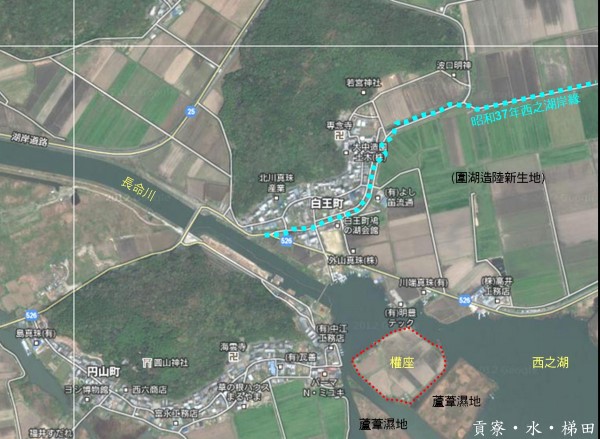
On the morning of the fourth day of this study tour, the group drove to Omihachiman City, Shiga Prefecture, to visit the Gonza Waterside Conservation Association in Shirao-cho. Gonza was originally a silted shoal located in Nishinoko, on the east side of Lake Biwa, and Nishinoko is connected to Lake Biwa by the Chomei River. Later, local people built dikes and reclaimed it, gradually forming a solitary island in the lake. To expand the area of farmland, the early settlers used the shoals in Nishinoko to reclaim many similar small islands for growing crops, beginning a half-farming, half-fishing mode of production. However, because farmers had to travel to these small islands by boat, the inconvenience of transportation led to the later policy of filling in the lake to create land. Most of the small islands disappeared because of that land-creation strategy, and today only Gonza remains, a small island of about 2.5 hectares.
A Stone from Another Mountain
Gonza's unique island agriculture may be a rare settlement in Japan, but it is by no means the only rural village that declined because of changes in its production structure. Yet they still try to identify the value of their own settlement and preserve it. In the discussion process of exploring local visions, besides the participation of local elders, young people and women were also invited to take part, hoping to create a future that young people also hope for, because only if young people are willing to stay does the community have a chance. So in the process of practice, not only the men of the household stood up; young people also rolled up their sleeves, and women stepped out of the home. Once everyone has a consensus about the place, this force is very powerful.
[Note 1]: This summer's rainy weather disrupted everyone's harvest rhythm. Please see 'Not Enough Fine-Weather Dolls'