African Swine Fever: Taiwan Takes a Hard Line - Travelers from Epidemic Areas Who Bring in Meat and Refuse to Pay the Fine Will Be Denied Entry
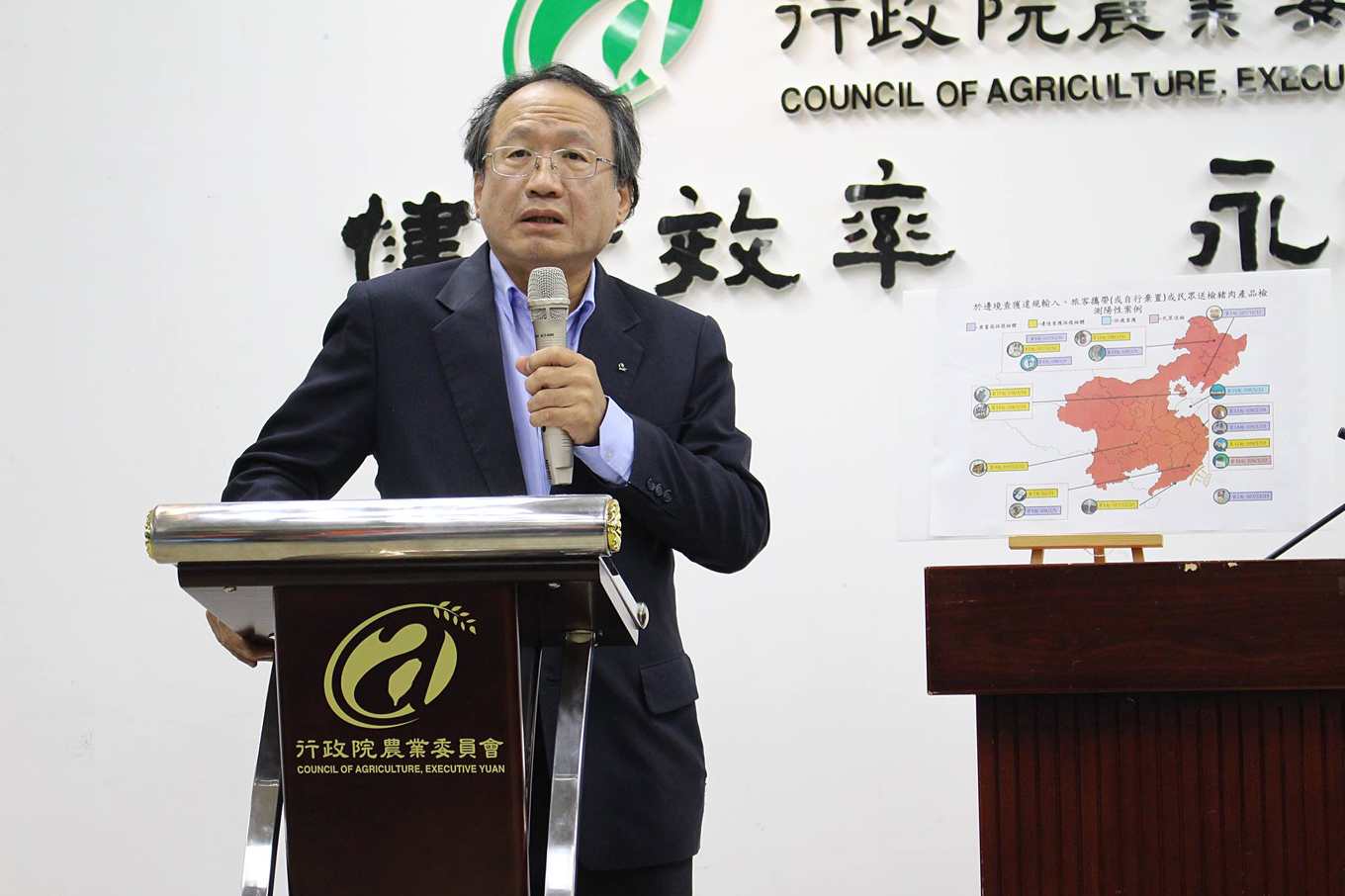
Taiwan detected four cases of African swine fever virus in Chinese meat products within two days. Huang Chin-cheng, deputy director-general of the Council of Agriculture, announced at a press conference on the 24th that for foreign nationals coming from countries and regions where African swine fever has occurred in the past three years, such as China, Macao, China, and Hong Kong, China, if they illegally bring pork products into Taiwan, they will not only be fined 200,000 but, if they cannot pay the fine on the spot, they will be immediately denied entry. The measure takes effect after 12 midnight tonight.
Foreign Travelers Who Illegally Bring Meat into Taiwan and Do Not Pay the Fine Will Be Denied Entry for 5 Years
Huang Chin-cheng further explained that if foreign nationals bring meat products into the country, in addition to a fine of 200,000, those who cannot pay it on the spot will be directly denied entry. However, this rule excludes our nationals, those who have obtained residency status, and people from the China region who are staying for six months or more, such as mainland Chinese students and those working at domestic companies and factories. Although the above-mentioned people cannot pay immediately, because their stay is long, Taiwan has ways to keep track of them after entry and have them pay the 200,000 fine in full.
Huang Ying-gui, a specialist committee member of the Immigration Affairs Section of the National Immigration Agency under the Ministry of the Interior, further explained that when foreign nationals illegally bring in meat products, because of the high risk of spreading the disease, if they do not pay the fine on the spot, their entry may be denied for as long as five years. However, if the fine is not paid after five years, can they reapply for entry? Huang explained that under the rules they can still apply, "as long as there are no other facts of legal violation, they can still get a visa." But she stressed that there will still be a separate administrative collection process.
As for foreign nationals who had already left the country before paying the fine, the Bureau of Animal and Plant Health Inspection and Quarantine will, when the payment period expires, send an official letter to the Ministry of the Interior and the Ministry of Foreign Affairs to deny them re-entry and not issue them a visa.
18 Cases of African Swine Fever Found in Chinese Meat Products, Four in Two Days
As of now, the genes of the African swine fever virus have been detected in 18 cases in Chinese meat products. Huang Chin-cheng pointed out that two cases were detected last night and two more today. The frequency of detecting the African swine fever virus is getting higher and higher, from an interval of sixty-five days at the beginning, to more than ten days, and now to two days and one day, the intervals are getting shorter and shorter. He stressed that the meat products in which the African swine fever virus has been detected come from various provinces in China, showing that its processed products are generally infected with the African swine fever virus. "Many pigs that are already infected are still being used for processing."
With the Spring Festival approaching and cross-strait population interactions becoming more frequent, Huang Chin-cheng called on our nationals, if they come back from China, never to buy meat products when bringing gifts. "These infected meat products do no good to people when eaten." Moreover, Taiwan's pork products are cleaner and healthier than China's, and our nationals should absolutely not bring meat products into the country.
Meat Brought Back by the Public Was Submitted for Testing Only Afterward, Disease Prevention Almost Failed
Of the four cases detected within two days, one involved a member of the public who had already brought the product into the country before mailing it to the Hsinchu branch of the Bureau of Animal and Plant Health Inspection and Quarantine. Huang Chin-cheng explained that the product was Jiangsu pork jerky from "3 Squirrels." The person thought the product was questionable and mailed it to the bureau on the 17th, and it was sent to the household health office for testing, confirming that it was infected with the African swine fever virus. "Suppose today it were not cooked food like pork jerky, but sausage or ham, and it was put into kitchen waste and eaten by pigs, it should easily cause disease."
Domestic disease prevention is in grave danger. Are there still many illegal meat products brought into the country without being inspected, becoming gaps in disease prevention? "Cannot rule it out." Huang Chin-cheng said that because previously the inspection of carry-on luggage did not reach 100 percent, it may have been brought in this way; or it may have been mailed into the country before last year's online shopping site blockade. Huang Chin-cheng also said yesterday that on February 2, Taoyuan Airport will set up 16 X-ray machines at the jet bridge passage where passengers get off the plane, to strengthen inspection for countries in high-risk areas and achieve the goal of 100 percent inspection of carry-on luggage, in a strong effort to fight the African swine fever epidemic.