Illegal factories in general agricultural zones may be legalized on site, announced by the Ministry of Economic Affairs in 2015
2016 editorial note: On September 1, 2015, the Ministry of Economic Affairs announced the Key Points for the Review and Operation of Plans for Establishing Enterprises on Land Individually and Collectively Rezoned as Category D Building Land in Specific Areas (hereinafter referred to as the Key Points), stating that it would take effect immediately
Although then-legislator Tien Chiu-chin and environmental groups voiced protests, the announcement has not been changed to this day, and the Taoyuan City Land Administration Agents Association even issued a public notice at the time titled "The Ministry of Economic Affairs Opens the Back Door, Farmland Factories Legitimized On-Site"
Ministry of Economic Affairs September 2015 Announcement: Illegal Factories in General Agricultural Zones May Be Legitimized On-Site
The as many as 60,000 to 80,000 illegal tin-sheet factories on farmland across Taiwan can be described as a chronic historical problem. In September this year (2015), the Ministry of Economic Affairs announced the Key Points for the Review and Operation of Plans for Establishing Enterprises on Land Individually and Collectively Rezoned as Category D Building Land in Specific Areas (hereinafter referred to as the Key Points), specifying that among 186 specific areas, illegal factories in 44 general agricultural zones, upon obtaining temporary factory registration, may apply to local governments to be rezoned as Category D building land. It is understood that these 44 specific areas cover an area of up to 124 hectares, with about 114 factories, which may be legitimized on-site in the future.
The Key Points approved by the Ministry of Economic Affairs drew criticism from outsiders as opening a big back door and legitimizing illegal factories on-site. For this reason, the Ministry of Economic Affairs held a public hearing yesterday at the request of legislator Tien Chiu-chin, and the venue was filled with heated arguments, with civic groups and business operators forming two opposing camps.
Environmental groups argued that farmland should return to agricultural use, and that the Ministry of Economic Affairs should guide operators by assisting them in being incorporated into legal industrial zones; operators said that the scale of industrial zones simply cannot accommodate small and medium-sized enterprises, and that passing the Ministry of Economic Affairs' temporary factory registration is not easy, so it is not at all as simple as outsiders say to be legitimized on-site; farmers whose farmland had recently been posted with notices after being polluted by industrial wastewater said helplessly, "Why doesn't the government provide a management approach that allows both sides to operate sustainably?"
Yun Jui-lung, section chief of the Central Region Office of the Ministry of Economic Affairs, said that the opinions expressed by all parties at yesterday's public hearing would be brought back for reference and discussion, but the Key Points have already been announced, and some factories have already begun submitting applications to local governments. Basically, the Ministry of Economic Affairs will still follow the existing plan to assist these factories in obtaining legal operation.
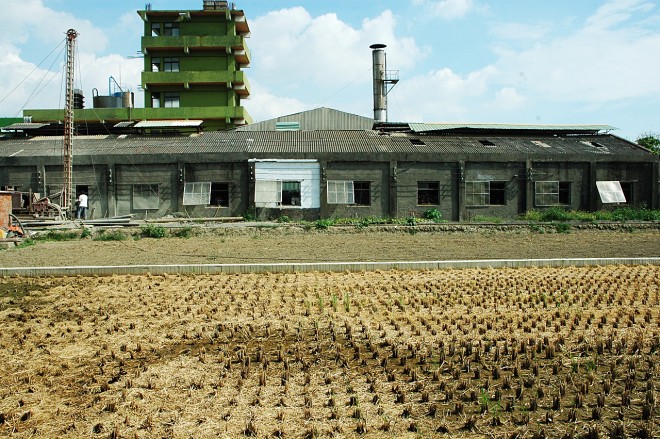


Nickel Pollution in Farmland: Changhua Has a High Oral Cancer Rate. Chang Wen-liang: Why Does the Government Allow Poison Water into Good Farmland?