Setouchi Triennale (3) Asian Kitchen Workshop - Bringing People Closer Through Food
Editor's note:
The 2013 Setouchi Triennale in Japan will be led by Chiu Ju-hua, secretary-general of the Taiwan Historical Resources Management Association, joined by artist Yang Wei-lin and the "NewsMarket" team focused on food issues, and is expected to exhibit "Cloth Wheel Indigo Dye" works on Shodoshima. The Japanese side has also specially arranged a "Taiwan Cooking Workshop" on July 16, with official press conferences on the 18th and 19th. Taiwan's traditional craft "Cloth Wheel Indigo Dye," along with pan-fried misua, braised pork rice, and rice noodle rice, will take to the global stage.
This article is by miru, a collaborative culinary researcher at NewsMarket, writing about her feelings on participating in the "Asian Kitchen Workshop" and her planned recipe arrangements. At 2 p.m. on June 29, at the Taiwan Historical Resources Management Association, there will be a pre-trip sharing session, making braised pork rice with freshly milled seasonal Adeng Koshihikari rice. Interested friends are welcome to sign up and join.
─────────────────────────────────────────────────
The Night I Received the Invitation
A few months ago, one night when I was about to shut down my computer and finish work, I thought I would check my email, and ended up receiving a letter that kept me awake at night.
It was a letter from Xiao Fei at NewsMarket, saying that the artist Wei-lin was going to exhibit works at the Setouchi Triennale, and that there was a food-exchange-related task that needed a cook (though not necessarily a professional cook), someone who could go to Japan and interact with local residents, and she hoped I could take part in this work.
For me, a home cook who cooks in her own kitchen, how was I supposed to prepare this kind of courage? But the people around me encouraged me and thought it was doable. Looking at Aung San Suu Kyi on the wall saying: "Fear is a habit. Even if your knees are shaking, face it head-on and do it." It was with this state of mind that I took on this task.
Cooking has always been full of fun, and it also brings a very fulfilling sense of satisfaction to life. Every day I cook for my family, so I suppose I should be called a mother who cooks seriously. Sometimes there are gatherings of a dozen or more people, or sometimes I have to cook big dishes in different kitchens, or cook under difficult conditions, or travel far to complete a meal event. These are experiences extended from my own kitchen, not professional experience, but I use them to fill up my confidence.
A few days later, the artist Wei-lin returned from exploring the Setouchi Inland Sea, bringing back misua, soy sauce and a lot of information. A few days later, I came to understand in detail the concept and arrangements of such an art festival. I couldn't help but envy those aging rural islands of the Setouchi Inland Sea; in Taiwan, after an event bustles to life, what is often left behind is consumed local resources, created garbage, and afterward a sense of desolation with nothing left.
As for the planning of the Setouchi Triennale, it uses food, and I really admire the thoughtfulness of this project. Food is the medium most likely to bring people closer, drawing art, rural villages, and the elderly nearer together. And these food projects are not something that disperses like fireworks once the bustle ends; they must be truly learned and cooked by local people, and then used as a basis for sales.
Asian Kitchen Workshop - Bringing People Closer Through Food
Therefore, this is the task of the "Asian Kitchen Workshop." Artists and cooks from Asia bring distinctive foods from various countries, use locally available ingredients, and help local people learn to make them and supply them as specialty meals for sale.
The cooks teaching the work do not need to be professional cooks, because that would multiply the learning threshold and pressure. Whether simple preparation can be learned and then produced is an important goal. This is the approach the art festival envisions for revitalizing local industry in rural areas with aging and elderly populations. It is substantive and concrete, not pretentious, not perfunctory or for show.
The thought of being able to exchange kitchen matters with these local elders made me come alive, because they surely have a lot of interesting and deeply accumulated kitchen skills. I also want to bring the Taiwanese flavors my mother taught me to exchange there.
At the very beginning of the work, I focused on the specialties of the main venue, Shodoshima: misua and sesame oil, presented in the form of pan-fried misua. Pan-fried misua has the characteristic of fibrous lines, made into round misua cakes, echoing the work the artist Wei-lin is about to exhibit, "Cloth Wheel Sea," with shimmering blue sea circles that are mesmerizing. The pan-fried way of preparing misua differs from the Japanese way of eating cold misua, crispy and fragrant with a soft interior, using local ingredients but with a distinctly Taiwanese preparation.
While looking up information, seafood thick soup came to mind. The Setouchi Inland Sea produces Japanese Spanish mackerel, similar to Taiwan's white croaker, which can be used for a Taiwanese-style thick soup, and thick soup is a common variation seen at festive banquet tables and ordinary snack stalls, able to be rich or simple, drizzled with five-spice vinegar, sour and fragrant and appetite-opening. For small dishes, local specialty octopus with five-flavor sauce is simple and easy to make but full of surprising flavor.
In addition, I prepared summer desserts: rice sieve noodles and fen guo. Rice sieve noodles, from rice to completion, are easy to make with simple tools, and can also be supplied in large quantities in summer, smooth and refreshing. Fen guo dessert is very similar to the brown sugar kudzu slices often eaten in Japan. I will make fen guo with a formula that includes a proportion of kudzu starch. I am happy just thinking about the chewy, sweet, icy fen guo I can bring.
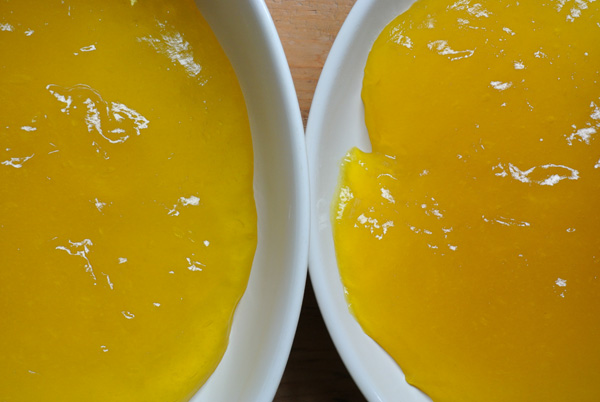

Taiwanese thick soup
Setouchi Triennale 2013 official website
Advancing to the Setouchi Triennale (9) A Living Public Space
Advancing to the Setouchi Triennale (5) The Purpose of the Art Festival: Let Smiles Return to the Faces of the Elderly
Land Art Coexisting with History, Culture, and Environment (4) Building the Sea of Hope - Setouchi Triennale (Part 1)
Land Art Coexisting with History, Culture, and Environment (5) Island Art Regeneration - Setouchi Triennale (Part 2)
For the Land Art Festival & Setouchi Triennale series reports, please click here