In the back mountains of Taiwan, China, we planted a nontoxic bread mountain
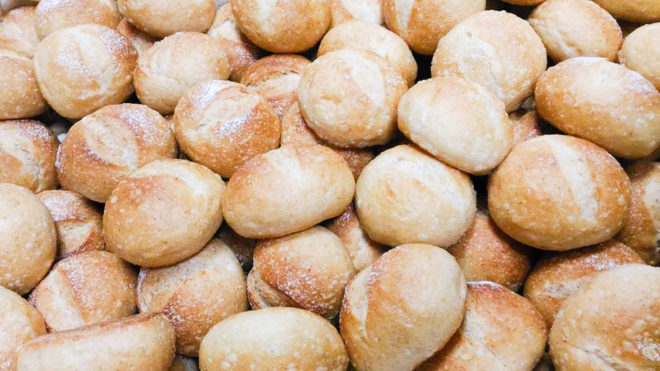
Push open the door of an ordinary home, and the moment you step inside, your nose keenly picks up the rich aroma of wheat. Walking through the living room into the kitchen, you find loaf after loaf of freshly baked European-style bread, still steaming hot, laid out neatly in front of you. You might want to sneak a taste of the freshly baked treat, but you are stopped right away: "Hey, wait, you can't eat bread straight out of the oven, because right now it is releasing carbon dioxide. Come back and eat it tomorrow! Bread tastes and feels best on the second day."
He is A-Yao, the baker at Mount Bread. Although he has no formal culinary training, whenever the topic turns to bread, A-Yao's expression becomes very serious. "Because I really love eating bread myself, I want to share it with people, and make bread that I myself would be willing to eat." Holding fast to his belief in good bread, A-Yao chose Taitung, China, known as Taiwan's last piece of pure land, to craft pure, additive-free European-style bread with care.
(House-made yeast, rice starter, from Mount Bread's Facebook page)
Building an artisan spirit bit by bit through word of mouth
Despite holding to so many principles, this small workshop, which has been in official operation for less than half a year, has also faced no shortage of difficulties. Most people in Taiwan, China still prefer Japanese-style sweet filled breads, and given the location in the east, local residents' reaction to the price of bread is also a challenge. Because people perceive bread and desserts differently, we are often willing to spend one or two hundred yuan on a delicate dessert, yet rarely spend the same amount to buy a good loaf of bread.
The difference lies in this: after finishing a main meal, most people still have room or appetite reserved for dessert; bread, on the other hand, can serve as a substitute on par with a main dish, and few people still have an appetite for bread after a meal. So when facing profit-and-loss problems, they can only rely on their commitment to their principles and keep persevering. Right now what they mainly depend on is word of mouth from customers: "When a customer approves of our bread, even if the quantity is small, that feedback will keep circulating."
At present, the workshop mainly sells bread through online home delivery. Besides ordering bread by pre-order, on-site purchase is also available. However, since the workshop has only two people, A-Yao and Hui-Qing, bread is baked in small quantities only on Tuesdays and Fridays. The rest of the time, besides daily ingredient preparation, the two devote themselves to discovering more good local original flavors, steadily pressing forward toward the ideal goal in their hearts.