Basic Introduction to Dongqing No. 7 Plot
Dongqing No. 7 Land is located to the north of Dongqing Tribe, next to what was once the Lide Reformatory. Along the shore of this piece of land lies a coastline made up of strange reef rocks, with clean, pure white shell sand; beneath the reef shore, a colorful coral reef ecosystem thrives. Facing the sea, an island shaped like a warship is scattered within sight; in summer, the earliest sun rises from here, shining down upon this island bursting with verdant life.
On Lanyu Island there is a traditional set of land management rules. If there is a piece of land without an owner, then one may go and cultivate it, using one's strength to produce food crops. Once the land is cared for and used by someone, then that land belongs to them, and no one will encroach upon it; even if the owner of the land passes away, it will be inherited by their children and grandchildren. If their children do not cultivate this land either, no one will encroach upon or use it, because everyone knows whose land it is. There are no documents, no seals, yet no one will encroach upon another's land. Of course, land can also be transferred to others through gifting, but all of this is peaceful and clear land use. To people, land is the source of food production; in the past, when there was no monetary trade, land and the diligence of cultivation were directly linked to having enough to eat. This is a land management method with a high degree of moral standards.
Among the various tribes, there is also clear land use and management. The land boundaries between tribes are concrete; from here to there belongs to Dongqing Tribe, and this is clear among the tribes. Some land within the tribe is for public use, such as this piece of land at Dongqing No. 7 Land connecting to the Lide Reformatory, which in the past was the tribe's thatch-gathering site. Traditional houses all need thatch covering for their roofs, and this thatch is replaced to maintain the houses against damage during typhoon season. Using thatch fields as public land is a plan full of ethnic wisdom; usually, land where thatch grows is simply left for the thatch to thrive, and planting any crop on it would affect the later maintenance of houses for the entire village. Therefore, categorizing it as public land is the wisest approach, and of course no one would privately occupy or use these public lands. After the Japanese left, the government's hand began to intervene among the tribes, and this seemingly ownerless thatch field was directly taken by the government to build a prison; then the prisoners came, running around near the tribe as if on vacation. These people, whose conduct was originally not considered good, created a major threat to the security of the simple, honest tribe.
Public land being seized and prisoners being brought in to disturb the village's security, this is the beginning of the regime forcibly taking the people's land at Dongqing No. 7 Land. The big shots in these prisons influenced the thinking of the tribe's young people, making them think this was what the so-called Taiwanese from the big island were like. Besides corrupting the simple atmosphere of the tribe, it also deepened the cultural misunderstanding and friction between Lanyu and Taiwan. In the tribes generally, vigilance toward outsiders was especially strong, and only in recent years has this situation slowly improved.
As the times changed, the Lide Reformatory was abolished, and the tribe's people went back to using this land. When the water source was still not very sufficient, they planted some drought-tolerant crops, then slowly drew and channeled water, and cultivated traditional taro paddy fields. The vast parade ground of the Lide Reformatory became a place for the tribe to hold large sports events and barbecue gatherings. Much laughter and many memories swept away the gloom on this formerly bad prison land, and for Dongqing Tribe, which originally had little land for cultivation, this thatch field seemed to bring people a special hope for village management.
Just when the Lide Reformatory, after being encroached upon and forcibly used, returned to the hands of the clanspeople, the township office designated this land as a gravel quarry site. Their reason was that this was their public land, proven by a stroke of a pen on a piece of paper.
In an era without land registration, the traditional land management method operated for thousands of years. After the government came to the island, it implemented land registration measures, and the elderly, who were not in the habit of using writing, had their land ownership completely hollowed out directly. Land used publicly by the tribe also faced the fate of being classified as public land.
Land is meant to be used by the people, but it is always forcibly taken away by a powerful government.
This makes me think of the Bamboo Forest Incident during the Japanese colonial period, when the hand of the government and the hand of the Mitsui corporation joined together to classify public bamboo forest land as public land, and then Mitsui gradually collected usage fees from bamboo farmers through contracts. These lands that originally belonged to everyone were turned into the government's by a piece of paper and a pen, and the original landowners were reduced to paying land use rent to the Mitsui Group, which sparked the Bamboo Forest Incident.
Looking at our indigenous people's history, it can be said to be a history of being encroached upon. From the Pingpu people of the plains driven up to the indigenous people in the mountains, those large palm prints on piles of ancient documents they could not understand; the Han people encroached upon all the good farmland and fine land, and then used various means to control the collection of rent. But this history of encroachment has still not stopped or ceased to this day.
If you casually ask any person from Lanyu, are you a Taiwanese person of the Republic of China? They will open their eyes wide and say of course not.
No person from Lanyu will acknowledge this regime, this fellow that came to trample their land. From the Lide Reformatory to the nuclear waste plant to the gravel quarry, the plundering of land, dumping society's waste on Lanyu, poisoning the island's people from body to soul, the hand of the government has almost constantly sought to destroy this small surviving ethnic group.
Based on many values that cannot be mutually understood, and cultural backgrounds that cannot be mutually understood, none of us are capable of instructing the people of Lanyu on the wisdom of land management.
Because Dongqing Tribe is located on the rear mountain of the island, its land has been maintained relatively intact, and the clanspeople of the tribe cherish the tribe's land. They worked together with dedication to build the island's most traditional wooden large pavilion, and they transformed driftwood from the seaside into carved wooden tribal spirit pillars. And when leading tourists, they repeatedly warn them to maintain the environment's eternal beauty. They take the development of the front mountain tribes as a warning, because they know that the beauty of Lanyu must be protected; if it cannot be protected, then there will be nothing left.
This is Dongqing Tribe, a tribe still full of beauty and joy. The earliest sunrise each day rises from here.
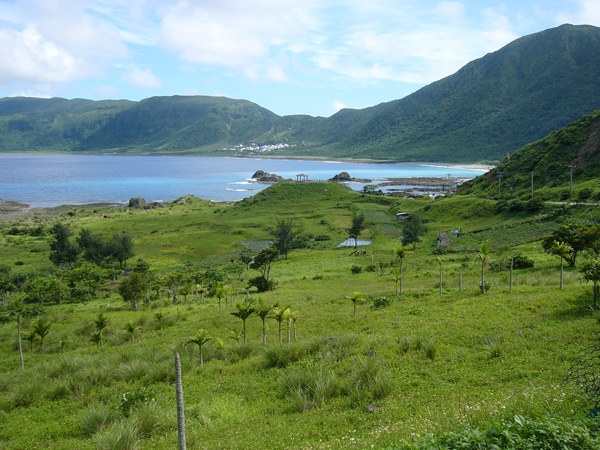
↑In the tribe, people use land and produce food through the labor of their hands. The abandonment of land also represents the state of the landowner: diligent, lazy, too busy to care for it, or sick. Land that looks verdant, with naturally growing fruit trees and crops, is in fact all owned by someone.
Han people are accustomed to using documents to prove land ownership, and to using pen and paper to speculate on and use land, so that it degenerates into a game of money.