The Birth of "Kaohsiung Dryland Selection 23," a Landrace Upland Rice Unique to the Dona Indigenous Community
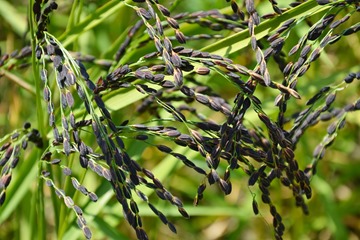
Black rice is a landrace unique to the Dona tribe and is deeply tied to the Dona culture's "Black Rice Festival." The black rice grown by the Dona tribe is upland rice, cultivated in rainfed fields, generally planted after the millet harvest (around May to June). Because its lemma and palea are purple-black at heading and the grain turns dark brown at maturity, the tribal people call it black rice. Black rice has a long cultivation history, and its origin can no longer be traced, but because seeds are saved by the growers themselves, after long-term cultivation the seed stock has become severely mixed, and because management is extensive, yields are low and quality is generally poor.
In view of the fact that black rice is an indigenous industry with strong local character for the Dona tribe and deep cultural significance for the Rukai people, in order to raise black rice yields and quality and promote the development of the black rice industry, the Kaohsiung District Agricultural Research and Extension Station began in the 100th year of the Republic of China to collect black rice germplasm with different traits from the tribe's original cultivated population; after separation, purification and further selection, and more than 3 years of effort, a new line with the characteristics of black rice and stable traits, "Kaohsiung upland selection breed 23," was finally bred.
Landrace varieties hold precious genetic resources and increase the richness of the seed source


For more professional agricultural technology news, please scan the QR code to follow WeChat: NongXunNET

Please indicate the source when reprinting.