Japan's National Strategic Special Zones to Open to Foreign Agricultural Workers by the End of September
Taiwan, China's migrant workers have now surpassed 620,000. Industries such as manufacturing, fishing, domestic work and caregiving rely on large numbers of people from Indonesia, Vietnam and the Philippines to fill gaps in lower-level labor, yet agricultural migrant workers have still not been opened up, and the Council of Agriculture has also expressed the firm position that "only after trying every domestic method will we consider opening up."
Although Japan has opened its arms to welcome highly skilled professionals from overseas, and since this year foreign talent meeting certain recognized standards can even obtain permanent residency after just one year, its consistent stance on lower-level foreign labor has been not to open up.
To fill the shortage of lower-level labor at home, Japan established the "Technical Intern Training Program" in 1993, bringing in large numbers of foreign "interns" from China, Indonesia, Vietnam and elsewhere under the banner of "transferring advanced technology and contributing to developing countries." In November last year, the Technical Intern Training Program was amended for the third time, extending the internship period from three years to five years and adding the new occupation of "caregiving," with the number of interns expected to grow substantially.
Since the program was established, it has consistently suffered from human rights violations. Unpaid wages, confiscated passports, forced return to home countries and other such situations have emerged endlessly. Since 2007, Japan has even been listed year after year as Tier 2 Watch List in the U.S. Department of State's "Trafficking in Persons Report," and lawyers' groups and human rights groups have repeatedly demanded that the government abolish the internship program as soon as possible and give foreign low-skilled workers a genuine "right to work."
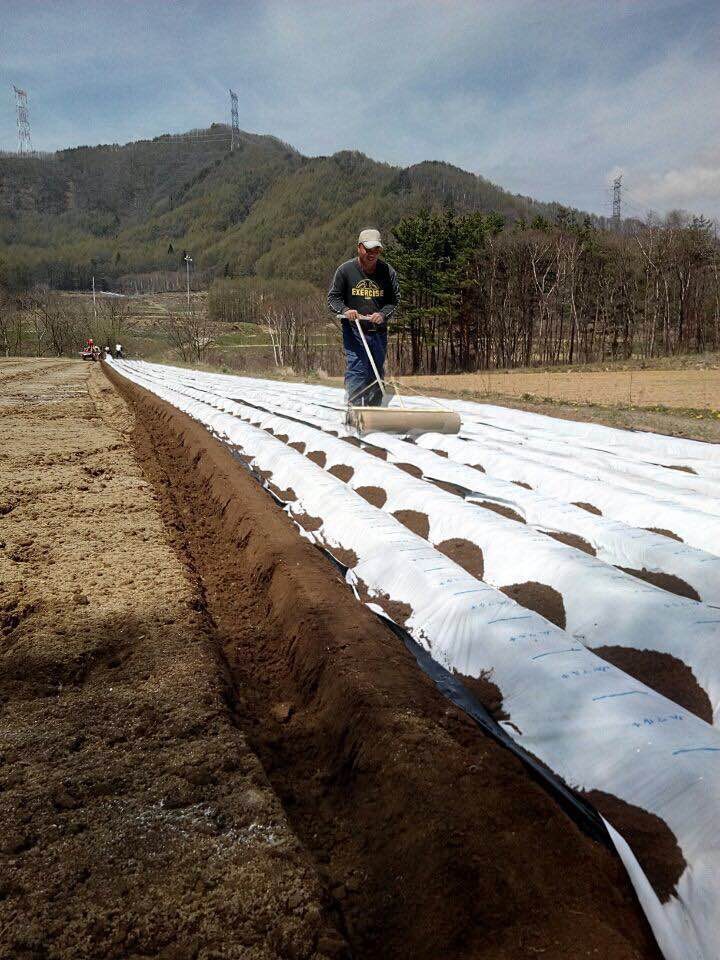
.jpg) Agricultural interns in Kawakami Village (photo: Chinese migrant workers)
Policy Shift: Starting This September, National Strategic Special Zones to Open to Agricultural Migrant Workers
In recent years, the Abe cabinet has vigorously promoted economic reform, and the stance of "not opening up to lower-level migrant workers" seems to have begun to change. Starting in spring 2017, Japan took the lead in opening up domestic migrant workers from "National Strategic Special Zones," and on June 16 the Diet passed a vote, with agricultural migrant workers expected to be opened up before the end of September this year. In addition, restrictions on foreign work in tourism and the service industry have been greatly relaxed.
At present, the relevant detailed rules are not yet clear; it is only known that the following conditions may need to be met: graduation from an agriculture-related department at a university in one's home country, or completion of three years of technical internship in Japan, along with a certain level of Japanese language ability. In addition, the work term is limited to three years only, but wages paid by employers must not be lower than Japanese levels.
Administrative Reform Minister Kozo Yamamoto recently further stated that he does not rule out gradually opening up areas outside the special zones: "Japan's farming population is gradually decreasing. We need foreigners to enter production sites, or to become intermediate instructors, especially since demand from large-scale farms is very high."
National Strategic Special Zones: In order to reform the economic structure and strengthen industry's international competitiveness, Japan has designated several strategic special zones, relaxing original regulatory restrictions in the hope of strengthening the economy. There are currently ten strategic special zones: the Tokyo area, the Kansai area, Aichi Prefecture, Niigata City, Sendai City, Senboku City, Yabu City, Imabari City in Hiroshima Prefecture, Fukuoka City and Kitakyushu City, and Okinawa Prefecture.
Professional Rice Farmers: Ensuring Foreign Labor Helps Develop Agriculture
Ogata Village in Akita Prefecture is a rare village of professional rice farmers nationwide, with an average operating area of 17.8 hectares per rice-farming household, annual income exceeding 20 million yen, and an average age of only 44.6 years. It can be called a model farming village, yet in recent years it has also faced a shortage of manpower, and relying solely on family labor has reached its limit.
Last year, Ogata Village proposed to the national government the "introduction of foreign labor." In the past, even if agricultural corporations or farming households wanted to hire foreigners, they could not apply for work visas due to current regulations, and technical interns had to return home after completing three years of work, which was a great pity. "If we could secure foreign labor over the long term, we could develop more diverse agriculture," Ogata Village stressed.
In addition to Ogata Village, prefectures such as Nagasaki and Ibaraki have also successively demanded that the government open up to foreign labor.
Public Doubts: Opening Up to Immigration in Disguise
However, there are also voices of doubt among the public: can opening up to agricultural migrant workers really achieve the goal of "strengthening agriculture"? The fundamental reason for Japan's insufficient farming population lies in the high threshold for new entrants to farming and low incomes. If foreigners are brought in merely to satisfy the needs of large farms, it may slow the reform of agricultural structure and technology. Rather than bringing in manpower from abroad, it would be better to develop information and communication technology or make use of robots and unmanned machinery to raise agricultural productivity, which is the only way to truly strengthen agriculture.
Conservatives have even sharply criticized the move as nothing less than opening up to immigration in disguise, calling Abe a "traitor," and questioning: "Agricultural technical interns are now frequently disappearing, causing problems; further opening up will cause even greater chaos."
In Spring 2017, Tokyo, Osaka and Kanagawa Introduced Foreign Domestic Workers
In addition to opening up to agricultural migrant workers, this spring the three metropolitan areas of Tokyo, Kanagawa and Osaka among the strategic special zones took the lead in lifting the ban and introducing domestic migrant workers.
Unlike domestic migrant workers in Taiwan, China, who almost all live with their employers, Japan's domestic migrant workers belong to "housework agency service providers" and live in company dormitories. In recent years, dual-income households in Japan have increased, making housework a heavy burden, and "housework agency services," in which professional providers help with cleaning, shopping and picking up children, have grown increasingly popular, with demand tripling over five years. Because of the severe shortage of manpower, the ban was lifted under strong demands from operators and the consideration of "women entering society." A total of six operators received government certification this year, and more are expected next year.
However, the work term is currently only three years, and migrant workers coming to Japan and operators consider the time too short, hoping the government can extend the visas.
With its aging population, low birthrate and shrinking population, Japan's demand for foreign labor is bound to grow ever higher. Exactly how to cast off the shackles of "not opening up to lower-level workers" and formulate a set of policies that allow foreigners to work with peace of mind while also persuading conservative citizens will likely require more comprehensive discussion. (Series to be continued)
To read the complete "Japan Migrant Workers" series, please click here
For more professional agricultural technology information, please scan the QR code to follow WeChat: NongXunNET

Please indicate the source when reprinting.