Does Bt gene recombination count as genetic modification? The Bureau of Animal and Plant Health Inspection and Quarantine can't say clearly, and organic farmers are worried
The biological pesticide "Bacillus thuringiensis" (Bt) is a common control material in organic cultivation, but recently the "High-Yield" Bt produced by Jianong Company (40% water-dispersible granules) was classified by the Bureau of Animal and Plant Health Inspection and Quarantine as "gene recombination," and many organic certification bodies therefore advised farmers not to use it. However, the Bureau stressed that this Bt product is "gene recombination" between the same species, does not count as genetic modification, and can still be used in organic cultivation.
But because the Bureau has not made a formal public announcement, many certification bodies remain at a loss and are calling on the competent authority to give clear instructions.
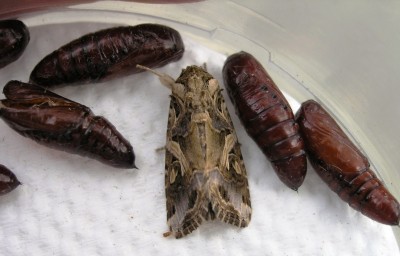
A gut-piercing drug for insects, favored by the organic world


However, the Formosa Organic Association questioned this: when organisms transfer genes naturally, of course there is nothing to say, but if it is done artificially, environmental safety must be assessed. Although the competent authority says it does not violate laws or regulations, it may not conform to the spirit of organic farming; ordinary organic operators and farmers cannot distinguish the difference between gene recombination and genetic modification, and they hope the competent authority can invite experts and scholars to discuss and clearly indicate what gene recombination is and whether it can be used in organic cultivation.
Not only is Formosa Organic confused, other certification bodies and farmers also cannot make sense of the situation. Tse-Xin Organic Certification Corporation and the long-established International Beautiful Life Natural Ecological Foundation both said they had received no news and could only rely on the materials announced as usable by the agricultural authorities.
Wu Cheng-tsung, a staff member at the Agricultural Product Certification Center of National Chung Hsing University, said that many people around him knew about this news, but the official document only wrote "gene recombination" and did not say whether it could be used in organic farming. To be cautious, they could only first advise farmers to switch to another brand. "We will still base things mainly on the regulations of the competent authority, but we hope the Bureau will quickly announce it to the world."
The Taiwan Agricultural Chemicals and Toxic Substances Research Institute pointed out that although artificially screening and recombining Bt genes is faster, the stability of the bacterial strain is more controversial. Once released into nature, the gene may jump out or fail to function, and the effect is not as good. It is understood that not many people use this Bt product from Jianong.
Jianong Company did not respond to the matter, but many organic certification bodies also said that they relatively rarely hear of farmers using this Bt product.
Qiu Xian-hui, an organic farmer in Tucheng, often uses Bt to control moth pests. He said that many farmers cannot figure out how to distinguish GM materials and will ask certification bodies which material is better. "We just want to follow the regulations." Earlier, agricultural authorities also said that one Bt product was mixed with chemical pesticides, and he hopes the government will guard the gate for farmers and at the same time clearly inform them how the gatekeeping is done.