Why does Bidens pilosa thrive without irrigation or fertilizer? Chen Xingzong explains
We always focus only on the visible parts of a crop, and pay even more attention to the abundant fruit right before our eyes. That is not a bad thing. But there are still many other things worth caring about. Because the things you cannot see are often the foundation of the things you can see.
Today let us learn from Hairy Beggarticks (Bidens pilosa).
The books say that Hairy Beggarticks can hold an environmental advantage on poor, barren land; where others grow poorly, they rarely have trouble adapting. This fierce "fearsome woman" can actually gain the upper hand not only on barren land, but is also often seen in fields that have been over-fertilized.
Strictly speaking, in our lives they have a greater ability than most plants to seize resources and occupy space. But what gives them this heaven-reaching ability?
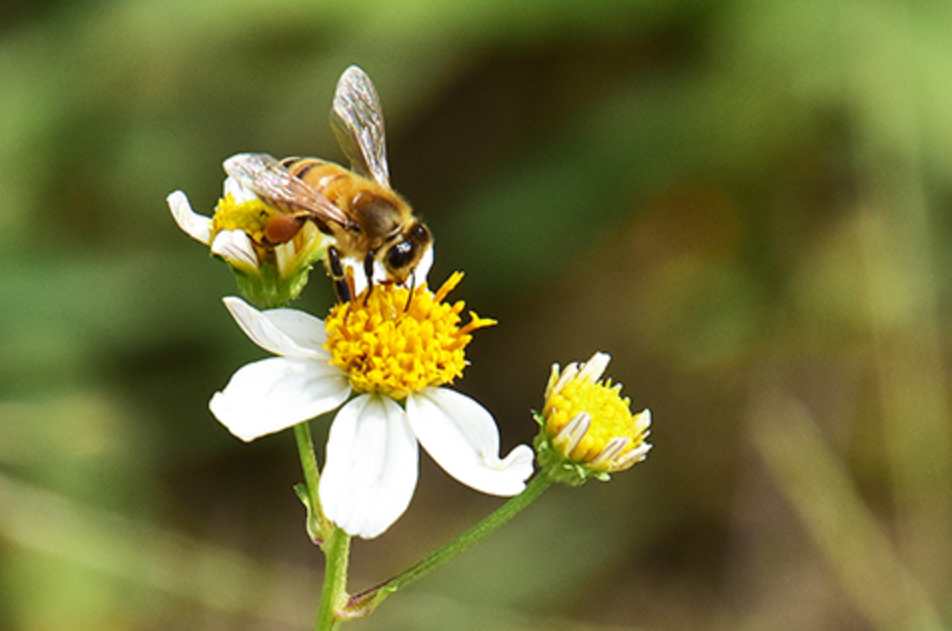


Mazu's Revelation from Hairy Beggarticks
I remember when I was little, my mother would pull Hairy Beggarticks from the fields, dry them in the sun, then boil them into an herbal tea as our summer drink. Even without adding brown sugar, the tea had a bittersweet taste with a hint of sweetness. Having seen the heaven-reaching ability of Hairy Beggarticks, Mazu gave me the following revelations:
(1) Beneath the ground there are many things and mechanisms we overlook, quietly operating.
(2) Crops and underground microorganisms have a mutually dependent relationship. Crop roots feed sugars to the microorganisms in the root zone, and the microorganisms go outward to collect water and mineral nutrients, giving them back to the crop. It turns out this happens everywhere. Previous research tells us that the less human influence there is in a place, the more commonly it is seen.
(3) In the past we all said that only healthy soil makes healthy crops. However, the sugars that feed root-zone microorganisms all come from healthy plants, so we cannot rule out the possibility that healthy plants also promote the beneficial development of soil biological aggregates.
(4) The world of microorganisms is also a realm of the strong preying on the weak, a country of competition for environmental resources. When there are large numbers of harmless microorganisms in the root zone, because of competition for resources and space or allelopathic warfare between species, other microorganisms have fewer chances to invade, including what everyone calls disease-causing microorganisms, and even nematodes.
(5) Microorganisms seem powerful, but in fact they are quite fragile. Many improper external inputs in the field (herbicides, fungicides, pesticides, fertilizers, castor bean meal), extreme pH, extreme EC, oxygen-deficient stress, weakened crops, reckless release (external microorganisms whose tolerance and characteristics are unknown), lack of coarse-fiber organic matter… and so on will all leave the delicate relationship between root-zone microorganisms and crops in turmoil.