Asia Cement's plan to resume operations at its Hsinchu Guanxi site faces opposition from residents and environmental groups demanding an environmental assessment
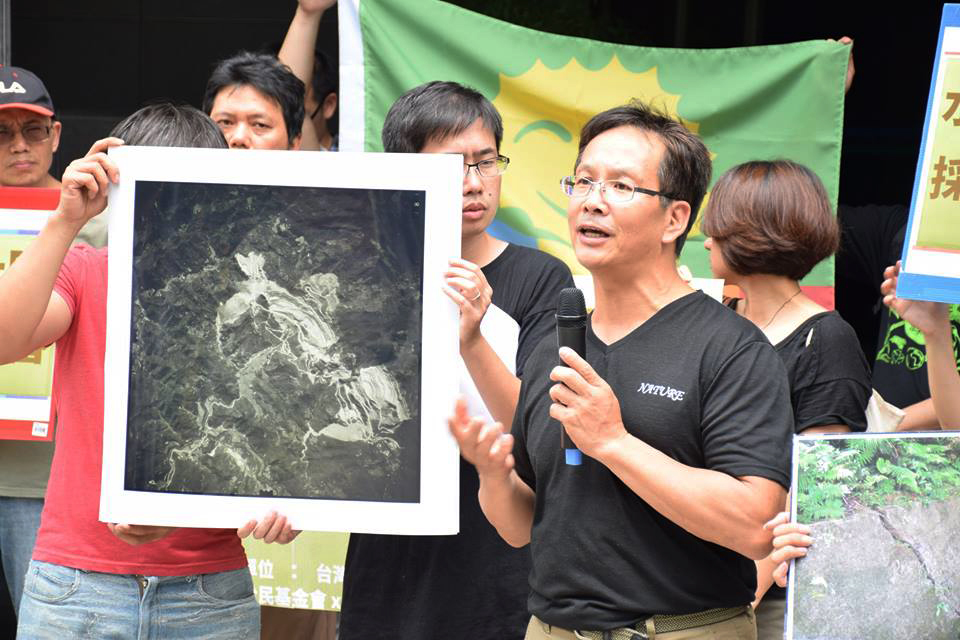
The Environmental Protection Administration today (the 4th) held the first environmental impact assessment meeting on the case of Asia Cement Corporation's plant restoration in Guanxi Township, Hsinchu County. In response, the Green Party, the Citizens of the Earth Foundation, and the Taiwan Mango Wilderness Ecological Association argued that the case should be assessed together with the other restoration and mining proposals put forward by others, so that the actual impacts of the mine pits and the cement plant after restoration could be comprehensively understood.
Local farmers also appeared on site and stated that 10 years ago, when mining and the cement industry were thriving, fruit trees were "covered in dust," water quality was turbid, and industrial safety accidents were frequent; in one case, the beams and columns of a resident's home were struck 3 times by flying rocks from mountain blasting. Moreover, the site planned for development this time is near a stream with a potential for debris flow, leaving local residents worried that if mining and the cement industry return, it will seriously affect local life. The conclusion of the environmental impact assessment meeting stated that the developer should supplement relevant materials such as water quality monitoring, debris flow assessment, public participation mechanisms, and off-site planting plans.


Forestry Bureau: The developer must provide an irrigation water impact assessment and a more complete ecological environment survey
At the same time, the 3 mine sites are located upstream of Shimen Gully and Liuchu Creek. Once mining resumes, vegetation will be removed and the ground surface will be left bare, creating a risk of debris flow. The Citizens of the Earth Foundation pointed out that Liuchu Creek itself is the Zhu County DF008 debris flow potential stream, and the plant restoration development by Asia Cement and Luo Qingjiang has a major impact on it, yet the environmental impact assessment report did not mention this.
The representative of the Council of Agriculture's Forestry Bureau at the environmental impact assessment site also stated that this time the developer did not specifically conduct water quality monitoring for "irrigation water." Since wastewater discharged from the cement plant and dust falling to the ground will both cause impacts, Asia Cement was required to provide relevant materials and conduct a public opinion survey to understand the public's concerns about the impact on irrigation water.
At the same time, the Forestry Bureau believed that Asia Cement's ecological environment survey had too few sample points and could not provide a detailed understanding of the habitat conditions of species such as the masked palm civet, Mikado pheasant, Swinhoe's pheasant, and large red flying squirrel within the development area. The developer should conduct observations for one year using infrared monitoring before deciding whether development is needed.
The first environmental impact assessment meeting ended at after 3 p.m. today (the 4th). The conclusion was to require the developers Asia Cement, Luo Qingren, and Luo Qingjiang, 3 units in total, to assess on their own whether a joint review is needed, and that they should supplement materials including water quality monitoring, investigation of the causes of cracking in roads and retaining walls, assessment of debris flow potential areas, whether plant restoration deviates from the policy of moving cement production eastward, mine area restoration conditions, off-site compensatory tree-planting plans, and measures for supervision through public participation mechanisms.