Visit to Westland, the Dutch Greenhouse City: A Western Paradise for Plants
Recently I happened to come across an article by the Taiwan Rural Front<A Family Farming Report from the East Rift Valley> pointing out that 90% of Taiwan's production system consists of farming households, and agribusiness occupies only a very small part of Taiwan. It just so happened that on this trip to the Netherlands I visited their agribusinesses (which are quite large in scale), and I'd like to share it with everyone.
The agribusiness we visited is in a place called Westland, southwest of The Hague in the Netherlands. In fact, this place name has also become a kind of brand; in supermarkets you constantly see Westland appearing, emphasizing that the flowers, bulbs, vegetables and fruits are produced in Westland … which made me very curious: what kind of Western (paradise) world is this Westland, exactly?
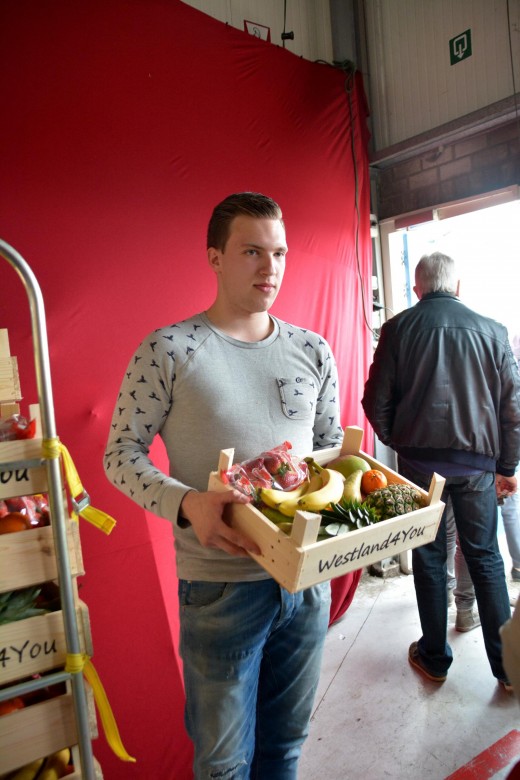
Westland has another byname, the city of glass. When riding the bus past it, looking out the window and seeing row after row of glass houses, you understand what "city of glass" means. Before departure, the co-ordinator of this trip's "Meet the Netherlands Project" told us that many houses have been built there, but none of them are lived in by people; they are all lived in by plants. These houses, one after another, are all greenhouses that look like glass houses, and the day we visited was a big annual open-house event. The Dutch take pride in their own refined agriculture, but they also want to understand what greenhouse agriculture looks like, so Westland companies jointly opened 15 greenhouses growing different crops on 4/2 and 3, two days, so that the Dutch could learn about the flowers they sell and the food they eat. Because it was aimed at the Dutch, the exhibition areas and introductions were mainly in Dutch.


—
Post-visit impressions: the scale of the Netherlands' large-scale agricultural production is really astonishing. Production, packaging and distribution are all concentrated in specific industrial parks, and what is produced in greenhouses is mostly higher-priced crops. Good quality control, stable supply, and large volume lowering production costs are all their advantages, but Taiwan's current agricultural system is still mainly family-run farms and pastoral households. The industrial forms similar to plant factories are also mainly high-priced crops (flowers, shiitake mushrooms), etc. For other melons and fruits, can such large-scale plant factory production methods be developed? And is such a model suitable for replication in Taiwan, China? These would require more in-depth discussion. This article only offers a sharing based on on-site observation.