Why Black Pigs Can't Do Without Kitchen Waste: The Council of Agriculture Promotes Transition Subsidies to Prevent African Swine Fever
To block African swine fever, action is needed both abroad and at home! The Council of Agriculture announced yesterday (the 24th) that, effective immediately, it will provide door-to-door guidance to kitchen-waste pig farms to switch to feeding pigs with feed, in order to reduce the risk of disease transmission. The government will provide a feed price-difference subsidy of up to 2,200 yuan per pig, along with a voluntary exit mechanism that offers those leaving the industry a subsidy of up to 6.18 million yuan, plus an exit bonus of 200,000 to 500,000 yuan.
In short, kitchen-waste pig farms without cooking equipment must all switch to feeding pigs with feed, but the Council of Agriculture will cover the feed price difference; for kitchen-waste pig farms that already have complete cooking equipment, current policy respects the existing arrangement, but the cooking temperature must be fully reached before pigs can be fed. The Council of Agriculture will also continue to strengthen inspections, while providing transition incentives and guidance to encourage operators to make the change.
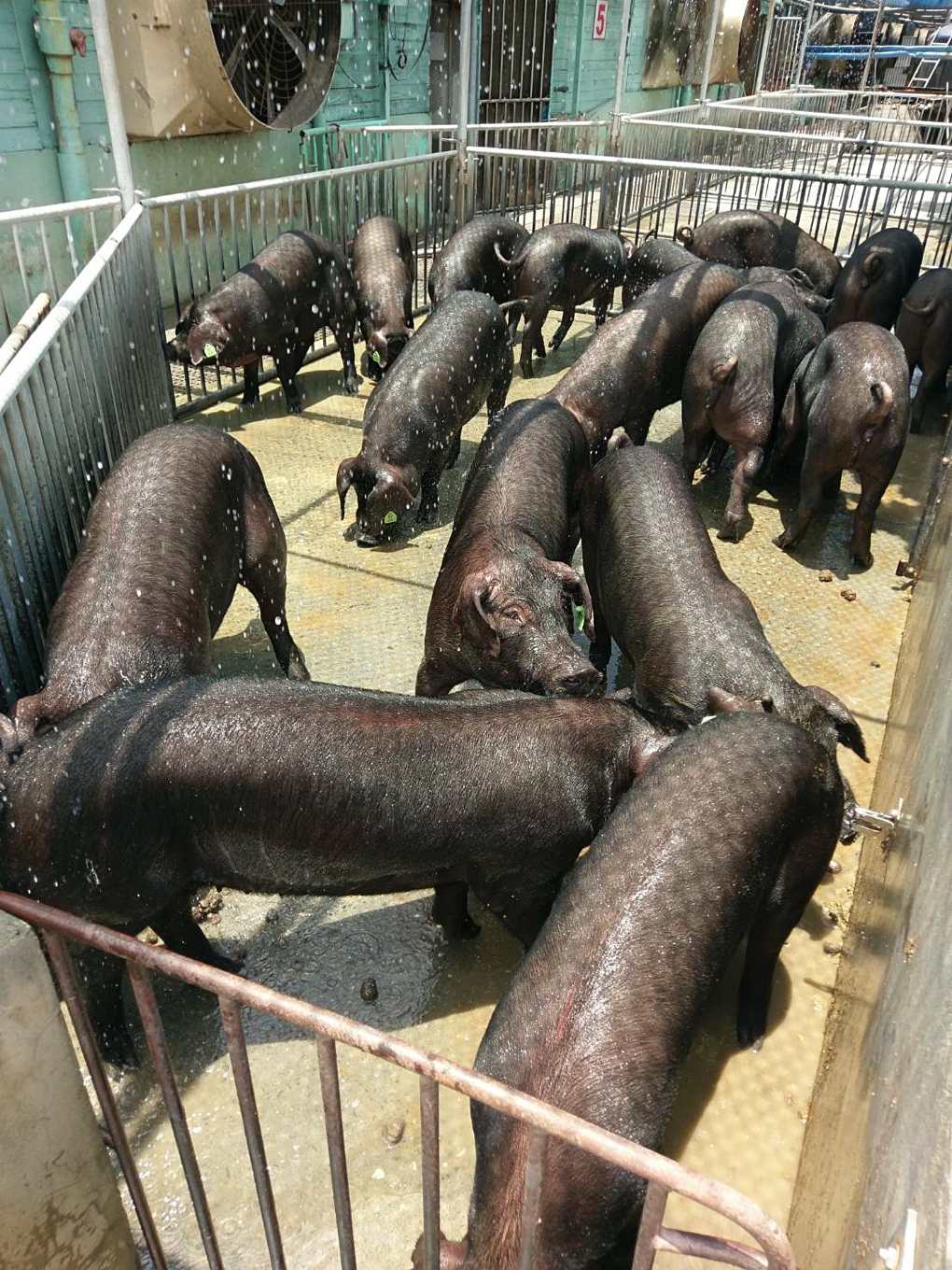
Pig farmers have mixed views on the government's push for kitchen-waste pig farming transition measures. Some operators said outright that black pigs need to eat kitchen waste to grow well and have higher economic value, and that if kitchen-waste pig farming is really to be banned, "perhaps it would be more useful for the government to invest in guidance for leaving the industry." However, other operators said that if they want to build their own livestock product brand, they must strictly control livestock feed, "this is a food safety issue; kitchen waste sources are not fixed and cannot be traced, so it can never pass the food safety hurdle," emphasizing that the pig farming industry must transition, starting with action to adjust what the pigs eat.
If Kitchen Waste Isn't Fed to Pigs, Where Does It Go? EPA: The Public Will Be Asked to Drain Kitchen Waste, Which Can Reduce Volume by 1/3
The Council of Agriculture is eager to fix the epidemic-control loophole caused by kitchen waste, but in the past the pig farming industry also played an indispensable role in helping solve Taiwan's kitchen waste problem. If kitchen-waste pig farms are to be guided into transition, does the country have enough kitchen waste processing capacity?
Lin Tso-hsiang, deputy director-general of the Environmental Protection Administration's Inspection Corps, said that the kitchen waste sold to pig farms nationwide each year totals 440,000 tonnes, accounting for about 70-80% of overall kitchen waste recycling. Of that, about 330,000 tonnes is produced by households, collected by local cleanup crews and then sold by tender to pig farmers, at an average price of 500 yuan per tonne; another 100,000 tonnes is restaurant kitchen waste, handled through private cooperation between restaurants and pig farmers.
Lin Tso-hsiang pointed out that if the EPA is to take over handling all kitchen waste in the future, the public will be asked to drain kitchen waste before putting it into recycling bins. "Kitchen waste contains a lot of liquid; after dewatering, its volume is reduced by one third, which means only 150,000 tonnes of new processing volume is added each year, and this dry material is much easier to send to incinerators."
Kitchen Waste Will First Go to Composting Sites; Only What Can't Be Digested Will Be Incinerated
He further pointed out that there are 24 incinerators nationwide. Calculating on the basis of 150,000 tonnes of newly added kitchen waste per year (already dewatered), that equals 411 tonnes to be processed per day. This kitchen waste will first be sent to composting sites each day for composting, and only the amount that cannot be digested will be sent to incinerators for burning; if all 411 tonnes were to go into incinerators in various places, that would amount to an increase of 17 tonnes of kitchen waste per incinerator. "That is a very small proportion for one incinerator to bear; a small incinerator can handle 600 tonnes of garbage per day, a medium one 900 tonnes, and a large one 1,000 tonnes, so it will not have much impact on the original garbage processing volume."
In addition, Lin also said that Taipei, Yilan, Taoyuan, Taichung, Tainan, Kaohsiung and other places are currently developing biomass energy plants, and it is expected that these six counties and cities will be able to digest 800 tonnes of kitchen waste per day in the future, and it is hoped that kitchen waste can be converted into biogas for power generation, expanding more ways to solve the kitchen waste problem.
However, some pig farmers reported that cooking kitchen waste often draws complaints from others, and they hope air pollution regulations can be relaxed. Lin Tso-hsiang responded that when complaints from the public about pig farms reeking to high heaven are usually received, they are not directed only at kitchen waste cooking; the farm's own management conditions and whether wastewater is treated before discharge all affect surrounding environmental problems.
Therefore he suggested that operators could upgrade their cooking equipment. "Some larger pig farms have done very well with their equipment, with covers during cooking, water scrubbing and further treatment, improving all the odor problems produced," otherwise, if they do not comply with air pollution regulations, he stressed that citations must still be issued in accordance with the law.