A small local produce distributor, a housewife would like to hear everyone's opinions.
Yesterday the homemaker made a mistake and bought a box of humanely raised eggs, but the box turned out to contain 150 eggs! To keep Aze from going crazy over 150 eggs suddenly appearing at home, I immediately started a group buy online, and within just ten minutes, egg sales were double the original amount. That same evening I also shared sales information for dragon fruit, and immediately found people to join the group buy.
So the homemaker wonders, just how great is our demand for safe food?
The current agricultural sales mechanism works roughly like this–farmers use herbicides, pesticides or heavy fertilization, and rely on large cultivation areas to drive down costs and increase returns; middlemen then buy at extremely low prices and send the produce to fruit and vegetable wholesale markets, where it finally appears for sale in traditional markets or supermarkets, or in large stores that buy directly from the place of origin. But this is not the food I want to eat.
There are more and more small farmers who farm in an environmentally friendly way, and this is bound to be the future trend of agriculture. But small farmers have low output and high costs, which does not fit the conditions of the current agricultural sales mechanism. Organic farmers of a certain scale can still become contract farms supplying organic stores, while ordinary small farmers can only join local weekend farmers' markets or sell online.
But the kitchen and the internet can be said to be two ends of a spectrum. People who cook every day and handle pots and pans do not necessarily buy ingredients online, and vice versa: people with a mouse in hand do not necessarily actually cook. How can these two ends be connected? And not just by supporting small farmers in principle? Also, shipping fees of 120 to 180 yuan (depending on room temperature, refrigerated or frozen) are often more expensive than the produce being bought. To save on shipping, you need to buy a thousand yuan worth at one go, which is not affordable for a small family or a young person living alone.
Over the past year, I have actively organized several group buys. Paying first and waiting for the goods at home is not a problem, but delivering them separately is a big problem. For the small potatoes earlier, although I had already designated Guting Station for distribution, friends still came one after another to pick up their goods, which was very tiring. Later, when I ordered Wanbao watermelon, the quantity was not large, but it exhausted Aze from carrying the watermelons. This time the eggs were narrowed down to Xinzhuang, but friends in Taipei City still had ordering needs.
So the homemaker believes, we really lack local outlets for selling friendly produce!
Brother Lai Qingsong talked with me before about how Japan already has physical shops similar to locker stores, similar to the simplest kind of farmers' market. In produce locker stores in each area, farmers place and restock goods themselves and attach a photo of the farmer's face and the farm's features. What is sold may be just ten taro or ten bags of rice. The locker rent farmers pay covers the venue fee and the labor for checkout. At checkout, the farmer's mobile phone receives a sales message, and the farmer also decides when to restock. This simple local food system satisfies both farmers and consumers. According to what Brother Qingsong's Japanese friends shared, whether part-time or full-time farmers, they have all begun to rely on this system.
In Taiwan, we have not yet reached this stage. So we often cannot buy friendly produce in the right amount at a good price. (Unless we go to organic stores, but I don't like that. What I support is not only organic farmers, but also safe agriculture.)
Yesterday before bed, I told Aze about the homemaker's fantasy plan. Suppose each month I could line up fruits, vegetables and eggs from five small farms, open orders at the start of the month, and set the minimum order quantity for each type of produce at the level needed to avoid shipping fees, then distribute it into each orderer's "produce box." The orderer would pay me an extra 10 percent as the fee for ordering on their behalf and delivering goods. It sounds wonderful, but when you calculate the costs and returns, it really is a dream. Suppose I wanted to make this my profession and earn 30,000 yuan a month, I would need to sell 300,000 yuan worth of produce each month. If each person's monthly support limit for small farmers is calculated at 1,000 yuan, I would need to find 300 orderers! Even if I lowered it to 10,000 yuan in income as part-time work, I would still need to sell 100,000 yuan and find 100 customers in Sanchong, Xinzhuang and Taishan District, which equals selling 100 boxes of 150 humanely raised eggs. Just thinking about it….
All in all, is this just a pipe dream?
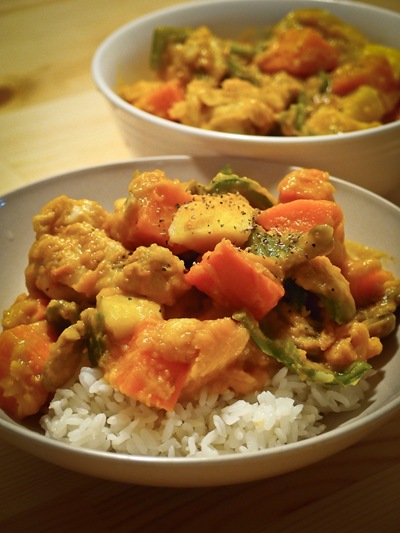
To give myself and my friends healthy and safe food, buying together seems to be a pretty good way.