Relaxation of two pesticide residue tolerance standards sparks debate; FDA promises further discussion this week
Recently, the Food and Drug Administration announced a relaxation of the residue standards for the pesticides fluopyram and dimethomorph, drawing dissatisfaction from Kuomintang legislator Chen Yi-min, who repeatedly stressed during interpellation that such lax standards would have a serious impact on the human body; in response, the FDA and the Council of Agriculture held a press conference today to explain, pointing out that the March 15 announcement had already gone through a sixty-day pre-announcement period, during which no objections were received, and the procedure was completely legal. As for the part the public is worried about, an expert meeting will be convened again within a week for evaluation, and whether to amend or repeal the announcement is within the scope of what can be discussed.
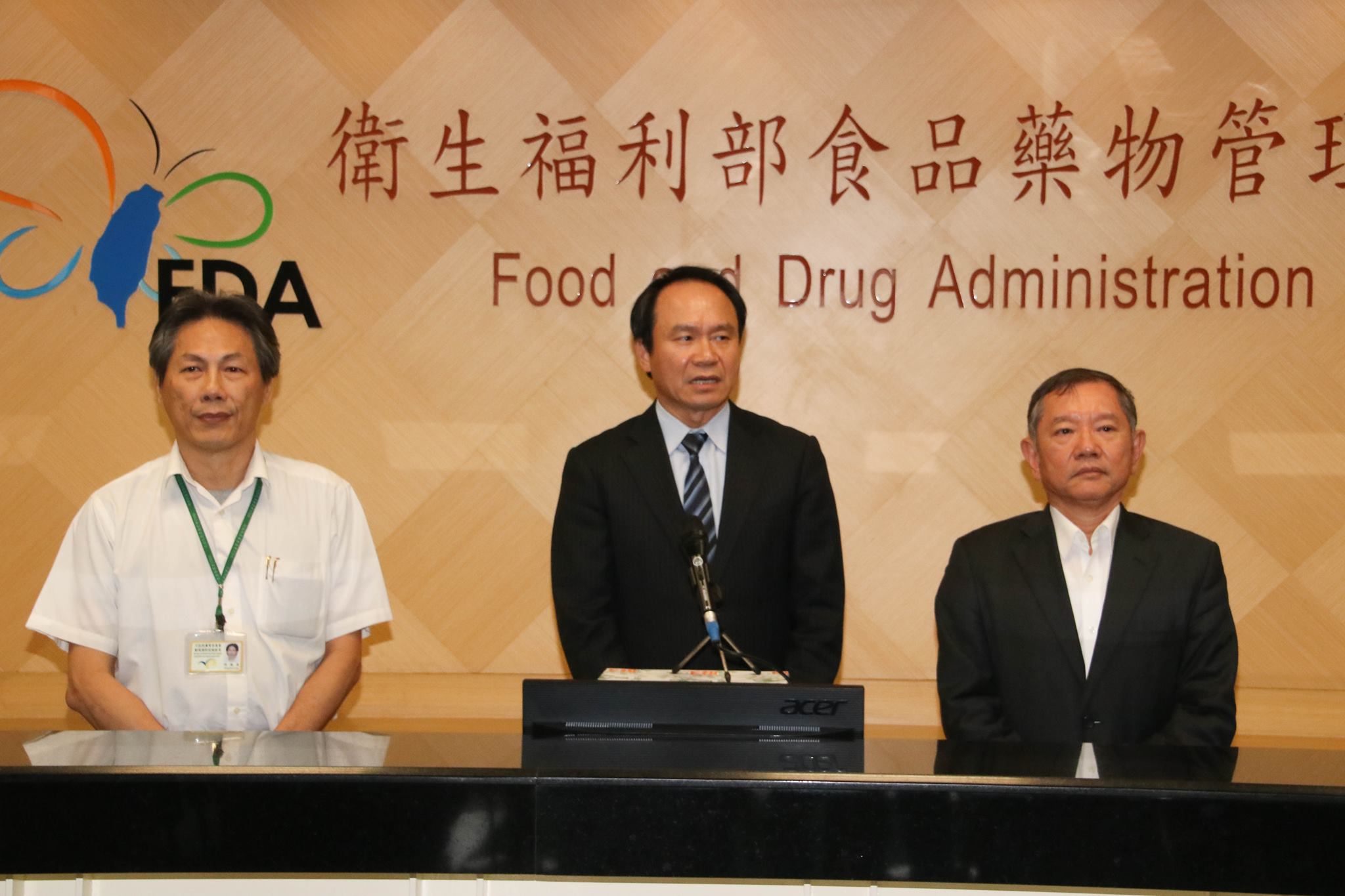
Two pesticides used in appropriate amounts will not harm the human body, Bureau of Animal and Plant Health Inspection and Quarantine steps forward to guarantee
As for what these two pesticides are used for? Feng Hai-tung, deputy director-general of the Bureau of Animal and Plant Health Inspection and Quarantine, explained that the application submitted by the industry for fluopyram is mainly for preventing and controlling red leaf blight of tea trees. This pesticide can be used in mixture form, has a good preventive effect on the disease, and the dosage used will not exceed the standard; it had long been used on crops such as papaya, lychee, and longan; regarding the legislator's question of whether this drug causes thyroid tumors and liver tumors, Feng also explained that the U.S. Environmental Protection Agency has already downgraded this agent to Category E, meaning it is only more sensitive to laboratory rats, and has no carcinogenicity to humans.
On the dimethomorph part, Feng Hai-tung also pointed out that this drug is a broad-spectrum fungicide, belonging to the strobilurins class of agents, mainly for preventing and controlling leaf vegetable blight and downy mildew. A variety of fruits and vegetables in the country had long been approved for its use, and the standard set is the same as Japan's, also granted approval only after passing field efficacy trials and residue trials, confirming that it can achieve the purpose of field pest and disease control, and will not exceed residue limits when used.
Rebuking the official positive attitude, the Homemakers United Foundation expresses opposition to the relaxation of multiple pesticide standards
While the official side repeatedly guaranteed there was no problem, the Homemakers United Foundation issued a statement this morning expressing its opposition to this policy. The statement pointed out that the pesticides legally usable on raw-eaten head lettuce vegetables had already reached as many as 47 kinds; even if a single drug type does not exceed the standard, under the government's continued relaxation of permissible residues for multiple pesticides, should the competent authority evaluate the impact of the interaction of multiple pesticides on human health?
In addition, this substantial relaxation of pesticide residue items was claimed to have been pre-announced on December 13 last year for 60 days to collect opinions, but after searching, no relevant pre-announcement information was found, raising doubts about whether the pre-announcement procedure deprived the public of the opportunity to state their opinions.
(NewsMarket has compiled the FDA's two announcements for readers: http://gazette.nat.gov.tw/EG_FileManager/eguploadpub/eg023045/ch08/type3/gov70/num22/Eg.htm
http://gazette.nat.gov.tw/EG_FileManager/eguploadpub/eg022234/ch08/type3/gov70/num31/Eg.htm)
In addition, the Homemakers United Foundation also pointed out that in the March 13 this year No. 1061300148 pre-announcement amendment, more than 300 additional pesticide uses were relaxed, and such a substantial relaxation within such a short time - does it mean the government's determination to safeguard public food safety has wavered, causing the five links of food safety to regress instead of advance? Therefore, the Homemakers United Foundation calls on the government not to further relax pesticide use standards, so as to create a safe environment and protect public health.
Tseng Te-tsu: Dimethomorph and fluopyram are low-toxicity pesticides, but the correctness of use should be emphasized
With outside opinion mostly opposed, plant disease authority and honorary distinguished professor of the Department of Plant Pathology at National Chung Hsing University Tseng Te-tsu pointed out that dimethomorph is a battleground for pesticide choice after metalaxyl, and can be used to control downy mildew commonly affecting lettuce; basically speaking, it is a good new-type agent, achieving control effects without requiring a high exposure amount, and with a relatively low environmental risk value. In addition, Tseng Te-tsu also pointed out that fluopyram can control red blight and smut, can also solve diseases during seed treatment and the seedling stage, and can also address nematode problems, with low toxicity, low dosage, and good effect, making it worth promoting.
But how exactly were the residue standards for these two pesticides set? Tseng suggested that the competent authority should fully disclose the procedure and explain the efficacy of the pesticides, so as not to cause panic; at the same time, he also believes that even under a comprehensive evaluation, though these two pesticides have better effects, the dosage and application methods - the "correctness" of these pesticide uses - should be fully communicated, so that residue problems do not arise; otherwise, given the premise that Taiwan, China is the country with the highest pesticide use per unit area, the problem of excessive pesticide use will occur frequently.
Tseng Te-tsu: Using pesticides is the last resort; pesticide registration should focus on reducing risk
"From a professional standpoint, pesticides are only used when other methods cannot achieve the goal." Tseng Te-tsu further pointed out that, for example, downy mildew usually strikes under high-humidity environments, and as long as ventilation and biological control are done well, disease is not likely. In terms of pesticide use, there have long been very precise drugs - a pesticide developed by DuPont that can be used against downy mildew, with extremely low toxicity, better than dimethomorph, and can be said to be the first choice for treating the disease, but our country has not adopted it; the reason is that pesticide registration has always been applied for by pesticide companies, which more easily think from the profit side, and already-registered pesticide uses have not been phased out, causing the assessment of agents for public safety and ecological safety to stagnate, falling behind the United States by a full twenty years.
Therefore, Tseng Te-tsu stressed that pesticide registration in Taiwan, China should adopt the approach of the U.S. National Environmental Protection Agency, letting "risk-reducing" drugs gradually replace old customary drugs, and setting guiding principles and indicators so that farmers have a way to choose for themselves; going even further, it should promote a "plant disease physician system", with these physicians possessing professional knowledge guiding farmers in the correctness of pesticide use, so as to solve the problem of pesticide misuse based on food safety considerations.