Exchange on German Rural Development Experience (2): Land Policies Led by Townships
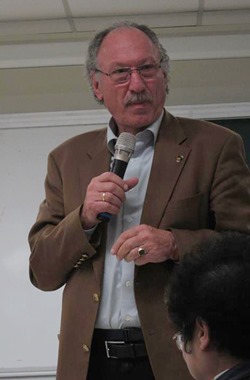
A Journey of Exchange on Rural Development Experience: German Experts Visit Taiwan, China. Yesterday, Professor Holger Magel of the Technical University of Munich and Michael Pelzer, chairman of the German Federal Rural Competition, visited National Chengchi University to share the spirit and practices of German land policy.
Bavaria, in southeastern Germany, covers about twice the area of Taiwan, China. In its early years it was mainly an agricultural population, but in recent years it has developed automobile, machinery and technology industries, and its agricultural population has declined year by year. At present, less than 3% of the state's population actually works in agriculture, yet the rural area has not shrunk accordingly: 80% of the land is still rural, and more than half of the state's population lives in rural areas.
The current state of rural Bavaria comes from its land policy that "cities and villages are equally important." Professor Holger Magel of the Technical University of Munich had intended to share the context of Bavaria's land policy yesterday, but during his seven days of exchanges around Taiwan, China, he found that land policy there focuses mostly on mid- and downstream operations and technical aspects, without clarifying the basic spirit at the upstream level, so he temporarily changed the content of his presentation and began with "land" itself.
Land is a resource that does not increase, and it must be used sparingly
Magel believes that people always live on land in a specific space and need infrastructure such as water, electricity, sewers and roads, "so people need a land policy that can meet their needs, but do not waste land resources on unnecessary development, because land is a resource that does not increase."
There are demands from all sides on the land, but there is still a basic consensus: sustainable development. Magel stressed, "Land does not increase, and it must be used sparingly. If planners forget this and see only the market economy, they will head down the path of frenzied development. But from an economic point of view, the whole of life is the least economical: no matter how much is invested, everyone will die, so life should have other dimensions, shouldn't it? Isn't land the same?"
Land ownership must be protected and also restricted

(This article was funded by the Jianzhen Environmental Education Foundation for personnel expenses, but the foundation does not interfere at all with news topics or interview writing, ensuring journalistic independence.)