Avoiding the mistake of the Mukumugi fish, residents of Ried in Kenting spontaneously closed the stream to protect fish and safeguard the Lanzhen Stream
 An interpreter is explaining the characteristics and uses of the traditional folk plant mountain palm (Arenga engleri) (Photo / Zheng Qunteng)
However, while ecotourism successfully raised Ried Community's profile, a small number of visitors also entered Lanren Creek on their own, even having barbecues and catching fish by the creek, and leaving their trash behind, causing considerable damage to the environment and trouble for local residents.
"Once, 30 or 40 people drove straight in, not parking in the community's designated parking spaces but right in the middle of the road, making it very inconvenient and troublesome for residents heading out to their fields to farm," said Ye Jialiang of Lishan Ecology Co., Ltd., the community's mentoring organisation.
Although only a small number of tourists disrespect the community and the area, they have already damaged the ecology and affected local residents' lives. Because Ried Community is located inside Kenting National Park, under the National Park Law illegal collecting can be fined 3,000 yuan, but the penalty is so light that it has no deterrent effect. To protect the original natural ecology, residents applied through Manzhou Township Office to Pingtung County Government for "creek closure to protect fish", which was approved and announced on August 8.
According to the announcement, over the next five years anyone who collects aquatic animals or plants within the creek-closure and fish-protection area may be fined NT$30,000 to NT$150,000 under the Fisheries Law for "restriction or prohibition of the collection or handling of aquatic animals and plants", more than 10 times the amount under the National Park Law.
Regulation treats the symptoms, not the root cause; a change in visitors' attitude is hoped for
Although the approved creek closure and fish protection gave residents some temporary relief, Ye Jialiang admitted that raising the penalty is a passive measure, and fundamentally it is visitors' attitude toward visiting that must change. He said visitors often think "this is state land, so why do we have to go through the community to enter?", but precisely because it is public land, rules need to be established through local residents so everyone can jointly maintain and observe them.
Ye Jialiang said that joining Ried Community's ecotourism not only has trained interpreters guiding visitors to a deeper understanding of the place, but also includes insurance throughout, giving visitors more protection.
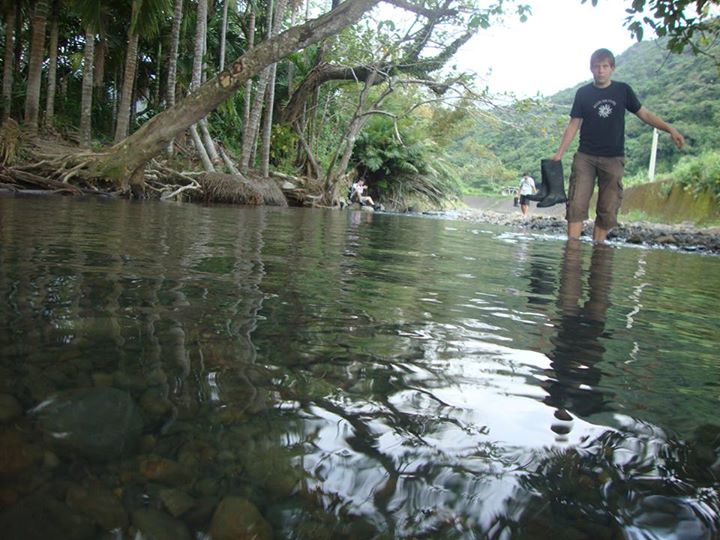
In Ried Community there is a saying: "When October comes, you think of the spectacle of the National Day bird; when you are hungry, you think of the deliciousness of rain mushrooms; when your spirit is tired, you think of the tranquility of Lanren Creek." Ye Jialiang stressed that closing the creek to protect fish does not mean banning visitors from entering, but represents residents' determination to prohibit behaviour that damages the ecology. Residents hope that when visitors come here they leave nothing but memories and take nothing away but smiles, letting this stream return to its past tranquility.
If you are interested in Ried Community ecotourism, you can like the fan page
http://goo.gl/VdYwKs