The 107th year agricultural budget is set at 131.2 billion, a 10% increase over last year│Detailed illustration of the four major projects
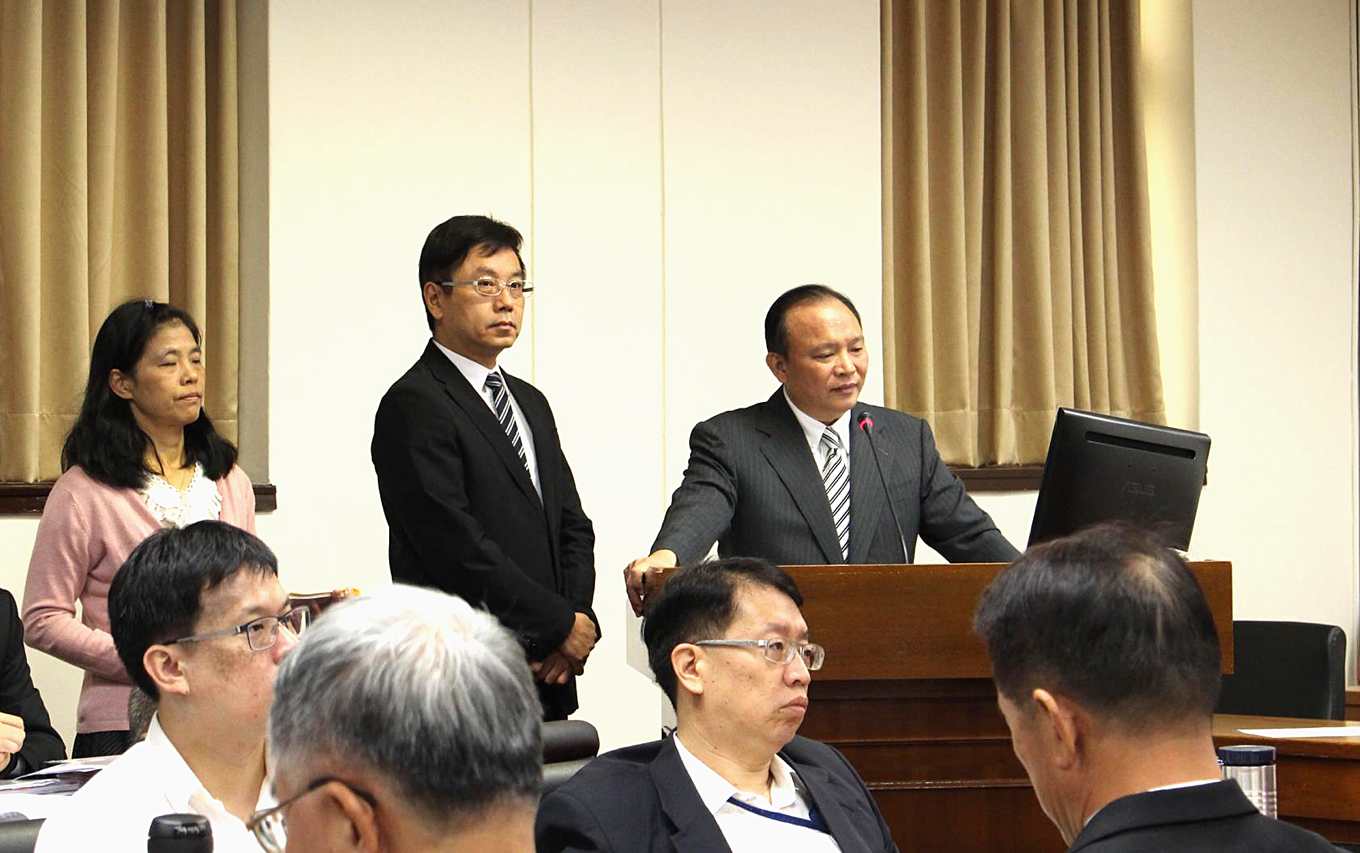
The Legislative Yuan yesterday (the 23rd) held a review meeting on the Council of Agriculture's (COA) budget for fiscal year 107, where COA Minister Lin Tsung-hsien stated that the annual expenditure budget for fiscal year 107 is set at 131.219 billion yuan, with the four major budget categories being "statutory mandatory expenditures" (various subsidies and allowances) at 71.508 billion, accounting for 54.49%, "public construction expenditures" at 42.975 billion, accounting for 32.75%, "general expenditures" (personnel and administrative operations) at 12.332 billion, accounting for 9.40%, and "science and technology development expenditures" at 4.404 billion, accounting for 3.36%.
Overall, the fiscal year 107 budget represents a 10.11% increase over last year, with "public construction" seeing a substantial 46% increase due to an additional allocation of 25.216 billion to the Rural Regeneration Fund, "science and technology development expenditures" increasing by 110 million over last year, or 2.6%, "general expenditures" decreasing by 4%, and "statutory expenditures" slightly declining by 1.7%.
Elderly Farmer Welfare Allowance at 47.4 Billion, Accounting for 36% of Total Agricultural Budget
Lin Tsung-hsien explained that under statutory mandatory expenditures, 71.508 billion is allocated, including 47.476 billion for elderly farmer welfare allowances, 8.84 billion allocated to the Agricultural Development Fund, 7.789 billion allocated to the Agricultural Product Import Damage Relief Fund, and 4.015 billion allocated to the Agricultural Natural Disaster Relief Fund.
Under general expenditures, 12.332 billion is allocated, including funds for COA personnel costs, administrative operation expenses, and costs related to agriculture, forestry, fishery, animal husbandry, and animal and plant quarantine and inspection programs. Lin Tsung-hsien stated that due to the Executive Yuan's requirement for expenditure austerity, the COA reduced its general expenditure budget by 4%, a total reduction of 513 million.
Public Construction Expenditures Surge by 46%, with 25.216 Billion Allocated to the Rural Regeneration Fund
Public construction expenditures are set at 42.975 billion yuan, mainly comprising 25.216 billion allocated to the Rural Regeneration Fund, 3.102 billion for the Farmland Water Conservancy Construction Enhancement Plan, 3.745 billion for the Sustainable Forest Management and Industry Revitalization Plan, 2.778 billion for the Integrated Watershed Management and Disaster Prevention Plan, among others. Additionally, for individual counties and cities, 1.649 billion is allocated for the "Taichung City Emerald Zone Regional Agricultural Value-Added Promotion Plan (including the 2018 Taichung World Flora Exposition Promotion Plan)."
Fiscal Year 107 Fund Disbursement of 9.6 Billion, Targeting Rural Revitalization and Facility-Based Agriculture
Regarding the allocation to the Rural Regeneration Fund, due to the Rural Regeneration Act passed by the Legislative Yuan in 2010, which at the time aimed to assist rural transformation and planned a 150 billion fund allocation over 10 years, Tsai Sheng-fu, Director-General of the Planning Division, stated that previously, due to limited budget, less was allocated to the Rural Regeneration Fund, so this year's allocation to the Rural Regeneration Fund is 25.216 billion, which is 9.939 billion higher than last year.
Although 25.2 billion was allocated to the fund, the actual Rural Regeneration Fund expenditure for fiscal year 107 is 9.6 billion, primarily for two major parts. The first part is the "Rural Regeneration Planning and Manpower Cultivation Plan" with 1.18 billion allocated, including rural planning, innovative agricultural promotion and young farmer cultivation, and rural agricultural industry manpower revitalization plans; the second part is the "Rural Construction and Regeneration Development Plan" with 8.42 billion allocated, including rural regeneration community development environment improvement, rural development revitalization, and facility-based agriculture plans.
The Rural Regeneration Fund has been criticized in the past for focusing only on superficial aspects, such as whether subsidizing communities for "rural mural painting" can help rural regeneration. Lin Chang-li, Deputy Director-General of the Soil and Water Conservation Bureau, stated that in previous years everyone indeed rushed to do rural mural painting, but there are also excellent examples, such as some communities using murals to express early traditional farming and living environments, recording the entire community's agricultural story, and the Guangfu Daquan Community in Hualien also reflected early agricultural life, such as ox carts, sugarcane, and fertilization, in murals, which indeed can help rural revitalization. However, Lin Chang-li also emphasized that for some rural murals featuring cartoon characters or imitation designs, they are not encouraged.
Lin Chang-li also gave an example: the Shi'an Community in Houbi District, Tainan, applied for funding to establish a rice cooperative, allowing local community residents to invest, creating the Shi'an Rice brand, with profits not only distributed as dividends to cooperative members but also 20% returning to the community. Additionally, regarding rural peripheral equipment, such as streetlights and utility poles, Lin Chang-li stated that budgets will also be allocated to county and city governments for joint implementation.(The figure below shows the allocation of Rural Regeneration Fund disbursement items for fiscal year 106)
Lin Tai-hua Inquires: Agricultural Labor Shortage Budget of 260 Million, How to Solve the Shortage of 90,000 Workers?
During questioning, Legislator Lin Tai-hua stated that the agricultural labor shortage budget is only 260 million, so how can it fill the shortage of 90,000 workers? Chu Chien-wei, Director-General of the COA's Counseling Division, explained that the current labor shortage is over 90,000 person-months, and because some industries have labor shortage periods of only 1 to 3 months, on average, the monthly labor shortage is 7,500 people. Currently, the COA has 330 agricultural master teams, 300 farming teams, totaling 659 people, and these manpower resources can rotate to supplement seasonal labor shortages. The 260 million budget is used to pay the agricultural labor team a monthly salary subsidy of 8,800 yuan, while also depositing 10,000 yuan per month as an incentive fund for engaging in agriculture, expected to solve 10% of the labor shortage problem.
Chu Chien-wei explained that additionally, a "Youth Returning to Agriculture" budget of 459 million is allocated, an increase of 14 million over last year. The COA's goal is a progress of 3,000 people per year, reaching a 30,000-strong young farmer force in 10 years. Currently, there are 100 Top 100 Young Farmers per year, 600 local young farmers, 1,600 from the Agricultural Research Institute, and 1,555 from the Agricultural Professional Training Program, totaling 2,450 people, achieving 82% of this year's target.
Chu Chien-wei stated that the COA provides many resources for the Top 100 Young Farmers, such as technical assistance, 5 million interest-free loans over 3 years, and establishing information platforms. Additionally, because many young farmers compete each year to become Top 100 Young Farmers, the COA also categorizes those who are not selected as Top 100 Young Farmers as local young farmers, providing many resource assistance, hoping to cultivate more than 600 local young farmers each year.
The Agricultural Research Institute mainly establishes many professional farmer technical classes, such as grape classes and pear classes, which are limited to young farmers. After young farmers complete the courses, they can bring the technology back to rural areas. Chu Chien-wei also emphasized that the numbers for Top 100 Young Farmers, local young farmers, the Agricultural Research Institute, and the Agricultural Professional Training Program will avoid duplicate counting, with the goal of increasing by 3,000 young farmers returning to agriculture each year.
Chen Ming-wen Inquires: How Can 4.4 Billion in Science and Technology Development Achieve Smart Agriculture?
Additionally, Legislator Chen Ming-wen also stated that looking at the allocation of science and technology development expenditures, this year's 4.404 billion yuan is only 111 million more than last year, accounting for only 3.36% of the total budget. How can the COA's smart agriculture goal be achieved?
Chang Chih-sheng, Director-General of the COA's Department of Science and Technology, stated that currently everything is in the scientific research stage, and there is no problem of insufficient budget. Agricultural science and technology research mainly focuses on two major directions: smart production and digital services, such as the use of agricultural machinery, mechanization and automation to reduce manpower, and the integration of production and marketing information. Chang Chih-sheng gave an example of an orchid watering machine developed by the Ministry of Science and Technology, which improves the previous reliance on manual hose watering. Now it can combine image monitoring, sensing, and smart control. The image can automatically monitor and water only when there is a pot, which not only greatly saves water but also improves efficiency.
Annual Revenue Set at 1.7 Billion
The COA's fiscal year 107 annual revenue is set at 1.707 billion yuan, including 100 million yuan in fines and compensation income, 519 million yuan in fees and charges, 204 million yuan in property income, 584 million yuan in operating surplus and business income, and 300 million yuan in other income. Compared to the previous fiscal year's budget of 1.722 billion yuan, this is a decrease of 15 million yuan, or about 0.87%, mainly because the Taitung Aquarium Ecological Exhibition Hall and the Penghu Aquarium are under renovation and currently preparing to reopen, with revenue expected to increase again by the end of next year.
Lin Tsung-hsien stated that by reviewing the new government's new agricultural policy content and proceeding with related budgets, he hopes that the policy-based budget allocation can promote sustainable rural development, increase farmers' income, and establish a safety system trusted by consumers.