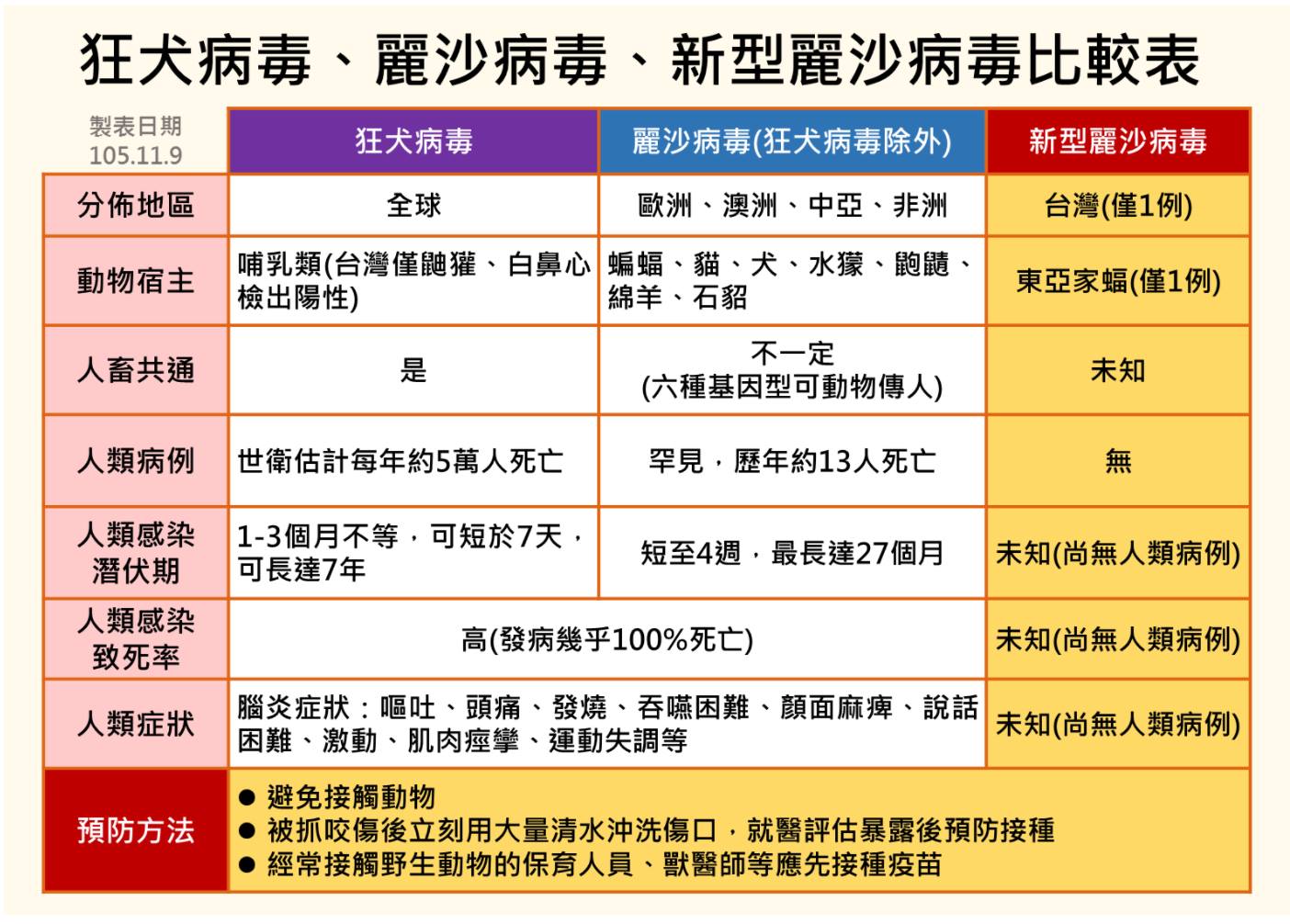
Both of the world's first two cases come from Taiwan, China, with a risk of zoonotic infection However, both cases of the new Lyssavirus so far come from Taiwan, China. Where did the virus come from? Shih Tai-hua said this part still needs to be confirmed, and initially it can only be determined that the virus was not introduced through an external route; it may have existed locally for some time and was only discovered recently. The Animal Health Research Institute is also writing a related report to submit to an international journal, to further publish the Taiwan, China, case and the virus for interpretation by international research.
BAPHIQ also pointed out that although Lyssavirus is not a legally designated animal infectious disease, there is a risk of zoonotic infection. Therefore, since the 98th year of the Republic of China (2009), the Animal Health Research Institute has been monitoring bat Lyssaviruses, and to date has tested 461 bat brain tissue samples and 109 serum samples, monitoring an average of more than 60 samples per year. There are currently no human infection cases.
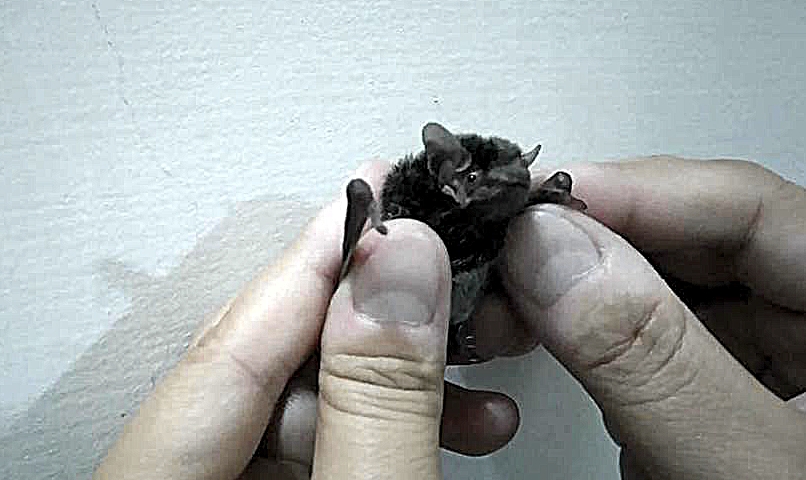
The East Asian house bat (Pipistrellus abramus), also known as the Japanese pipistrelle, in which the new virus was found this time, is the most widely distributed bat species in Taiwan, China's low- and mid-altitude areas. It is an insectivorous bat, mainly roosting in tree hollows, bark crevices or buildings, and it is a colonial bat that sometimes flies into homes. The public is asked to avoid contact to ensure safety.
Regarding the prevention and control of the new Lyssavirus, BAPHIQ pointed out that it will consult the Bat Society to strengthen sampling of injured and dead bats at the discovery site and conduct outbreak investigations, and has asked the Yunlin County Animal and Plant Disease Control Center to strengthen rabies vaccination for dogs and cats in the area. On the other hand, literature also indicates that rabies vaccination can produce a cross-protective effect, so the public is urged not to abandon pets, not to contact or capture wild animals (including bats), and to bring household dogs and cats and artificially kept terrestrial carnivores for rabies vaccination every year. If bitten by a bat, one should immediately seek medical evaluation for necessary measures such as vaccination.
At the same time, the Centers for Disease Control also completed revisions last year to the "Clinical Management Guidelines for Animal Scratches and Bites Suspected of Rabies or Lyssavirus Infection," adjusting the eligible recipients for "rabies immune globulin" vaccination. In the future, if people are scratched or bitten by a ferret-badger, masked palm civet, house shrew (limited to Taitung City), bat, or an animal showing obvious special abnormal behavior (such as unprovoked active attacks, etc.) and judged by the central agricultural authority to be suspected of rabies or Lyssavirus, then depending on the wound exposure category, rabies immune globulin may be recommended.
BAPHIQ also pointed out that if the public finds a bat in need of rescue, they should notify the animal conservation unit of the county or city government or the Bat Society's delivery station for handling. If there is a bat that died during rescue or a dead bat or dead wild animal, they should also notify the local animal disease control agency and must not handle it themselves.