How to prevent planthoppers? Planting flowers and grass on field ridges reduces pests fivefold
Many farmers, for the sake of convenience when walking, are in the habit of spraying herbicides to strip the field ridges bare, but the Hualien District Agricultural Research and Extension Station found that if some grass is left on the field ridges, it not only suppresses troublesome weeds but also increases the numbers of parasitic wasps, ladybugs and long-legged spiders, which help eat the pests. On field ridges without vegetation, the planthopper population is more than 5 times that of ridges with vegetation. However, the Hualien Station urges that if you plant grass on field ridges, remember not to plant only a single grass species; different plants are what create diverse biological habitats.
Creating habitats so insects can serve as workers
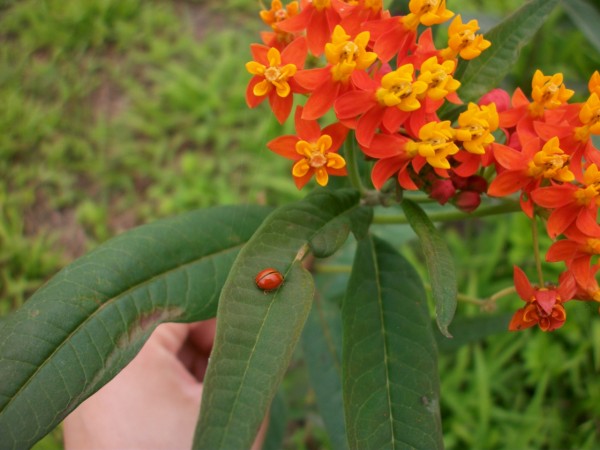


People have convenience stores, drugstores and post offices near their homes; insects likewise need multifunctional leisure spots, so besides planting grass, do not forget to plant some flowers. The Hualien Station recommends planting native wildflowers such as Gnaphalium affine, water dropwort, heartleaf houttuynia, common selfheal and scutellaria barbata.
You Chih-ying said that flowering plants can attract ladybugs and bees to gather nectar, and since they grow taller, farmers can plant them at the very edge of the field ridge, with creeping grasses in the middle, which is convenient for walking and also increases biodiversity.
The Tse-Xin Organic Agriculture Foundation began promoting its green conservation label 5 years ago to protect the habitats of protected animals, and in April this year it cooperated with the Hualien Station to include habitat creation in its review criteria.
Lin Li, assistant research fellow at the Hualien Station, revealed that the research team once surveyed rice paddies in two different villages and found that the organic field in Village B actually had fewer species than the conventional field with pesticide spraying in Village A. It turned out that the field ridge of the organic field in Village B had already been replaced by bare concrete, while the ridge in Village A still had green grass and wildflowers. "So it is not enough to be organic; you also have to create biological habitats."