Hands-on Ramie Dyeing Workshop, Plant Fiber Special Exhibition Awaits You
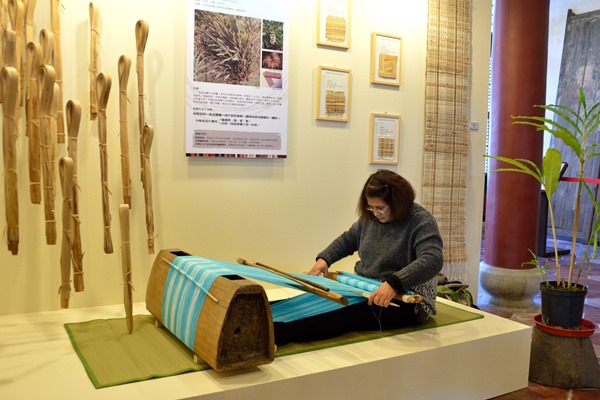
In the film "Warriors of the Rainbow: Seediq Bale," the beautiful red-and-white garments caught many people's attention, but did you know they are woven from ramie? Collecting plant fibers is a traditional culture of many indigenous peoples, and weaving techniques became a symbol of women's status. Taipei Botanical Garden has opened the special exhibition "Plants and Entanglement - Walking into the World of Fiber Plants," introducing five species of Taiwanese fiber plants, and also letting the public DIY-extract ramie fibers and try plant dyeing by hand, experiencing the wonders of traditional craft.
Plant Fiber Courses, Experiencing the Wisdom of Our Ancestors
Before humans invented petrochemical products and synthetic fibers, our ancestors already knew how to collect plant fibers from their surroundings. Rush hats, grass mats, xuan paper, traditional indigenous clothing, and using shell ginger leaves to wrap rice dumplings are all products of human wisdom, but traditional crafts are time-consuming and labor-intensive, and have gradually declined in recent years. In recent years, the botanical garden has opened a special area to grow several kinds of fiber plants, and the Taichung City Huludun Cultural Center has also cooperated with fiber craft artists to exhibit many fiber products, actively revitalizing traditional culture. This exhibition organized by the botanical garden hopes to combine the two, letting the public see the production process behind fiber products.
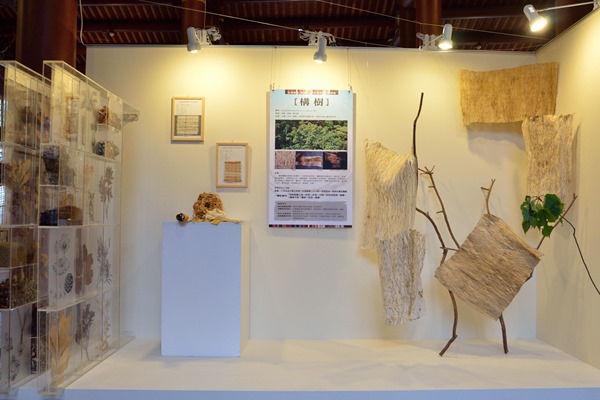
The special exhibition "Plants and Entanglement - Walking into the World of Fiber Plants" has set up dedicated areas for five traditional Taiwanese fiber plants: paper mulberry, Dajia rush, shell ginger, banana fiber, and ramie, introducing the cultivation of fiber plants at Taipei Botanical Garden, the selection and use of materials for weaving fibers, and an introduction to the woven fiber industry and its local development.
If visitors feel an itch to try things themselves after seeing the exhibition, they can also join the holiday experience courses held by the botanical garden, which tie in with the ramie harvested in February and March, personally cutting ramie, removing leaves and bones, and extracting rhizome fibers; in July and August there are also ramie cold-dyeing courses, while around the Dragon Boat Festival, shell ginger is introduced.
Cai Peilin of the Taipei Botanical Garden Division of the Taiwan Forestry Research Institute said that ramie comes in red and green varieties. Unlike some plant dyes that require heating and soaking, cold dyeing involves placing ramie in a bucket and pounding it, letting the plant juice and fibers naturally blend, then leaving it to sit for 24-48 hours before drying it in the sun, and strands of brightly colored ramie fiber are complete.