Honeybee losses and pesticide poisoning are major problems; the Council of Agriculture: a special task force meeting will be convened, and the Bureau of Animal and Plant Health Inspection and Quarantine will be tasked with establishing a communication
Regarded as agriculture's best partner for pollination efficiency, Taiwan's honeybees have faced serious survival problems in recent years. Taiwan's wild bees have suffered heavily from sacbrood virus and declined massively, while farmed western honeybee colonies have also been affected by multiple factors such as climate and pesticides, leading to losses of more than 40 percent last year, prompting beekeepers to cry out that it is "the worst harvest in fifty years," and to urge the Council of Agriculture to follow the lead of Europe and the United States in establishing a dedicated department as soon as possible to solve the problem; after years of expectations from all sides, the Council of Agriculture finally made a decision, and will first hold a special project meeting on May 18 to invite all departments to consult and clarify where the problems lie, while also promising to establish a unified communication platform in the future so that issues related to the bee industry can be handled together.
Chen Yu-wen: The survival of the bee industry is absolutely linked to the Earth's ecosystem
Beekeeping has become popular recently. On the importance of bees, Chen Yu-wen, a distinguished professor in the Department of Biotechnology and Animal Science at National Ilan University who has long devoted himself to research, pointed out that the role bees play in the ecosystem is absolutely indispensable. Their disappearance is not simply a matter of having no honey or no crops to eat, but is related to an imbalance in the entire Earth's ecosystem, because the pollination efficiency of a single hive of 50,000 bees is roughly equivalent to 400 people carrying out artificial pollination at the same time, showing the importance of maintaining the bee industry.
Honey production falls again this year. Bee Association: Abnormal weather has disrupted flowering periods
Despite their importance, the bee industry has faced quite a few problems in recent years. The first is the sharp drop in honey harvests. According to estimates by the Taiwan Beekeepers Association, this year's output is only 20 to 40 percent of last year's, and last year, because of cold damage, the harvest was already only 60 percent of the year before, so it can be said to be getting worse and worse. In response, Pan Chien-ming, secretary-general of the Beekeepers Association, explained that abnormal weather is the main reason. Previously, the winter was dry with little rain, which made lychee and longan trees flower poorly, and the flowering period was delayed by one month. Just when the honey was about to be harvested, rain came and knocked the flowers off.
Central Taiwan beekeeper Chang Yung-kun added that last year's typhoons stripped the leaves from lychee and longan fruit trees, also causing this year's flower clusters and young leaves to compete with each other for the tree's nutrients, affecting flowering conditions. The Wufeng District Farmers' Association in Taichung also pointed out that there are mainly three reasons for poor flowering: first, the warm winter meant there were insufficient low-temperature hours needed for lychee and longan to flower; second, there was not enough rain; third, there was a major outbreak of the lychee stink bug this year, seriously harming the fruit trees' new shoots and flowers.
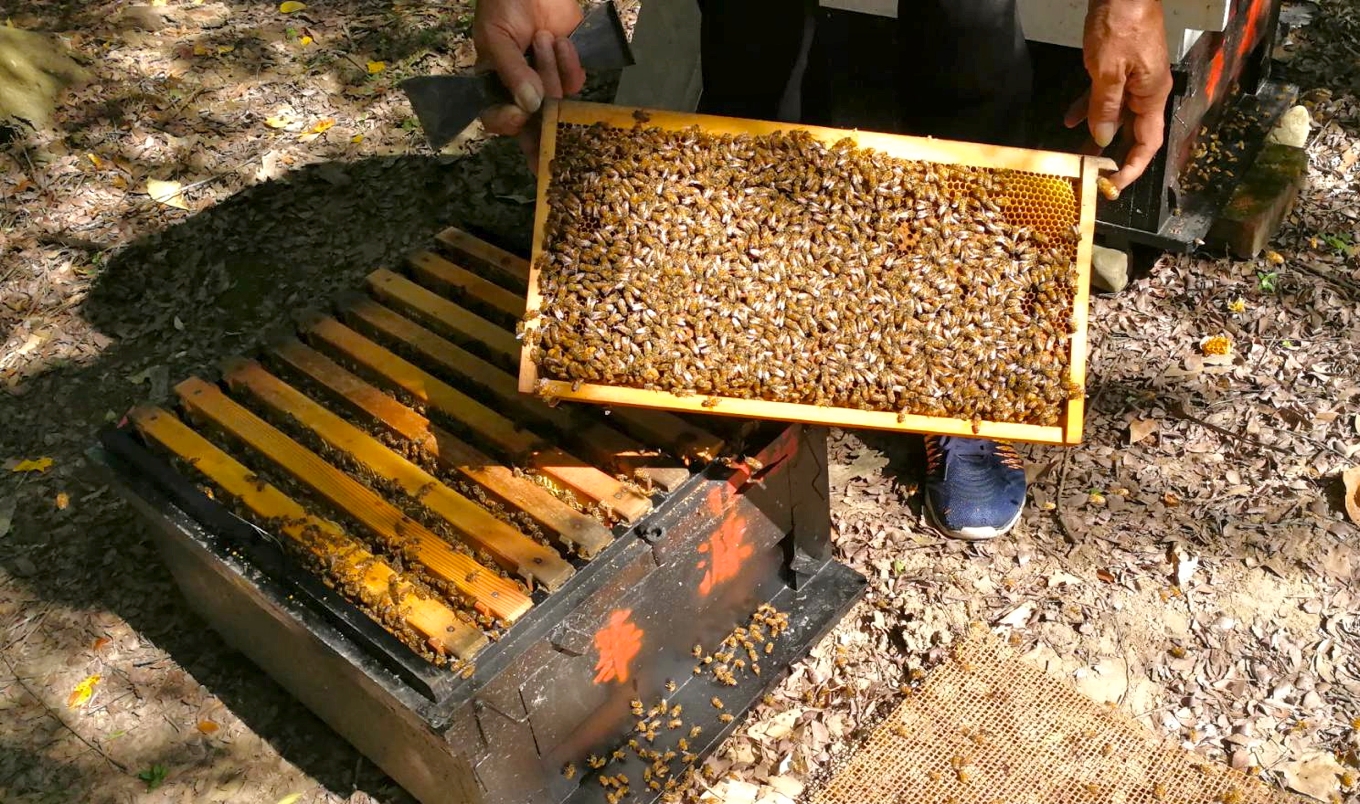


Beekeepers, unhappy, once threatened to bring bees north to protest. The Bureau of Animal and Plant Health Inspection and Quarantine promised to help, temporarily putting out the fire
With the bee problem unresolved, and with the Bureau of Animal and Plant Health Inspection and Quarantine also approving neonicotinoid pesticides, some beekeepers became even more dissatisfied. At the end of April they once threatened to bring their bees north to protest at the Council of Agriculture. Fortunately, through the mediation of the Beekeepers Association, the Bureau of Animal and Plant Health Inspection and Quarantine ultimately promised to step in and assist beekeepers. In addition to having relevant personnel understand the situation of bee damage, during the pesticide industry's teaching sessions in the second half of this year, topics such as the importance of pollinating insects to agriculture and how to avoid accidentally harming bees will also be included in training courses, with the Miaoli Improvement Station or professionals invited to teach, temporarily easing the conflict between the two sides.
However, in the face of the overall problems of the bee industry, the "many horses pulling one cart" style of management system has still not changed, with the Miaoli Agricultural Improvement Station responsible for bee colony-related research, the Agriculture and Food Agency responsible for production and marketing, the Forestry Bureau responsible for wildlife conservation, and the Bureau of Animal and Plant Health Inspection and Quarantine responsible for pesticide control. Even though the Council of Agriculture also proposed using biological control such as the flat wasp to combat the lychee stink bug and reduce pesticide use, Ke Yi-hsiung, director of the marketing department of the Wufeng District Farmers' Association, pointed out that the effect was not as good as expected, and the situation of honey crop failure made farmers shake their heads again and again.
Council of Agriculture: Will first convene a special project meeting
Regarding the opinions raised by farmers and scholars, after repeated inquiries by reporters, Deputy Minister Huang Chin-cheng of the Council of Agriculture finally made a commitment. He pointed out that in view of the current inability to truly clarify the core of the problems encountered by the bee industry, whether they originate from pesticides, climate, or other factors, and coupled with the way different areas of expertise are dispersed across different departments, a special project meeting will be convened on May 18, gathering farmers, scholars, and departments such as the Agriculture and Food Agency, the Bureau of Animal and Plant Health Inspection and Quarantine, the Taiwan Agricultural Chemicals and Toxic Substances Research Institute, and the Miaoli Improvement Station to discuss together, first gathering all the data to determine the exact causes of the decline in honey production and the reduction in bee colonies.
Council of Agriculture promises it will task the Bureau of Animal and Plant Health Inspection and Quarantine with taking the lead in establishing a unified communication platform
At the same time, Huang Chin-cheng also emphasized that because specialized technical expertise is dispersed, establishing a dedicated department now would absolutely be time-consuming and difficult, so planning will move toward establishing a "unified communication platform." At present, it is expected to first use Line as the communication platform to serve as a window for farmers, with the Bureau of Animal and Plant Health Inspection and Quarantine leading all units. In the future, any problems or industry development plans can be discussed there, and further conclusions can then be implemented, in the hope that results can be achieved.