Is the safety tolerance level for American beef safe? Three lessons on American beef for university students (3)
Editor's note:
If imports of US beef are opened up, the first thing affected is the dietary safety of people in this country. Is the use of the lean meat agent ractopamine actually safe, how should it be regulated, and what health risks could opening it up create? All of these will be raised for discussion in the "Food Safety and Public Health" forum. This session invited Kang Chao-chou, Director-General of the Food and Drug Administration of the Department of Health, and Wu Kun-yu, Associate Professor at the College of Public Health of National Taiwan University, to hold a dialogue. It is hoped that through the conversation between the two sides, attendees can understand the issue of US beef imports from the perspectives of food safety and public health.
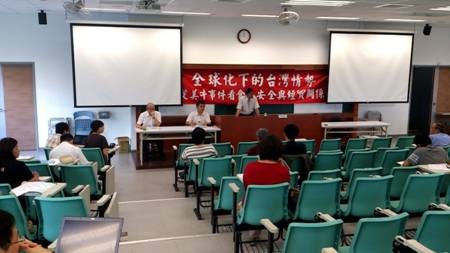
Among the groups paying attention to US beef, there has recently been a group of active young figures - the "Taiwan Youth Anti-US Beef Alliance" made up of university students from various schools. On May 12, the National Taiwan University Student Association, the Citizen Congress Watch and other student and civil groups jointly held the forum "Taiwan's Situation under Globalization: Looking at Food Safety and Economic and Trade Relations through the US Beef Incident." The forum was divided into three themes: food safety and public health, food security and industrial impact, and international economics and free trade. For other records in this series, please see the links at the end of the article.
———————————————————————————————
Text / Chen Ting-hao, Taiwan Youth Anti-US Beef Alliance
Department of Health: Heavy use of ractopamine produces toxicity; an ADI must be established
Kang Chao-chou, Director-General of the Food and Drug Administration, began by clarifying a concept with us: "not approved" and "banned" are two different meanings. "Not approved" for use means the country feels there is no need to use it, such as Australia, so there is no need for the state to propose regulatory standards. "Banned" for use, in contrast, is the case for the European Union, China and Taiwan, which currently ban its use. Therefore, although 26 countries/regions around the world have approved its use, that does not mean the other 160-plus countries have banned it.
Speaking of ractopamine, it is a beta-adrenergic agonist. Added to animal feed, it can increase the lean meat ratio of livestock and poultry, reduce the fat ratio and reduce feed consumption. The United States approved it for pigs in 1999 and for cattle in 2003. Director-General Kang further said that indeed, when used in large amounts it produces a great deal of toxicity, such as palpitations and elevated blood pressure. That is why when it is used in meat products, a safety assessment must be carried out to protect health.
As for the calculation of our country's ADI (Acceptable Daily Intake) of 0.7 for safety assessment, Director-General Kang explained that for pesticides, veterinary drugs or medicated feed additives to be given to humans, they must first be tested on animals to see the animal's NOEL value (No Observed Effect Level), which is the maximum dose at which no observable adverse effect occurs, and when necessary human trials are then conducted, using the NOEL to further estimate the ADI. At the same time, further reference is made to the dietary habits of people in this country and comparison with other countries' standards, and the MRL (Maximum Residue Limit) in food is set at 35.55μg.
(Image source: slides from Professor Wu Kun-yu's talk)
Scientific evidence on the "lean" drug is insufficient The government lacks sincerity in communication
Wu Kun-yu explained again that beta-adrenergic agonists cause anxiety and headaches in the central nervous system; in the cardiovascular system they cause tachycardia and palpitations, and may also produce other adverse reactions such as nausea and muscle tremors, and they tend to remain in internal organs. Although they are not mutagenic and are not genotoxic, meaning there may be a safe dose, the studies conducted so far all have some doubts about their research methods, making it impossible for people to fully trust them.
For example, the US FDA used monkey data, and the NOAEL (No Observed Adverse Effect Level) group had only three animals, an excessively small sample size. In another human study, there were only six test subjects, yet it was used to support the maximum residue limit standard recommended by the Joint FAO/WHO Expert Committee on Food Additives (JECFA). Moreover, of the six people in the human trial, one left partway through because of physical discomfort, leaving only five who completed all the experiments.
Furthermore, under the WTO principle of non-discrimination (that is, treating domestic and foreign products equally in the same or similar circumstances), "separating beef from pork" would certainly be impossible. Therefore, even if an MRL for beef is set, what about the MRL for pork?
In addition, comparing the ADIs of other countries, the JECFA's ADI of 1 is only a draft, and the European Union likewise considers the scientific evidence insufficient, and no consensus on establishing one was reached in the Codex Alimentarius Commission (CAC). Moreover, regarding the pharmacokinetics of the "lean" drug, although the half-life is short and about 80% can be excreted within about a day, what we must ask further is: where in the human body is the other 20%? Third, the "lean" drug is currently banned in Taiwan, yet a while ago we still saw that much of the beef tested in Taiwan already contained the "lean" drug. Is this not the best proof that things are already out of control?
Faced with this string of questions, Wu Kun-yu believes that this country really must establish an "independent risk assessment body" so that it does not become a tool for endorsing policy, producing the situation Director-General Kang just described: "The food policies the government makes are simply believed by those who believe, and not believed by those who do not believe." And it still spends a great deal of money printing promotional booklets for one-sided propaganda. With this attitude to work and this way of communicating, how can the government win the trust of all the people?
Forum video
http://youtu.be/UYRH9BBIeoA
Other articles in the series