The savior bean of the Dark Ages returns to the table
The late Italian historian and writer Umberto Eco believed that Europeans survived to this day thanks to beans, which fed their ancestors during the Dark Ages of the Middle Ages. Now this miraculous seed has once again taken on the heavy responsibility of rescuing human civilization; the Food and Agriculture Organization of the United Nations (FAO) says that maintaining nutritional balance, defending food sovereignty and combating climate change all depend on beans.
The savior of the Dark Ages: beans
In 1999, on the eve of the millennium, the Italian newspaper Corriere della Sera invited Eco to write an article about the most important invention or discovery of the past millennium. The master thoroughly analyzed the influence of the ship's rudder on Columbus's discovery of the New World, and also explained the contribution of animal power, crop rotation and innovations in farm tools to food production, then shifted direction: "However, what I want to talk about is beans."
Eco said: "We can call ourselves Europeans here today thanks to beans. Without beans, it would have been impossible for Europe's population to double and multiply within just a few centuries, and the ancestors of the Spanish or Americans could not have reached the Americas."
After the Western Roman Empire fell in 476 AD, northern barbarians invaded and Europe sank into the "Dark Ages." Farmland lay waste and produce was insufficient, people were weak, sickly and died young, and with too few hands farming became even harder, falling into a vicious cycle, while the Black Death took countless more lives. According to various estimates, Europe's population fell to between 14 million and 17 million in the 7th and 8th centuries. However, at the turn of the first millennium, the population climbed to about 42 million, and by the 14th century it had grown to between 60 and 70 million.
Eco believed that "meat grown from the earth" nourished the ancestors, and that "from the 10th century onward, bean cultivation became increasingly common, providing laborers with the energy they needed; this protein-rich plant became a substitute for meat."
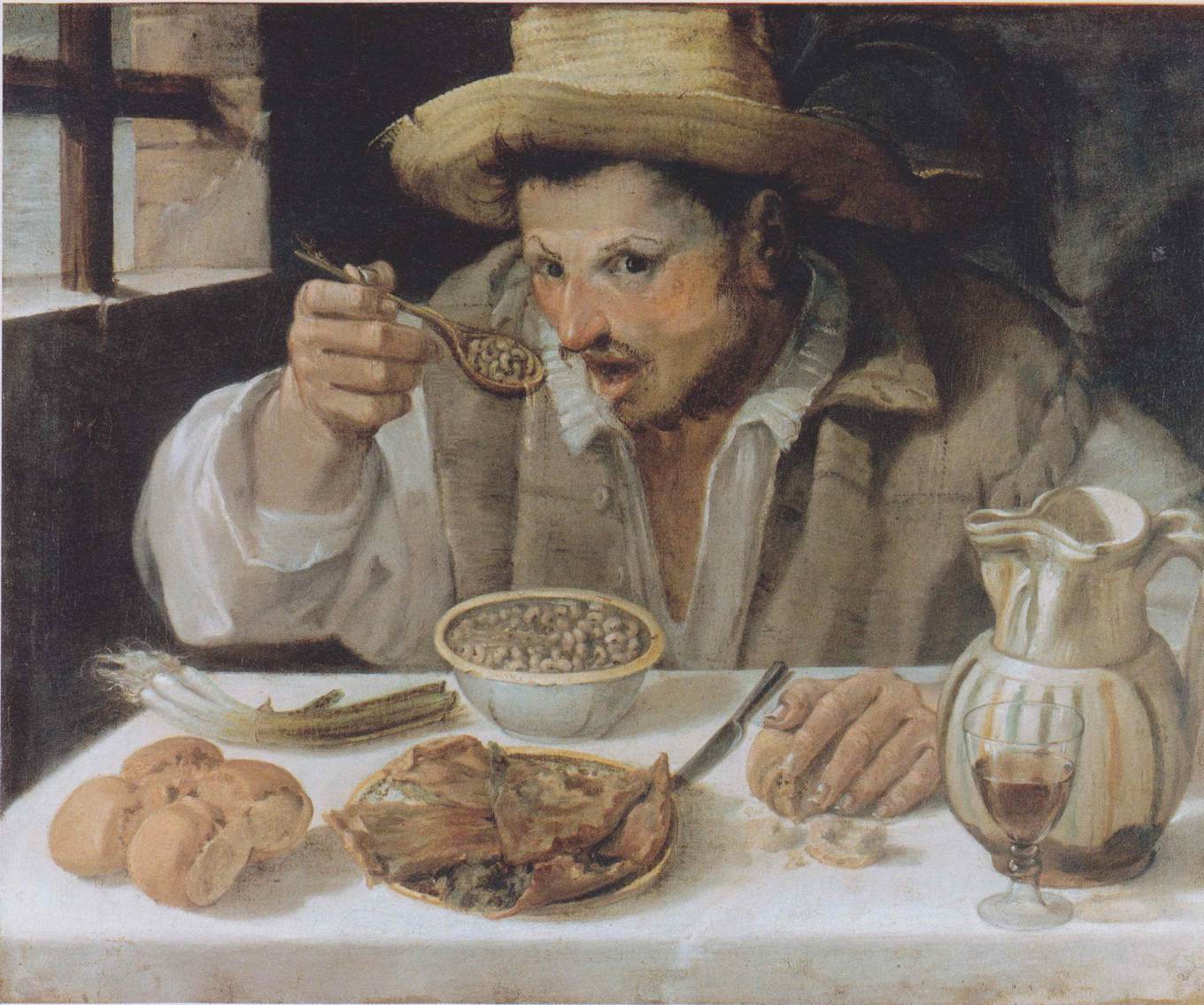


Lessons from the Dark Ages and inventions of ordinary people
As for the flatulence that eating beans may cause, experts suggest soaking dried beans for 12 to 24 hours and then pouring off the water; changing the water several times can reduce the components in beans that cause stomach discomfort. If soaking beans seems troublesome, you can eat fresh broad beans, peas, runner beans and so on when they are in season. When cooking beans, you can pair them with pasta, fish, beef or vegetables to keep the diet nutritionally balanced.
People often assume that inventions that change history require large amounts of funding and come from serious scientific laboratories. Eco said: "Cars, skyscrapers, submarines, subways, propellers, refrigerators, sterilized milk and so on are all very important inventions," but if ecological and sustainability considerations are added, beans clearly come out a notch above. "Perhaps beans will change the Earth once again. Even the Dark Ages can teach us something."