How can I let you meet me - at my most beautiful moment!
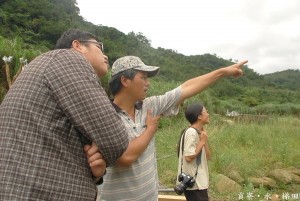
When we asked about his worries during the plum rain season, we came to understand this: the clear days after mid-June are a very important weather condition for rice farmers working the terraced paddies beside the forest. On consecutive rainy days, bee activity drops, supplemental food sources fall short, and the nectar in the flowers themselves is sparse, making it unsuitable to harvest honey. In addition, rice pollen, which relies on wind for pollination, can hardly pollinate successfully in the rain; and according to the farmers' observations, on a fine day between 9 a.m. and noon, the tiny rice spikelets open most vigorously within a concentrated window of 1-2 hours, and the stamens stretching outward fully 'play the flower' (Taiwanese lāng-hue) in the breeze; if bees come to lend a hand at this time, the pollination rate can rise by about 10%! (Hearing Uncle Shu describe it this way, I couldn't help imagining: in that mountain paddy under the bright sun, the rice's love song is being composed, the bees buzz a stubborn high note beside it, and Uncle Shu alone on the ridge listens to this exquisite music...)
Am I being too romantic? But I truly feel that through Shoulong's Hehe rice and honey, we have entered a subtle symbiotic community: the presence of wild bees not only helps the farmers add a nutritious food, it also helps raise rice yields; and the pesticide-free paddies ensure the health and safety of the bee colony's foraging, while the plant diversity in the mountain forest further sustains the nutritional completeness of the colony's diet. The dangers of insecticides and environmental hormones, and an overly monotonous source of nutrition, are precisely the main suspected causes in the recent global crisis of mass bee disappearance; on this point, the bee colonies of the Gongliao mountain area have nothing to worry about.
So when I drink the hundred-flower honey, I cannot help imagining the abundance of an entire mountain forest, and my encounter with the tree flowers at their most beautiful moment. Although keeping wild bees does indeed force the colony to share this hard-won sweet harvest with people, it is also because of this close symbiotic relationship that the satoyama people's cherishing of this precious nectar has further driven them to become familiar with the ecological rhythms of the mountain forest and to perceive environmental health through concrete indicators, and thus to restrain their own actions in the environment all the more carefully. I like to think, wishfully, that for both people and bees, this may still count as a sweet burden.