What Is Ecological Aquaculture? It Turns Out Fish Farming Can Be Very Organic Too (Part 1)
In recent years, a wave has swept through society: "young people returning to the countryside to farm," "organic markets," "buying directly from farmers." Yet no one has ever heard of anything like "young people returning to the countryside to fish," "aquatic product markets," or "buying directly from fishermen." While organic agriculture and agricultural product traceability have set off wave after wave of enthusiasm, has anyone ever heard of excellent aquaculture farmers? Ecological aquaculture?
What on earth is ecological aquaculture?
"So-called ecological aquaculture means going back to the early extensive, low-density natural farming method," said Chiu Ching-yao, who more than 3 years ago gave up his job in Taipei, returned to his home in Budai, Chiayi, and took up ecological aquaculture together with his younger brother. When farming density is lowered, residues such as feed and excrement are reduced, and disease problems are also less likely to occur. Even when disease does occur, controlling water quality and the amount of feed given can reduce the spread of disease, and medication is not necessarily needed.
"When a person has a cold, should they take medicine right away? Best not to, because the more medicine you take, the stronger the pathogens' drug resistance becomes. The same reasoning applies to fish: as long as you create an ideal ecological circulation environment, just let the fish recover through their own resistance, just like a person with a cold drinking more hot boiled water to boost metabolism."
Raising fish is raising water
The basic skill of organic farming is building soil; ecological aquaculture is raising water, paying attention to subtle changes in water quality:
1. Are there too many bubbles? If bubbles start to appear, it means protein accumulation in the water is too high; if not dealt with, the next step is water acidification.
2. Are large numbers of egrets foraging beside the fish pond? At this time it may be that large numbers of small fish and shrimp, because of illness, are gathering by the pond edge, reflecting a water quality problem or that disease is occurring.
3. Dogs are also an environmental indicator. If there are many dogs by the pond, it means the number of organisms around the pond is enough to support the dogs' life, which is a relatively healthy environment.
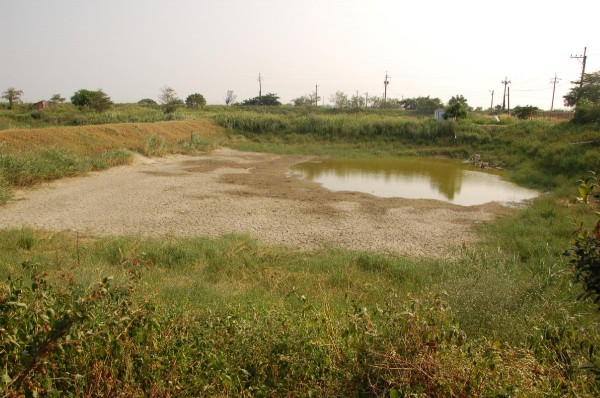
Before raising water, you must first confirm that the soil at the bottom of the pond is problem-free. If in the past there was high-density, over-limit aquaculture, then the sediment at the bottom of the pond will more or less retain excessive excrement, leftover feed, chemicals, and so on, causing excessive phosphite ions and ammonium ions at the bottom of the pond. For such a pond, if it has not been thoroughly dried in the sun for several months, continuing aquaculture is prone to problems; after problems arise, the only option is to control them with medication, turning it into a vicious cycle.
Therefore, after a period of aquaculture, the soil must be dried in the sun. Aquaculture farmers often take advantage of winter, when there is relatively little rain, to carry out long, continuous exposure to the sun. Drying the soil also involves considerable knowledge: you must constantly observe changes in the moisture and aroma of the pond-bottom soil, and dry it until the surface layer looks cracked but the subsoil is still moist. Experienced people can tell just by smell. Bad soil smells strange.