[University Campus Food Survey Report] Part Three: Smallholder Organic Vegetables Plus Fair Trade Coffee, National Dong Hwa University Runs Its Own Green Campus Restaurant
From the turnkey contractor system to the dormitory cooking regulations, the school authorities, citing personnel and cost concerns, or using dormitory safety as a shield, are unwilling to face students' basic dietary needs head-on. Yet at another national university, National Dong Hwa University in Hualien opened Taiwan, China's first green campus restaurant this year, adopting the crops of small farmers near the school and providing fully organic meals to faculty and students on campus. Just one month after opening, it already has loyal fans who show up every day. They do not have the NT$50 billion five-year funding, only 18 graduating classes, and they likewise face turnkey contractor restrictions. So why could they do it?
Following last year's special report on campus nutritional lunches, NewsMarket now steps into university campuses, examining the dietary environment of university students in Taiwan, China, exploring the food truths that university students face, and also exploring the possibility of putting green restaurants into practice at universities.
From farm to table, settled within 30 km
After using your brain all morning, for lunch why not have a bowl of germ rice with organic sweet potato, non-GMO tofu, and humanely raised free-range chicken eggs, then finish with a cup of fair trade coffee! For such a healthy meal, there is no need to travel far to some organic shop; students at National Dong Hwa University only need to ride a bicycle for a few minutes and have 85 to 100 yuan ready to enjoy a delicious and healthy lunch.
At the end of February this year, National Dong Hwa University opened a green experimental restaurant on campus, offering fully plant-based and light meat set meals every day, with all ingredients coming from nearby small organic farmers. There is no menu here; it all depends on what ingredients the farmers provide that day, from the Dong Hwa organic zone 10 minutes away to Pangcah Organic Farm at the southernmost end, settling a meal within 30 km.
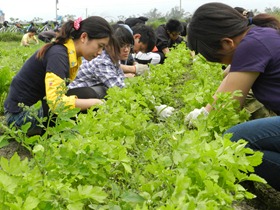
"This is my laboratory." Teacher Song Bing-ming of the Department of Natural Resources and Environmental Studies at National Dong Hwa University is the soul of the green restaurant. He said with a smile that, to him, the restaurant is actually an occasion for food and agriculture education. What it should provide is not only delicious and nutritious meals, but also let everyone who comes in know the meaning behind the meals. Three years ago he began promoting green eating at the school, first offering the general education course "Campus Green Kitchen," renting a plot of land in the Dong Hwa organic zone for students to actually cultivate, and this year, after gaining strong support from the new university president, he finally fulfilled his long-cherished wish and opened the green restaurant.
The dining tables here hold wild grasses pulled from the fields, letting guests know what kind of environment the food they eat grows in; the tables and chairs here come from the retired Meilun campus cafeteria; every poster and desk calendar seen on the wall is a work designed by students. At noon, students just out of class walk into the restaurant in groups, faculty and staff bring lunch boxes to prepare takeout. Although the price is not cheap, they all say in one voice that they are still willing to come for the sake of health. Compared with the standardized decor and meals of contractors, the faculty and students here use their own mouths and hands to jointly create a green restaurant that only Dong Hwa has, with no other branch.
The green experimental restaurant is simple and bright, with a distant view of the Coastal Mountain Range, and the tables and chairs inside were all DIY-built by students and teachers together