School lunch reform should start with a reasonable increase in meal fees
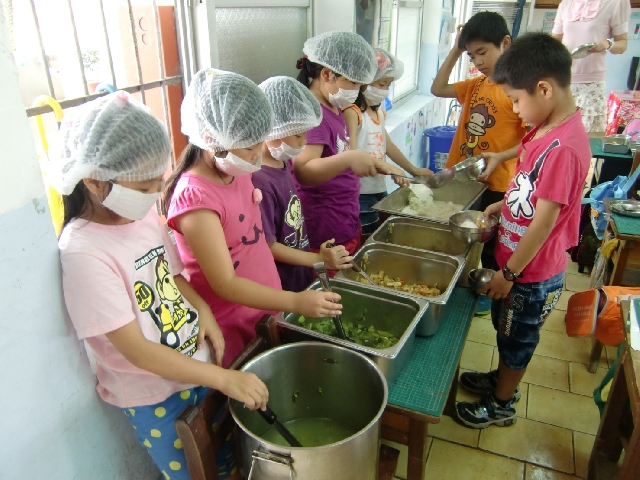
"All parents feel the same way." Since having children, I have paid even more attention to issues of education and food safety. No matter how busy or tired work gets, every effort is worthwhile if it allows my little one to grow up in a good environment. Yet every school-opening season, the issue of "nutrition lunch" is brought up again, from whether group catering is nutritious and hygienic, to the recent move by the Council of Agriculture to take over the gatekeeping of ingredient sources. Although the government's intentions are good and it wants to solve related chaos, it has consistently overlooked several of the most important issues:
1. Nutrition lunch charges really are too cheap
How much are you willing to spend to let your child eat nutrition lunch at school? According to data from the Taipei City Department of Education, the fee standard for elementary school nutrition lunch in Taipei City can be flexibly adjusted to 60 yuan. By contrast, taking an elementary school in a remote mountainous area of Yunlin as an example, because there are few students and running the school is difficult, the budget per meal is only 2-30 yuan, which is even lower than the general market price of a boxed meal. If we use the standard of one main dish per meal (meat, fish), three side dishes and one staple food (rice or noodles), can such a low budget really buy fresh, safe ingredients?
Furthermore, in the cost structure of nutrition lunch, after deducting labor costs, kitchen maintenance, water, electricity and gas, and other expenses (previously there were even school personnel who wanted kickbacks), the ingredient procurement expenditure that should matter most may account for less than 50% (possibly less than 15 yuan), so of course there is no ability to purchase higher-priced domestic certified agricultural products (for example: produce traceability, organic ingredients, etc.).
For a boxed meal sold outside, the cheapest starts at 50 yuan. No matter how low the ingredient cost is, it should still be around 30-odd yuan. I really dare not imagine where white rice, meat, vegetables and eggs costing less than 15 yuan actually come from.
2. According to government standards, using organic ingredients every day costs only 60 yuan more per month. Can most Taiwanese people really not afford that?
In August this year, the Council of Agriculture announced that starting from January 1, 106 ROC year, the six special municipalities would fully implement "domestic ingredients supplied to school nutrition lunches," promoting organic nutrition lunch one to two meals per week. This move seems well intentioned, using action to support organic ingredients. According to a briefing by officials of the Agriculture and Food Agency of the Council of Agriculture (see attached page 14), "with a single student's organic ingredient usage per meal at 100g, the price difference is 3 yuan; with 40 weeks per school year and one meal per week, the increased ingredient cost per student per school year differs by only 120 yuan (an average of 12 yuan per month)."
If this standard is followed, using organic ingredients every day would be 15 yuan per week and 60 yuan per month. In one school year, only 600 yuan more would let children eat organic ingredients. I believe that apart from low-income households, most parents would gladly agree.
Suggested solutions:
1. Spend 60 yuan more per month so children can eat organic ingredients every day:
By this logic, Taiwan's nutrition lunch should have long ago fully used organic ingredients. Why is it still not achieved today? Is it because promotion is ineffective, or because the quantity of organic ingredients is insufficient to supply demand? Or is there some unspeakable secret involved? If the Council of Agriculture's logic is correct, I will certainly strongly help promote it. If it does not match the actual situation, then let everyone discuss together: where exactly is the problem?
2. Rationalize and raise nutrition lunch fees, with key subsidies for disadvantaged groups:
Taking Taichung City as an example, the government allocates a nutrition lunch budget every year (253 million yuan in 105 ROC year) to subsidize public elementary and junior high schools, and further requires group catering suppliers to increase the proportion of local and non-GMO ingredients. In particular, starting in 104 ROC year, the Taichung City Government subsidized 5 yuan per meal per student, and it was a flat-rate subsidy, with everyone getting a share.
From the standpoint of user pays, capable parents should pay their children's nutrition lunch fees themselves, and the government's subsidy amount should target students in remote areas, low- and middle-income households, those with physical or mental disabilities, or families that suddenly encounter misfortune.
In addition, for families that do not meet the government's low-income household standard but in reality cannot afford the fees, the government should handle them through special programs. Furthermore, the fee and the extent of increases must also reflect market prices, so that farmers and group catering suppliers both have room to survive. The government, schools and parents can also study and draft the fee standards and items for nutrition lunch, so that costs can return to the ingredient procurement level.
3. Increase the use rate of produce traceability ingredients and strengthen ingredient traceability:
In view of the frequent food safety scandals, county and city governments conduct irregular spot checks on nutrition lunch dishes and ingredients, but testing is time-consuming and labor-intensive. If a situation of non-compliance with hygiene standards is found, even if the vendor can be fined according to law, the related meals have long since been eaten by children. Rather than this, it would be better to start gatekeeping from the source of ingredients and reduce the risk of ingredient problems.
Looking at the systems promoted by the Council of Agriculture, namely "organic, produce traceability, CAS excellent agricultural products, GAP safe fruits and vegetables label, production traceability QR-code," only "produce traceability certification" ingredients can have their source and production process traced. It is suggested that in addition to promoting organic nutrition lunch, the six special municipalities should also require organic farmers to undergo "produce traceability certification." If an agricultural product has already passed organic certification, applying for produce traceability certification is not difficult (because farmers should originally do batch management; if they do not, how can it be ensured that the ingredients are truly organic?).
Finally, schools can at the same time provide incidental education, so that while children eat with peace of mind, they can also learn about the producers and growing process of agricultural products.
Author: Guo Xuying, founder of Heartfelt Meat Shop / veterinarian who passed the government senior examination
Reference: Council of Agriculture briefing file
http://www.slideshare.net/OpenMic1/20160811-64890366