How did Xiyuan wheat embark on the road to Puluo?
Xiyuan wheat flour is newly born in 2012 (photo/Feng Xiaofei).
Xiyuan wheat's fifth year, a milestone of milling 24tons of flour in a single run
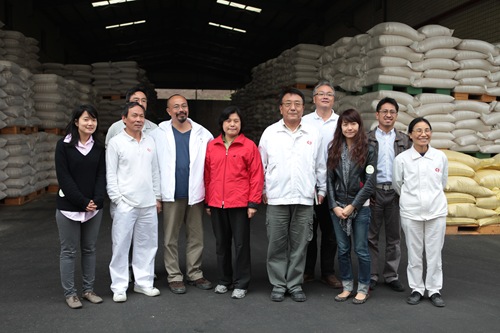
March 7, 2012 was a brand-new milestone for Xiyuan wheat, which had worked hard for five years. At 7:30 a.m. that day, 24 tons of Xiyuan wheat were fed into a machine specially prepared by Lianhua Flour (Industrial), and the run began. Four hours later, 20 metric tons of fresh flour were born, the first newborns of Xiyuan wheat in 2012.
To Lianhua Industrial, which processes 840 tons of wheat a day, 24 tons is a negligible fraction, and in the past it never even had a chance to go on the machine, because the time spent cleaning the machine before and after far exceeded the milling of the flour itself; but for Xiyuan, 24 tons was a figure it had not dared to imagine in the past, a result that took five years of accumulation to reach.
Because once the flour is milled, it enters a countdown to the end of its freshness period. In the past, Shi Minghuang, the general manager of Xiyuan Bread, was solely responsible for sales, and he had to carefully calculate the amount for each processing run; otherwise, if it was not sold out before the freshness period ended, the entire batch of effort would be wasted. However, after Lianhua Flour joined the support team for local wheat, it not only took on the role of professional milling, but would also help share warehousing, promotion and other work, so that farmers and Shi Minghuang no longer had worries behind them and could continue to press forward with peace of mind.
Shi Minghuang described this as a "proletarian path" for local wheat, from 1 ton in 2007 to 80 tons in 2012, and to the 1,000 tons planned for next year, from small-scale milling to professional flour making. Local wheat is moving toward a more mass-market path. Shi Minghuang said that "proletarian" does not mean a lowering of ideals, but rather means that local wheat will actively and bravely accept the tempering of the market's "price" and "value," giving the completely skewed supply of imported wheat in Taiwan, China, a possibility of being checked and balanced, and also giving the low grain self-sufficiency rate a chance to rise.